Stainless steel vs glass food containers: which lasts longer?
By FITTO Trade Desk · Last updated 29 October 2026
In the stainless steel vs glass food containers question, steel lasts longer where containers get dropped, carried and packed, because it does not shatter. Glass lasts longer where food is reheated and stored at home, because it does not stain, hold smells or scratch easily. In both, the plastic lid and seal usually wear out first.
Key takeaways
- Steel wins on drops, weight and transport: lunch boxes, tiffins, catering runs and children.
- Glass wins on reheating, visibility and stain resistance: home meal prep, leftovers and tomato or turmeric dishes.
- Steel is not for the microwave; borosilicate glass handles microwave and oven use, with the lid removed.
- The lid is the weak point of both, so buy containers with replaceable or sturdy lids and seals.
Buyers often pick one material for all their food containers (علب حفظ الطعام) and regret it later. Glass breaks in a lunch bag, steel cannot reheat a meal at the office, and either one leaks once its seal fails. Each mistake means buying again.
This comparison settles which lasts longer for each job, for home cooks, caterers and retailers in the UAE. At FITTO Food Storage, a wholesale food containers and jars supplier in the UAE, we stock both materials, so we see where each one earns its keep.
How do stainless steel vs glass food containers compare side by side?
Steel is lighter and unbreakable but opaque and not microwave-safe; glass is heavier and breakable but clear, oven-friendly and stain-proof. Neither is better in every kitchen, so match the material to the job.
| Factor | Stainless steel | Glass (borosilicate) |
|---|---|---|
| Drops and knocks | Dents but rarely fails | Can chip or shatter |
| Weight | Light | Often 2-3 times heavier (rule of thumb) |
| Microwave | No | Yes, lid off or vented as the label allows |
| Oven | Body often can, but check the label | Base usually can, lid never |
| Freezer | Yes | Yes, with headspace and no sudden heat |
| See the food | Only through a clear lid | Yes, all round |
| Stains and smells | Resists well | Does not absorb either |
| Acidic or salty food | Fine short term; avoid long brine storage | Unaffected |
| Typical failure | Lid, seal or dented rim | Breakage, then lid and seal |
How do stainless steel containers wear over time?
A good steel container can last for many years; it dents, but it rarely breaks. Its lifespan is usually set by the lid, the seal and any dent near the rim that stops the lid closing.
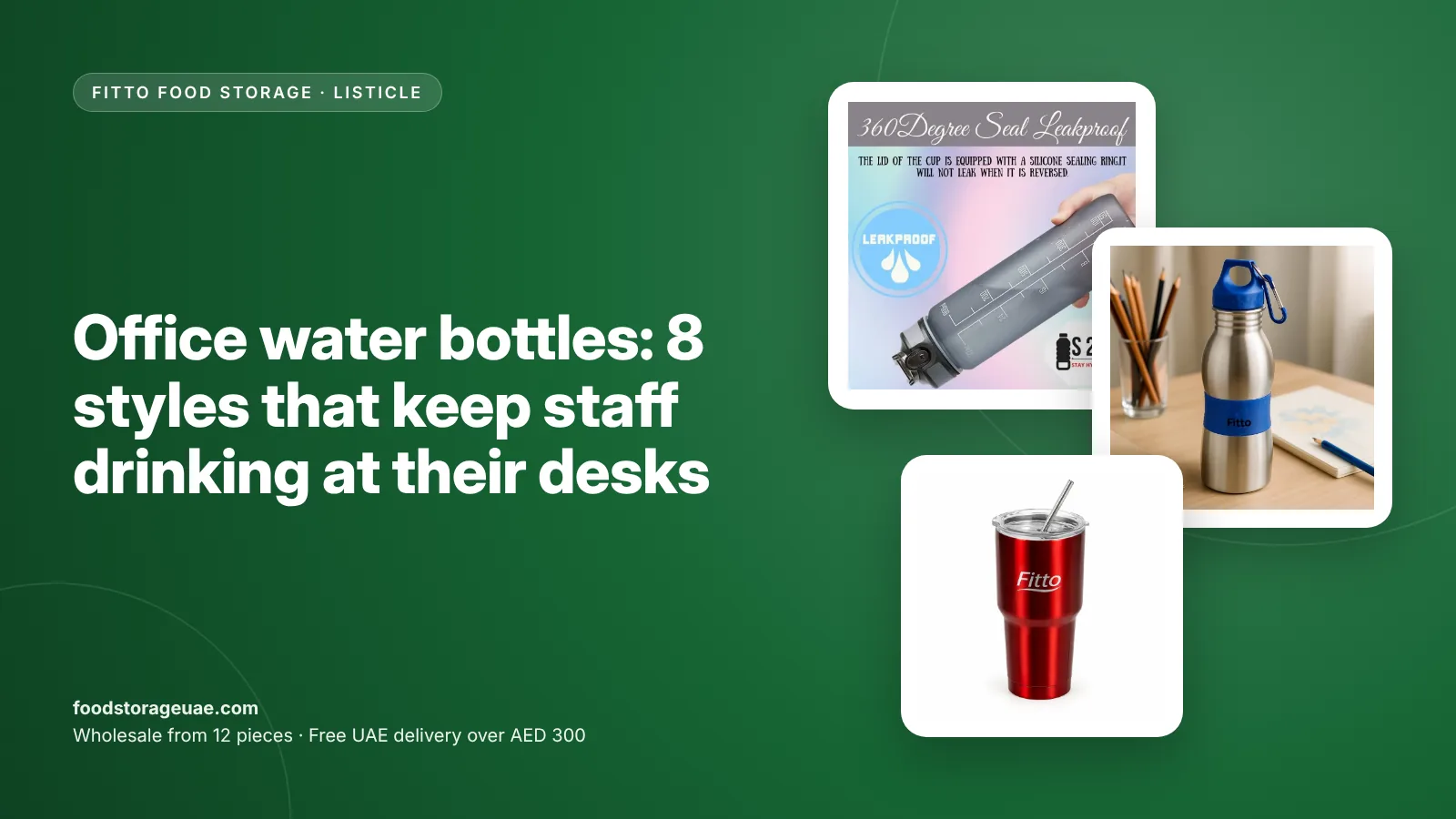
Many steel food containers use 304 stainless steel, also called 18/8, which resists rust in normal kitchen use. The FITTO 3-layer stainless steel lunch box is made from food grade 304 steel, with side locks and a carry handle. That build suits workers who carry a hot meal to site or office every day.
Steel's weaknesses are honest ones. You cannot see inside without a clear lid, and long storage of very salty or acidic food, such as pickles in brine, can mark the surface over time. Decant pickles and sauces into glass for long storage.
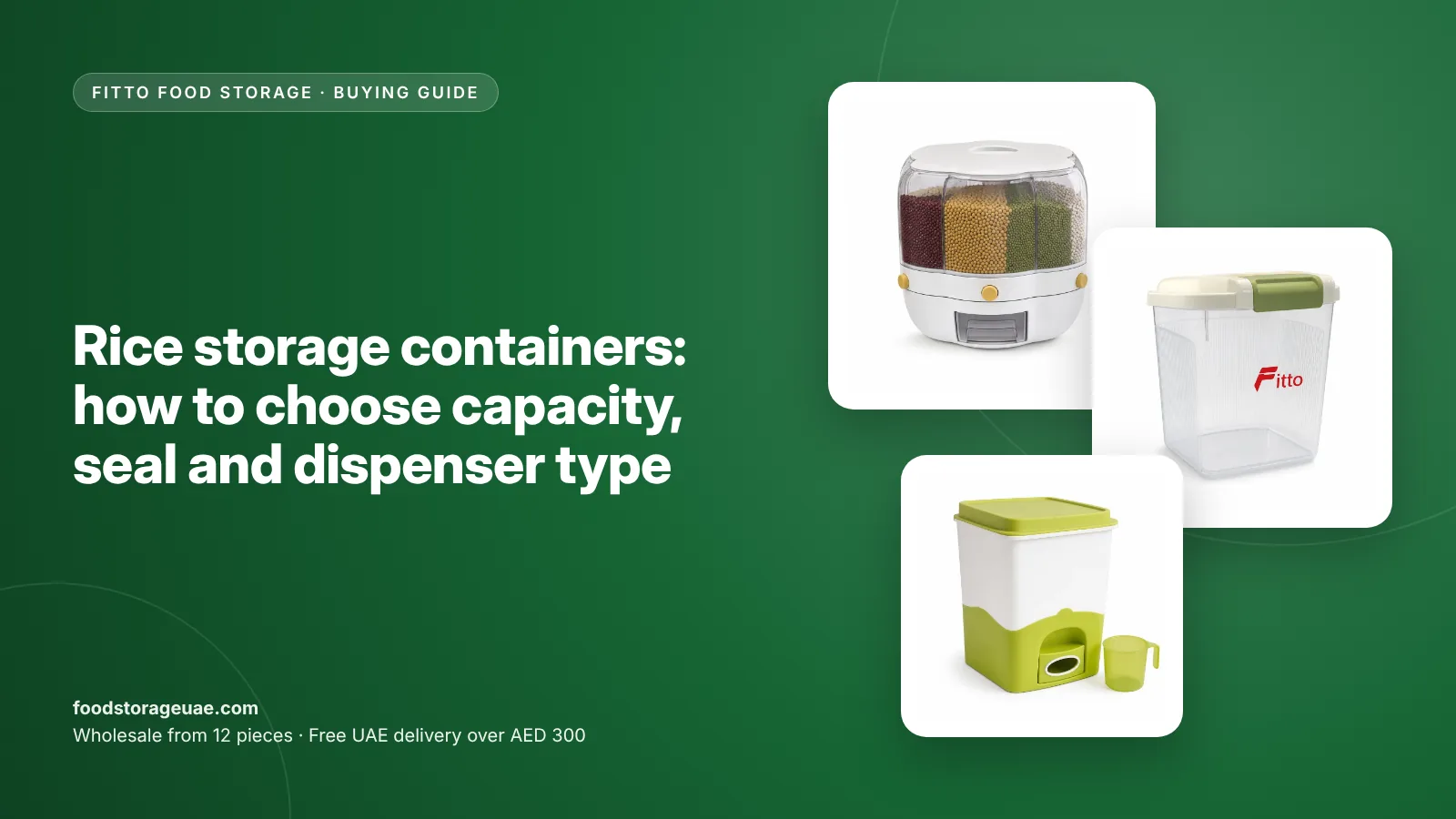
For fridge and pantry use, the FITTO square stainless steel container with clear locking lid measures 22 x 22 x 9 cm. Its clear lid answers the visibility problem, so staff can see contents at a glance.
How do glass containers wear over time?
Glass does not wear in normal use: it does not scratch easily, stain or absorb smells, so it either lasts for years or breaks. The main risks are a drop onto a hard floor and a sudden temperature change.
Two kinds of glass dominate. Borosilicate glass handles temperature changes better, which is why it is used for oven and microwave containers. Tempered soda-lime glass is tough against knocks but less tolerant of sudden heat.
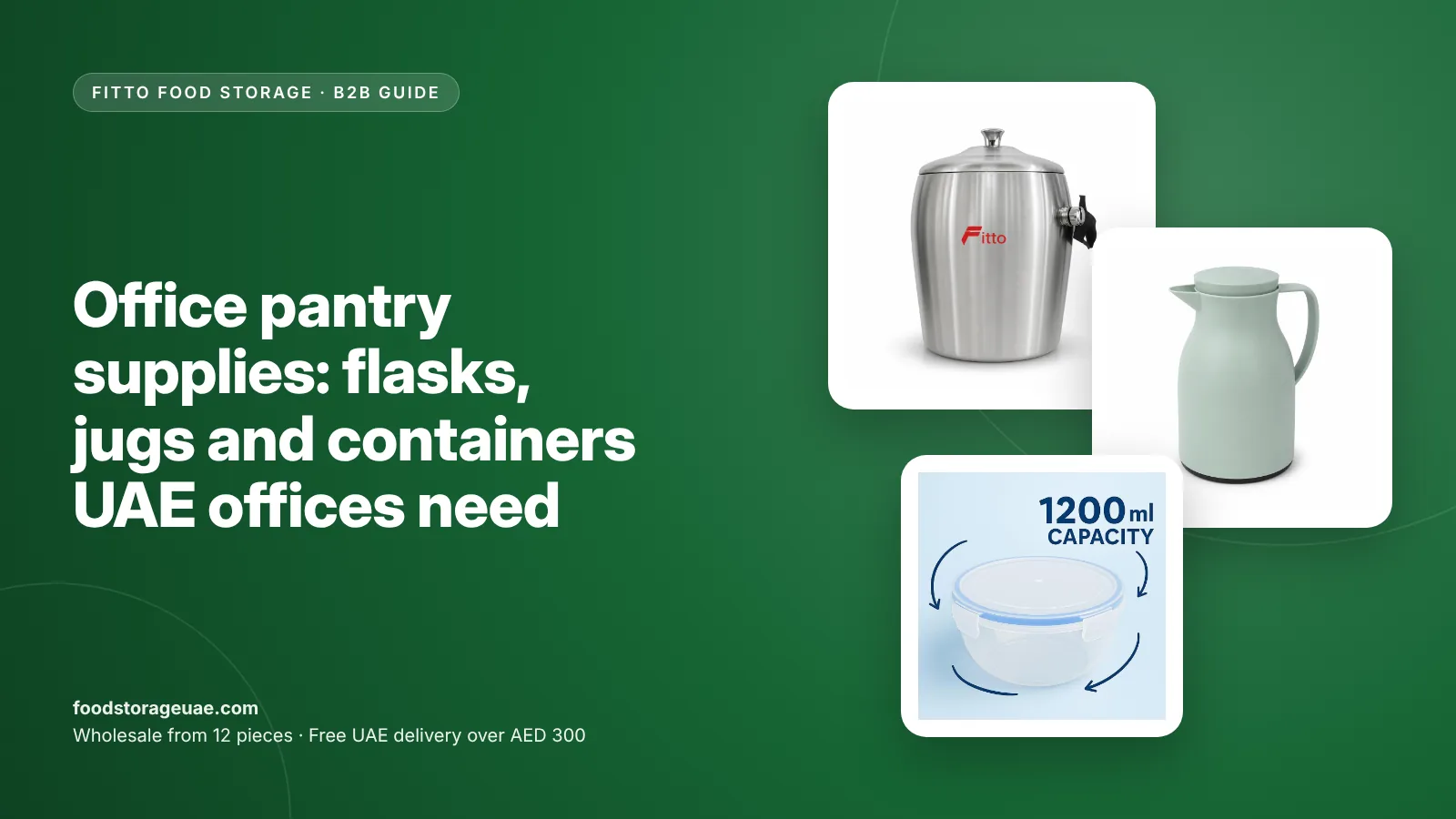
The FITTO 1500 ml glass meal prep container is borosilicate and listed for microwave, oven, freezer and dishwasher use. The FITTO 1040 ml borosilicate container with PP lid measures 22 x 16 x 9 cm, a common size for one family dish or two lunch portions.
Even borosilicate has limits. Let a frozen container stand before heating, and never place a hot dish on a wet or cold surface.
Why does the lid decide the real lifespan?
On both materials, the lid and its silicone seal fail long before the body. A cracked clip, a warped lid or a stretched seal turns a good container into a leaking one.
Most glass and steel containers use polypropylene (PP) lids. Our guide to microwaving plastic containers explains why lids should come off, or be vented, when you heat food.
To protect lids:
- Wash lids by hand or on the top rack only, unless the label says otherwise.
- Remove the silicone seal weekly, wash it and let it dry fully.
- Never put a PP lid in the oven or under a grill.
- Store containers with lids resting loosely on top, so the seal is not compressed for months.
Which should you choose for each use?
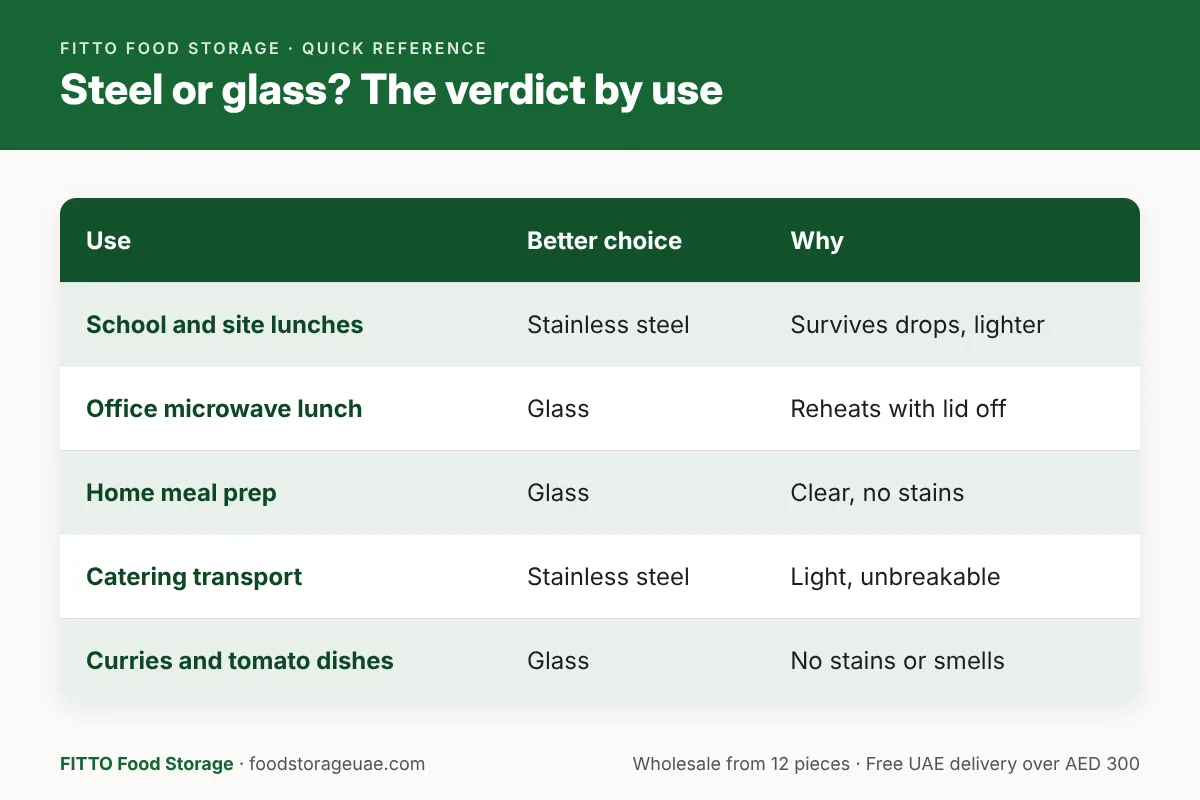
Choose steel for anything carried and glass for anything reheated or displayed. For mixed kitchens, a few of each costs less than replacing the wrong one.
| Use | Better choice | Why |
|---|---|---|
| School and site lunches | Stainless steel | Survives drops and is lighter to carry |
| Office lunch reheated in a microwave | Glass | Goes straight in, with the lid off |
| Home meal prep for the week | Glass | See contents, reheat, no stains |
| Catering transport and tiffins | Stainless steel | Stackable, light, unbreakable |
| Curries, tomato and turmeric dishes | Glass | Does not stain or hold smells |
| Retail gifting and home sets | Glass | Looks premium on the shelf |
For a broader look at materials, see our comparison of glass vs plastic food containers. For portion sizes, our meal prep containers guide covers capacities by meal.
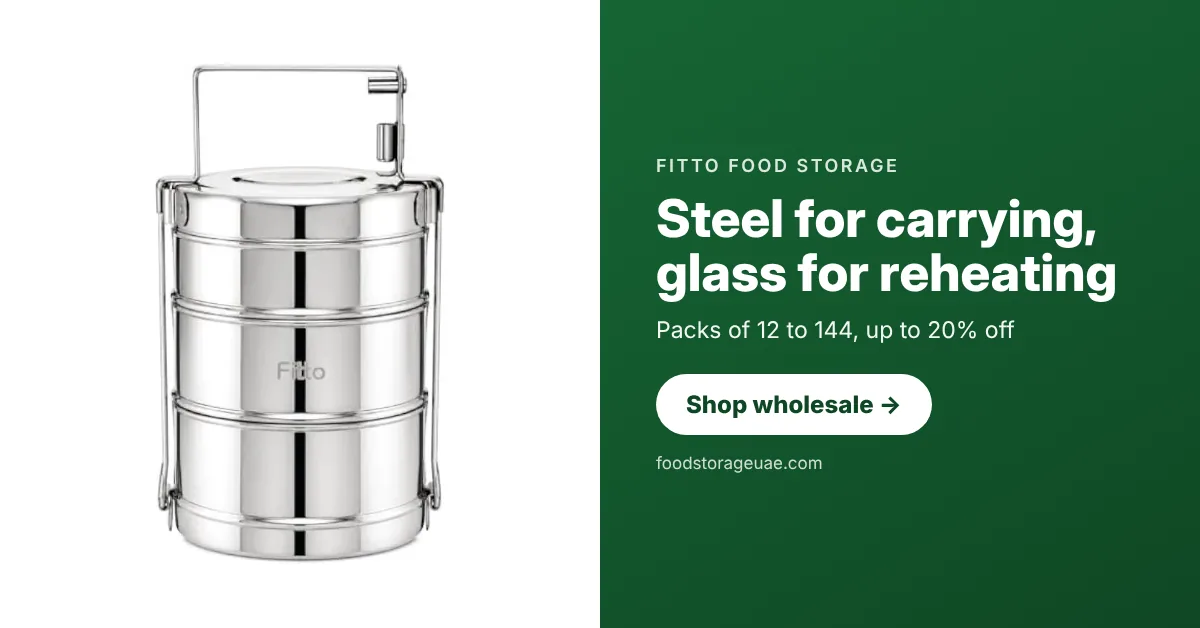
FITTO Trade Pick: One steel line, one glass line Stock the 3-layer 304 stainless steel lunch box for customers who carry meals, and the 1500 ml borosilicate glass meal prep container for those who reheat. Both come in packs of 12 to 144 pieces, with up to 20% off per piece on the largest pack.
How do you make either type last longer?
Most early failures come from heat shock, harsh scrubbing and lids left to warp. A few habits add years to both materials.
- Steel: dry after washing to avoid water spots, and use a soft sponge rather than steel wool.
- Glass: avoid moving it from freezer to hot oven, and use oven gloves on a dry, folded towel.
- Both: store with lids off or loose, replace seals when they stretch, and follow each label for dishwasher use.
The bottom line
Stainless steel lasts longer in bags, cars and busy hands; glass lasts longer in the fridge, microwave and oven. Whichever you choose, the lid and seal decide when it needs replacing, so look after them.
Browse our wholesale food containers and jars and lunch boxes and bags. Request a quote for a mixed steel and glass order, order samples to test both in your kitchen, or WhatsApp +971 55 672 6947. Delivery is free to all seven emirates on orders over AED 300. FITTO Food Storage: fit for the way you store.
FAQ
Can stainless steel food containers go in the microwave?+
No: metal containers reflect microwaves, heat unevenly and can cause sparks, so most manufacturers advise against it. Move the food to a microwave-safe glass or plastic dish first. If you reheat at work every day, a borosilicate glass container saves that extra step and the extra washing.
Is borosilicate glass better than tempered glass?+
Borosilicate glass copes better with temperature changes, which makes it the usual choice for oven and microwave containers. Tempered soda-lime glass is tough against knocks but less tolerant of sudden heat. Both are food-safe and non-porous, so check the label for oven and freezer guidance.
Do glass containers really keep food fresher than steel?+
Freshness depends mainly on the seal, not the body. A well-sealed steel container and a well-sealed glass container protect food equally in the fridge. Glass helps indirectly, because you can see what is inside and use it before it spoils.
Which is safer for children's lunches, steel or glass?+
Stainless steel is the safer choice for most children, because it will not shatter if dropped in the playground or on a bus. It is also lighter to carry. Choose lids that children can open alone, and keep glass for meals packed and eaten at home.
Why does my steel container smell after storing curry?+
Steel itself does not absorb smells, so the odour usually sits in the silicone seal or plastic lid. Remove the seal, wash it in warm soapy water, then let it dry fully. Leaving lids off overnight usually clears the remaining smell.