Meal prep containers in the UAE: how to choose sizes, compartments and materials
By FITTO Trade Desk · Last updated 29 October 2026
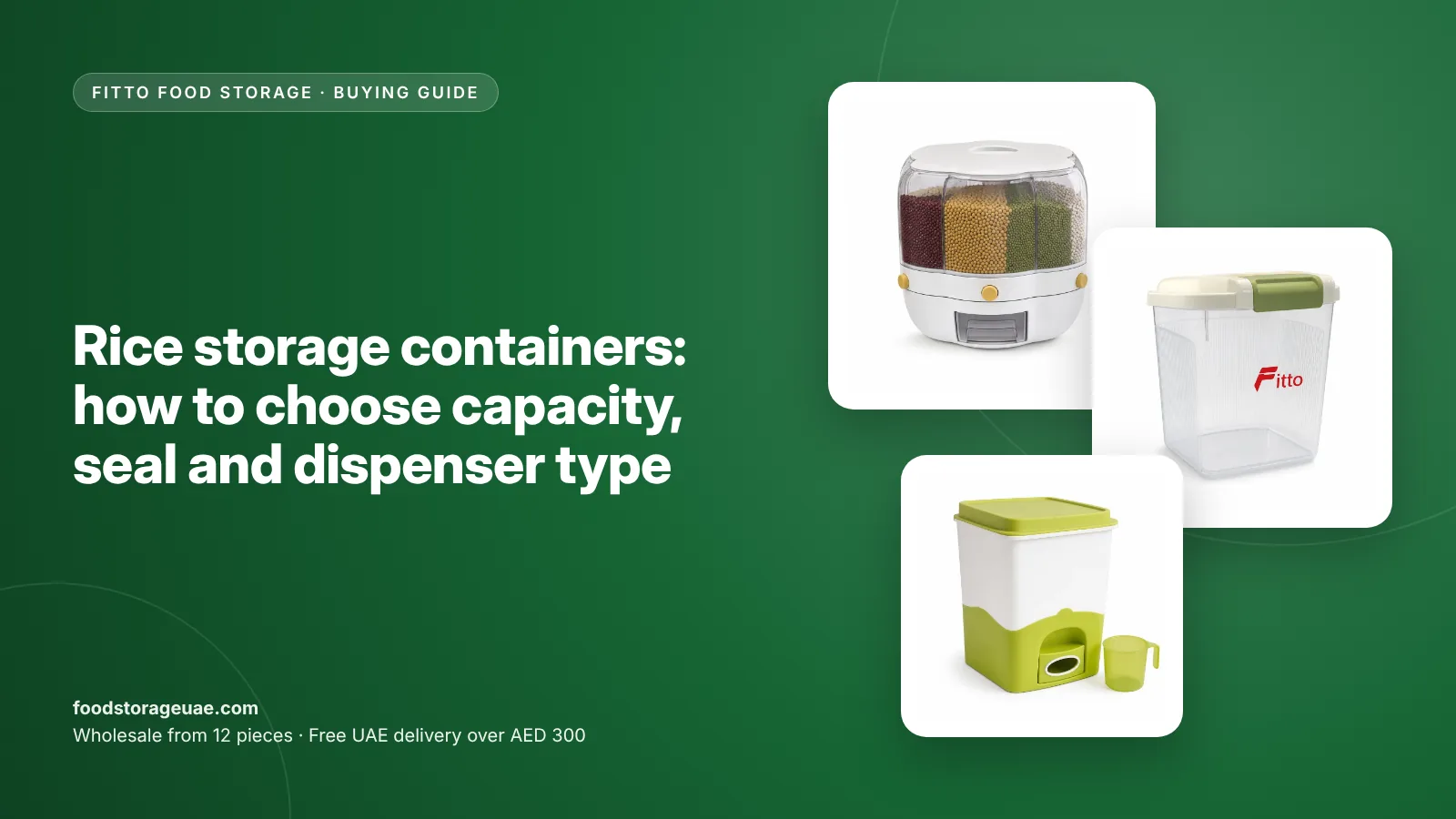
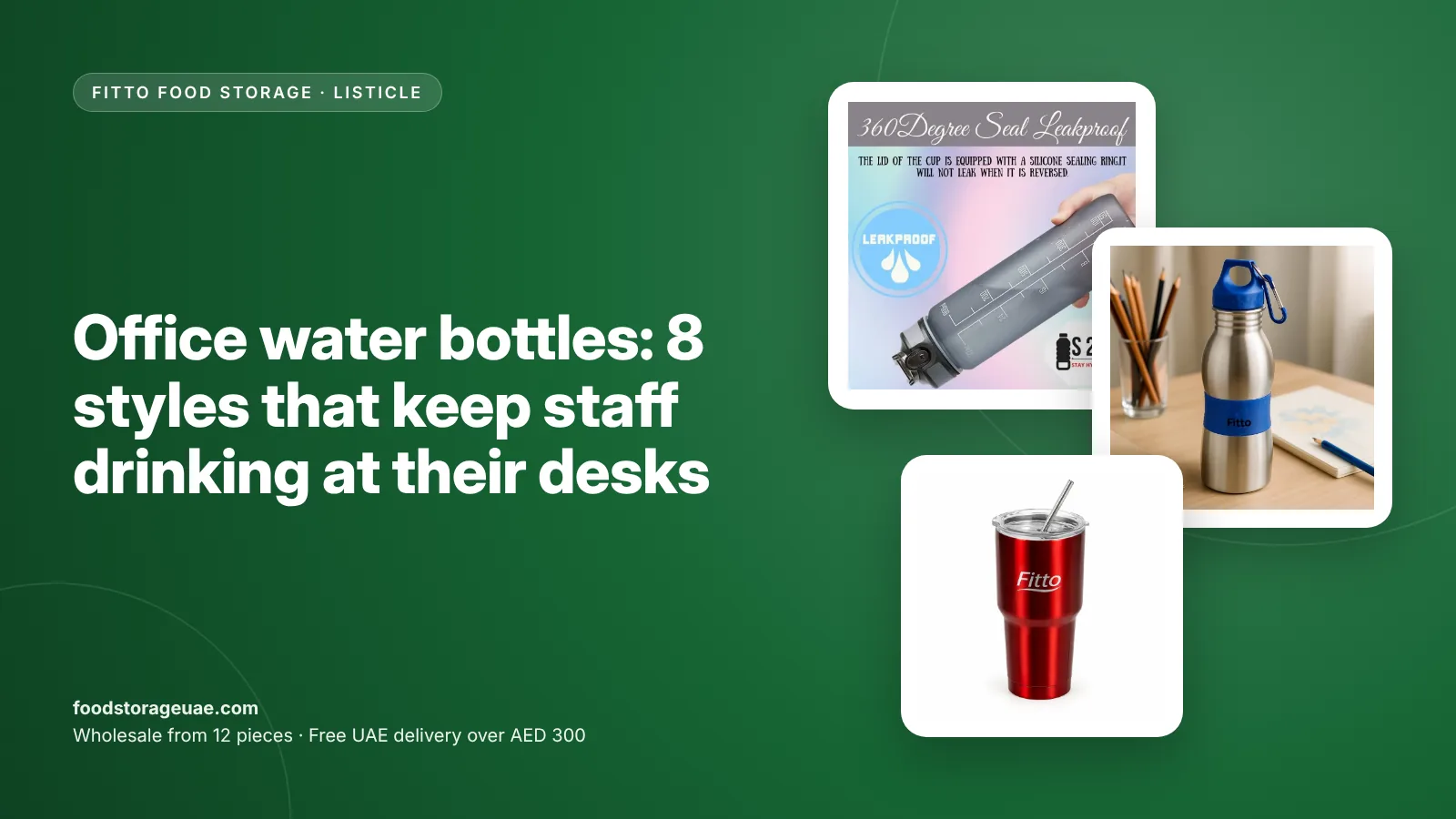
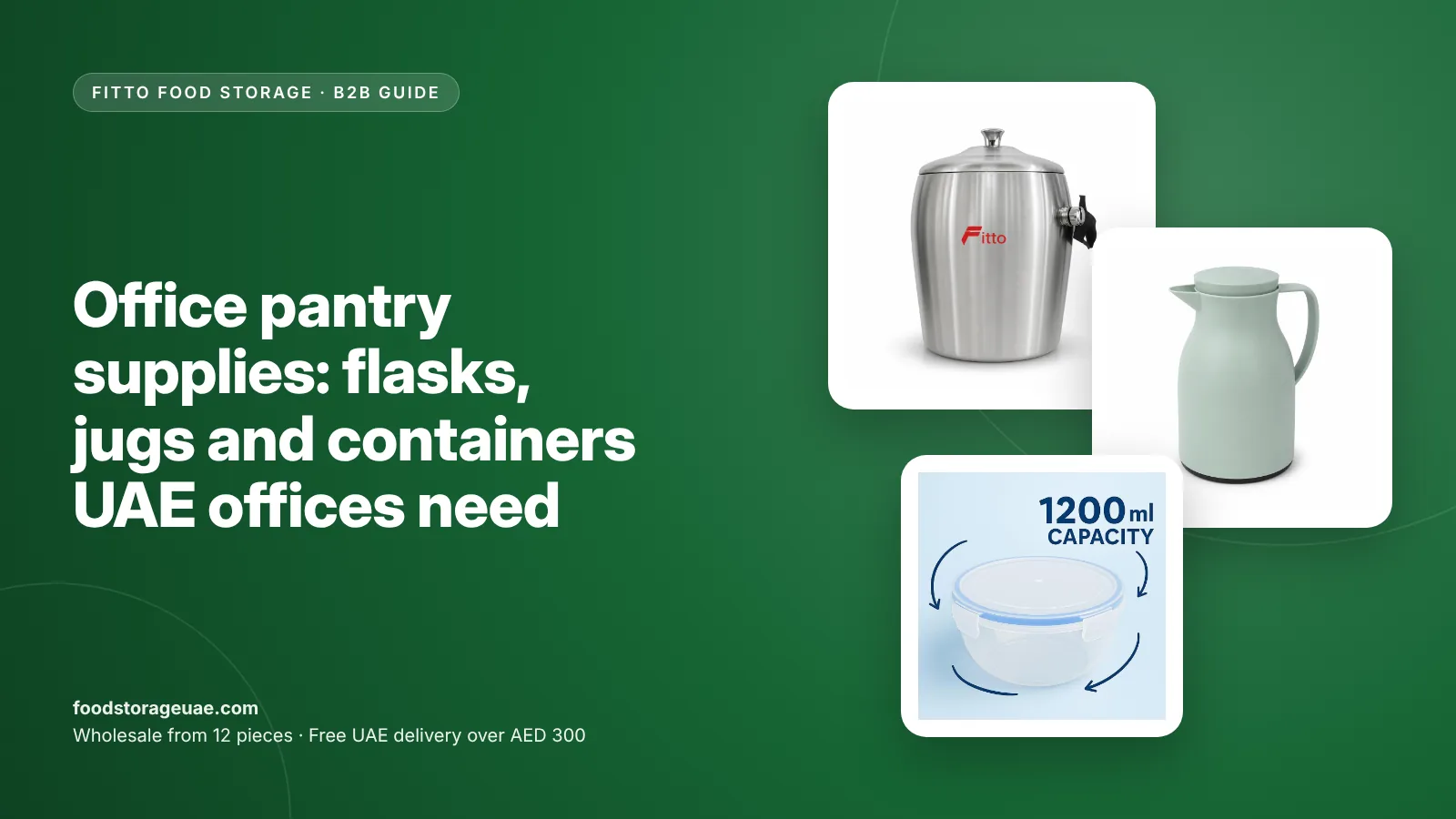
The best meal prep containers in the UAE match three things to the meal: size, compartments and material. Choose 700–800 ml for a light meal, 1–1.2 L for a standard lunch and 1.5 L for bigger portions. Use divided containers to keep sauces apart, glass for reheating at home and lightweight BPA-free plastic for carrying and delivery.
Key takeaways
- Size by meal, not by habit: most single meals fit 700 ml to 1.2 L.
- A full-height divider keeps rice and curry apart; three or more compartments suit snacks and portion control.
- Glass reheats well and resists stains; plastic is lighter and cheaper to replace.
- A locking lid with a removable silicone seal is the most important leak check.
- Cool food fast and keep it at 5 °C or below: UAE heat leaves little margin.
A container that leaks curry into a work bag undoes a whole Sunday of cooking; for a meal-prep business, it means a refund and a lost subscriber. This guide shows how to pick meal prep containers (علب حفظ الطعام) that portion well, reheat safely and survive the week.
It is for gym-goers, home cooks, meal-prep businesses and resellers in the UAE. At FITTO Food Storage, a wholesale food containers supplier in the UAE, we carry glass and plastic meal prep lines from 300 ml snack pots to 2.3 L batch boxes.
What size meal prep containers do you need?
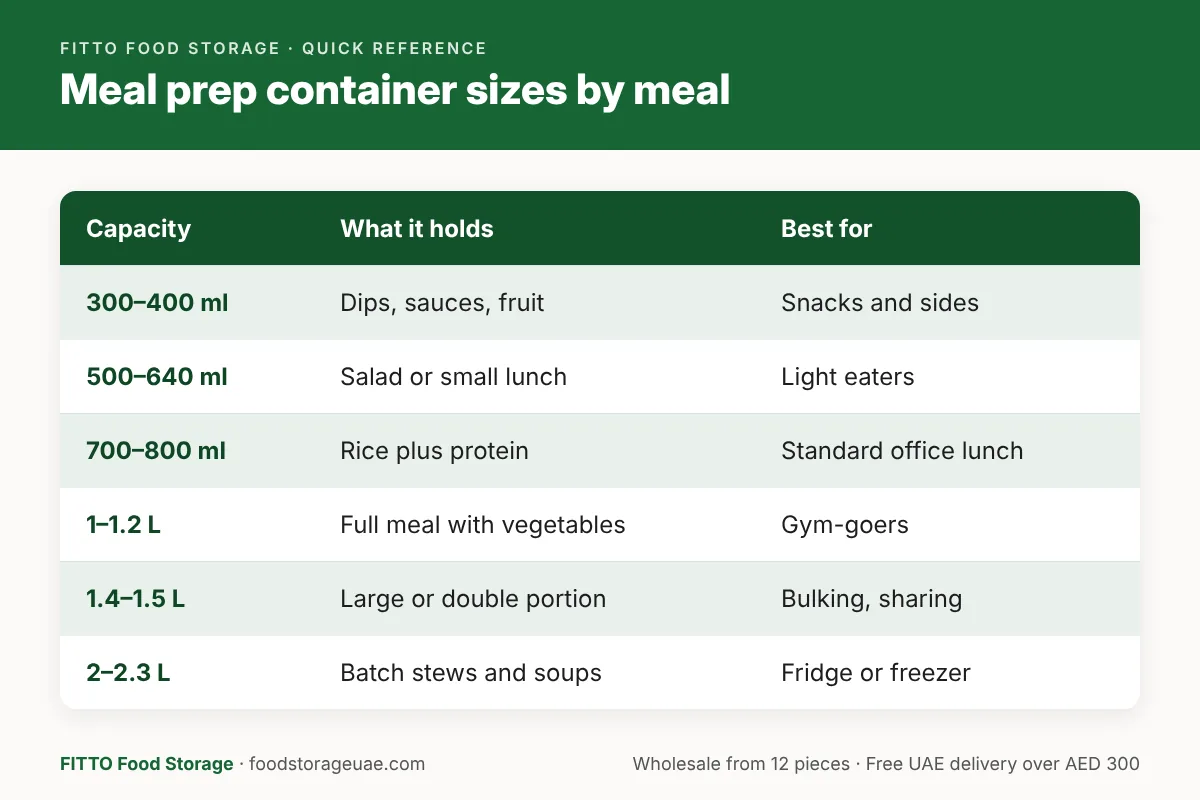
Most people need 700 ml to 1.2 L for a main meal, plus a few 300–500 ml pots for snacks and sauces. Pick the size by what goes in it.
| Capacity | What it holds | Best for |
|---|---|---|
| 300–400 ml | Dips, sauces, fruit, overnight oats | Snacks, kids, sides |
| 500–640 ml | Salad side, small lunch, breakfast | Light eaters, cutting phases |
| 700–800 ml | Rice or pasta plus protein | Standard office lunch |
| 1–1.2 L | Full meal with vegetables | Gym-goers, bigger appetites |
| 1.4–1.5 L | Large meal or two portions | Bulking, sharing, family packs |
| 2–2.3 L | Batch-cooked stews and soups | Fridge or freezer storage |
A useful habit is to fill a container to about 80%. Food has room to steam when reheated, and the lid seals cleanly without squashing the gasket.
For meal-prep businesses, keep sizes consistent across a menu. If every lunch comes in the same 1 L box, labelling, stacking and delivery bags all get simpler.
How many compartments should a meal prep container have?
One divider suits most lunches; three or more compartments suit snacks, kids and strict portion plans.
- Single compartment: stews, pasta, salads and batch storage; fastest to wash.
- Two compartments (full divider): rice in one side, curry or protein in the other.
- Three or more compartments: portion control, such as protein, carbs and vegetables, or snack boxes with fruit, nuts and crackers.
Check that dividers reach the lid. A low divider lets sauce spill over when the box tips in a bag. Our airtight food containers guide explains how lid seals make this work.
Glass or plastic: which material suits meal prep?
Glass is best for reheating and long-term use at home; BPA-free plastic is best for carrying, delivery and price. Many meal preppers use both.
| Feature | Glass | BPA-free plastic |
|---|---|---|
| Reheating | Microwave-friendly; borosilicate bases are often oven-safe without the lid | Microwave-safe when labelled; never in the oven |
| Stains and smells | Resists turmeric and tomato stains | Can stain with curries over time |
| Weight | Heavier to carry | Light for bags and delivery |
| Breakage | Can crack if dropped or heated unevenly | Survives drops |
| Unit cost | Higher | Lower |
| Best for | Home, office fridge, reheating | Gym bags, deliveries, kids |
Glass needs one extra rule: avoid sudden temperature changes. Moving a glass box straight from the freezer to a hot oven can crack it, so thaw it in the fridge first. Always check each product's label for oven, microwave and freezer use, because lids are usually less heat-tolerant than bases.
For the full material debate, read our glass vs plastic food containers comparison.
What should you check on lids and seals?
Look for locking clips and a removable silicone gasket. These two features prevent most leaks.
- Lock the lid and turn the container upside down over a sink with water inside. It should not drip.
- Remove the gasket and check it comes out and goes back easily for cleaning.
- Check the microwave mark. Even microwave-safe lids should be loosened or removed when reheating, so steam can escape.
- Stack three containers. Lids should sit flat, so a week of meals fits on one fridge shelf.
How do meal prep needs differ for gyms, homes and businesses?
Gym-goers want portion control and light carrying, homes want reheating and storage, and businesses want consistency and cost per piece. Choose the range around the buyer.
Gym-goers and individuals
Five to ten 1 L containers cover a working week; add divided boxes if you track macros. Plastic is lighter in a gym bag; glass is better if you reheat at the office.
Home cooks and families
Families batch-cook stews, machboos and soups. A nesting glass set, such as 400 ml, 640 ml and 1,040 ml, covers sides, lunches and leftovers. Larger 2.3 L boxes suit fridge and freezer batches.
Meal-prep businesses and cloud kitchens
Businesses need one or two consistent sizes, strong locking lids and enough spare stock to cover breakages and washing cycles. For returnable boxes, a rule of thumb is two sets per active subscriber: one with the customer and one being washed and filled. Adjust it once you see your own return rate.
How do you keep prepped meals safe in UAE heat?
Cool cooked food quickly, refrigerate it in sealed containers and eat it within the time local food-safety guidance recommends. Heat and humidity make this matter more in the UAE.
- Divide hot food into shallow containers so it cools faster before it goes in the fridge.
- Keep the fridge at 5 °C or below.
- Label each box with the cooking date.
- Use an insulated lunch bag with an ice pack for the commute, especially from April to October. Our lunch boxes and lunch bags guide covers bag choices.
This is general guidance only. Follow Dubai Municipality or your local authority's food-safety advice, particularly if you sell meals.
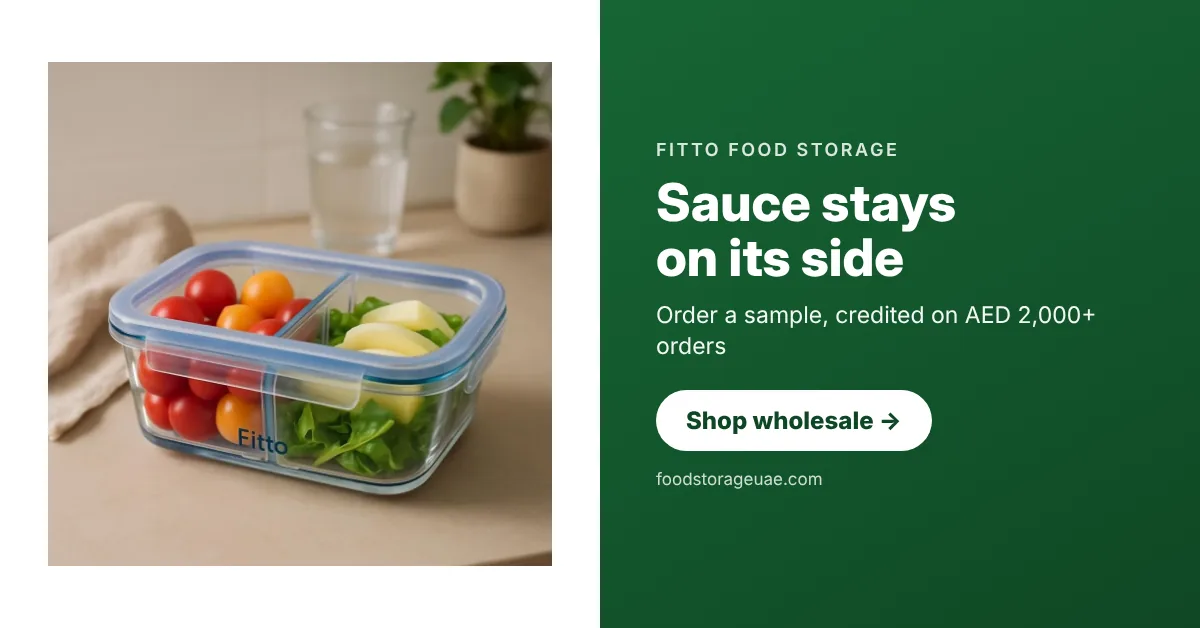
FITTO Trade Pick: Meal prep containers that seal, stack and reheat The 1,500 ml borosilicate glass meal prep container, the 1,200 ml glass container with full divider and the 1.4 L BPA-free microwave-safe container cover home, gym and delivery. Try one first: order a sample, credited on a bulk order of AED 2,000+ within 30 days.
The bottom line
Choose meal prep containers by the meal: 700 ml to 1.2 L for most lunches, a divider for sauces and a locking lid with a silicone seal. Use glass where you reheat and plastic where you carry. If you sell meals, keep sizes consistent so stacking, labelling and reorders stay simple.
Browse our wholesale food containers and jars and lunch boxes and bags, or request a quote for mixed cartons and regular supply. Wholesale prices start from 12 pieces, with free delivery over AED 300. Questions? WhatsApp +971 55 672 6947. FITTO Food Storage: fit for the way you store.
FAQ
What is the best size for meal prep containers?+
For most adults, 700 ml to 1.2 L holds a full lunch of rice or pasta, protein and vegetables. Choose 1–1.5 L for larger appetites or bulking plans. Add a few 300–500 ml containers for snacks, sauces and fruit, so you are not using a big box for a small portion.
Are glass meal prep containers better than plastic?+
Glass is better for reheating and resisting curry and tomato stains, and it lasts for years if handled carefully. BPA-free plastic is lighter, cheaper and survives drops, which suits gym bags and deliveries. Many people keep glass at home and plastic for carrying.
Can I put meal prep containers in the microwave?+
Yes, if the container is marked microwave-safe. Loosen or remove the lid so steam can escape, and stir halfway for even heating. Glass handles microwave heating well. Do not put plastic containers in a conventional oven, and avoid moving glass straight from the freezer to high heat.
How long do prepped meals last in the fridge?+
It depends on the food and how quickly it was cooled. Many food-safety authorities suggest eating cooked meals within a few days of refrigeration. Follow local guidance, keep the fridge at 5 °C or below and label every container with its cooking date.
Can I freeze meals in meal prep containers?+
Yes, if the container is labelled freezer-safe. Leave about 2 cm of space at the top, because liquids expand as they freeze. Cool food before freezing, and thaw glass containers in the fridge rather than on a hot surface, so the sudden change in temperature does not crack them.