Rice storage containers: how to choose capacity, seal and dispenser type
By FITTO Trade Desk · Last updated 29 October 2026
Choose a rice storage container by bag size first: as a rule of thumb, 1 kg of uncooked rice fills about 1.25 litres, so a 5 kg bag needs 7-10 L and a 10 kg bag needs about 13 L. Then pick a dispenser for daily portions or a sealed box for shelf storage.
Key takeaways
- Size the container to the bag you buy, with 10-20% headroom so the lid closes without pressing on the rice.
- A 10 L container holds roughly 7.5-8 kg of rice; a 10 kg bag needs a second, smaller container for the overflow.
- Dispensers suit families who cook rice daily; flip-lock boxes suit shelves and bulk stock.
- A firm seal, a dry spot and an empty-and-wipe routine between bags do more against weevils than any container feature.
- Keep full 10 L containers low; at 8 kg, they are heavy to lift from a high shelf.
In many UAE homes, rice is cooked daily and bought in 5 kg or 10 kg bags. An opened bag picks up humidity and smells and invites weevils, and losing half a bag of basmati costs more than a good container.
This guide is for families, cooks, restaurants and retailers choosing a rice storage container (علبة تخزين الأرز). At FITTO Food Storage, a wholesale food containers and jars supplier in the UAE, we supply rice dispensers, boxes and jars to homes, kitchens and shops, and these are the questions buyers ask us most.
What size rice storage container do you need?
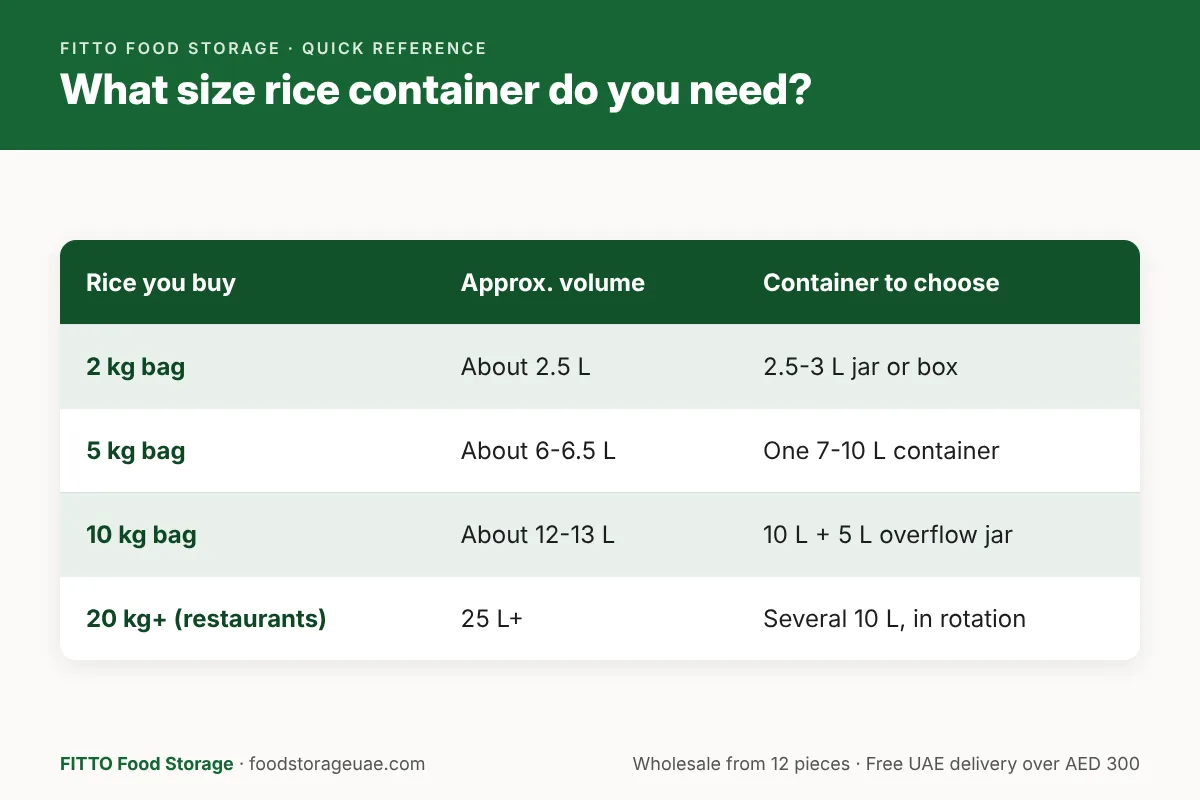
Match the container to the bag size you buy, then add headroom. As a rule of thumb, uncooked white rice weighs about 0.75-0.85 kg per litre, depending on the grain.
| Rice you buy | Approx. volume | Container to choose |
|---|---|---|
| 2 kg bag | About 2.5 L | 2.5-3 L jar or box |
| 5 kg bag | About 6-6.5 L | One 7-10 L container |
| 10 kg bag | About 12-13 L | 10 L container + 5 L jar for overflow |
| 20 kg+ (restaurants) | 25 L+ | Several 10 L containers, used in rotation |
Long-grain basmati is lighter per litre than short-grain rice, so it takes slightly more space.
Should you choose a rice dispenser or a storage box?
Choose a dispenser if you cook rice daily and want measured portions; choose a box if rice is stored on a shelf and scooped. Dispensers save time; boxes save space and cost less per litre.
| Type | FITTO example | Best for | Trade-off |
|---|---|---|---|
| Rotating dispenser | 10 L, 40 × 35 × 35 cm | Countertop, daily portions | Needs counter space |
| Front-spout bin with cup | 22 × 22 × 30 cm, stackable | Pantry corner, portioning | Check capacity before buying for a 10 kg bag |
| Flip-lock box | 10 L, 30 × 22 × 28 cm | Shelves, bulk stock | Needs a scoop |
| Large PET jar | 5,000 ml | Overflow, smaller households | Lid to open each time |
| Wall-mounted dispenser | 6 compartments | Lentils and grains in small amounts | Not for a full rice bag |
| Glass jar with bamboo lid | Various sizes | Display and small quantities | Heavier and breakable |
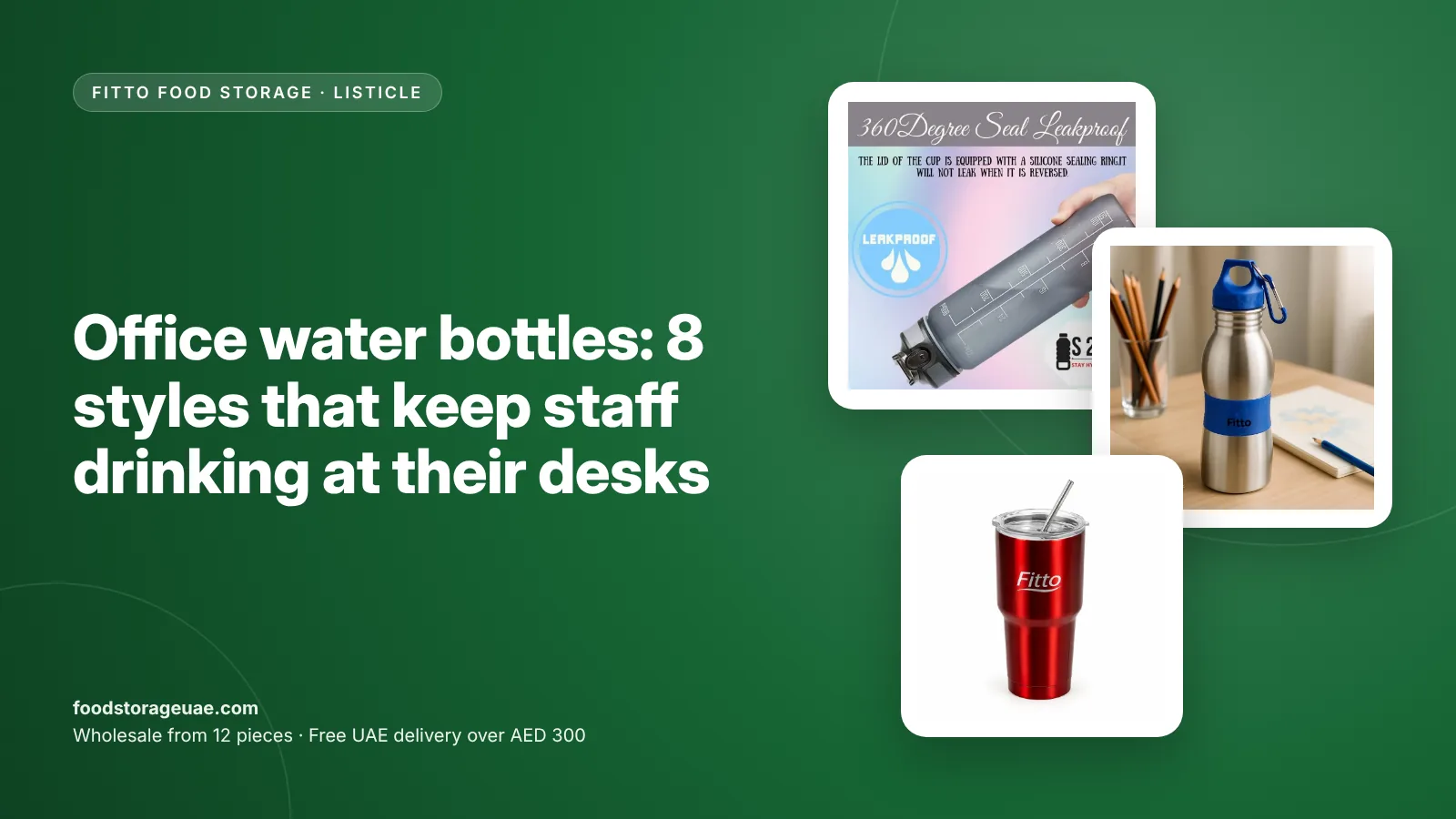
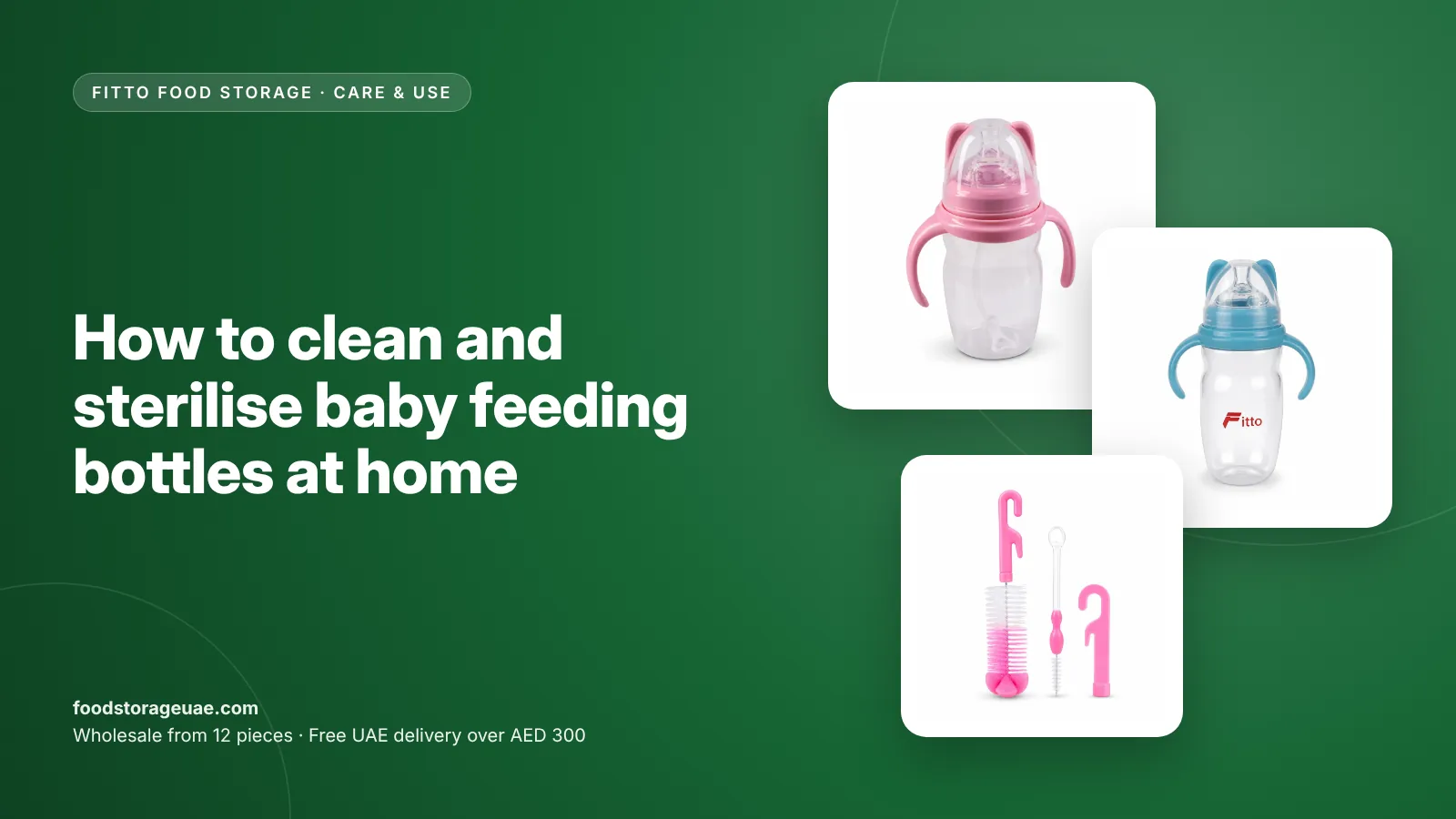
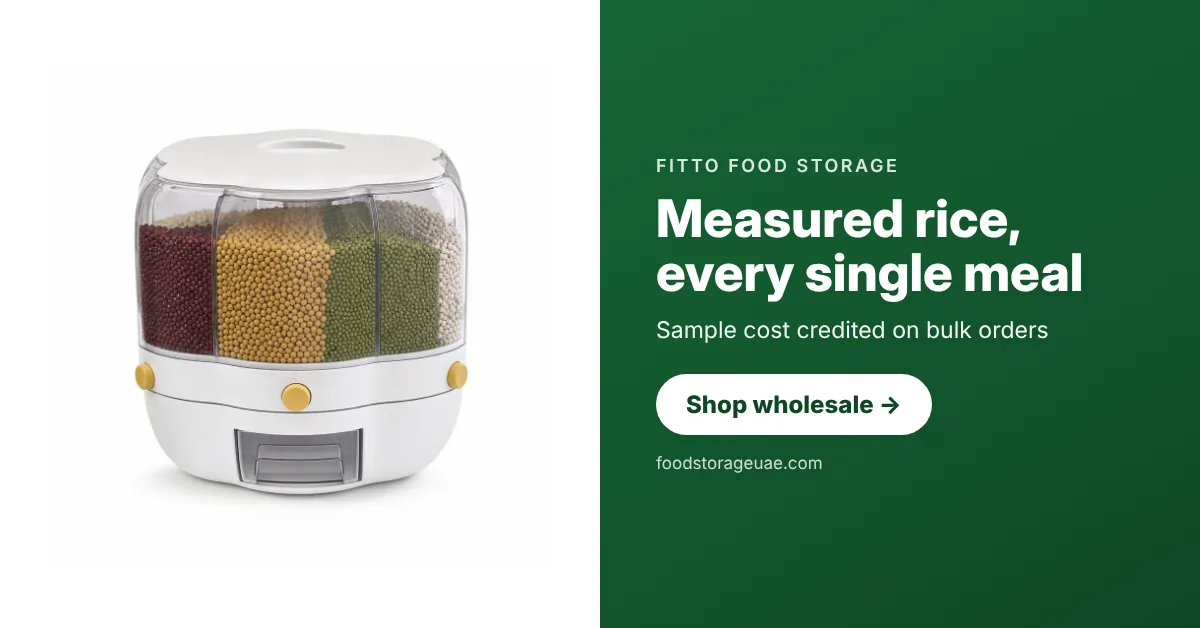
The FITTO rotating rice storage dispenser, 10 L sits on the counter and keeps rice accessible for daily cooking. The rice dispenser bin with front spout and dispensing cup is made of PP plastic and lets rice flow from a hatch near the base straight into the cup, so every portion is the same.
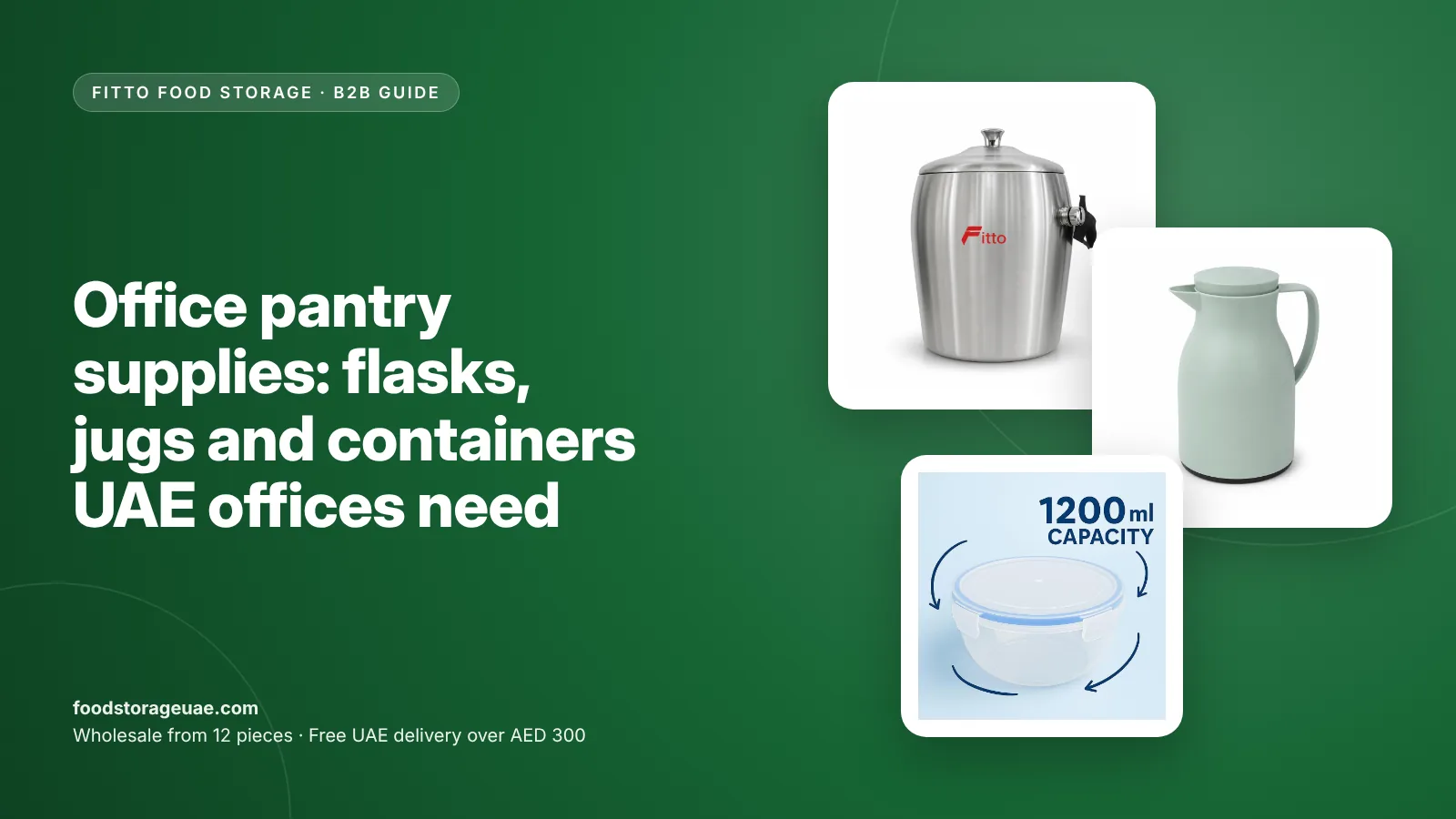
For shelf storage, the FITTO 10 L rice storage container with flip-lock lid has a clear body, so you can see the level without opening it. Our cereal dispenser buying guide covers smaller dispensers for oats, cereals and pulses.
How do you keep rice safe from insects and humidity?
Use an airtight rice container, store it somewhere cool and dry, and never pour new rice on top of old. The seal matters, but the routine around it matters more.
- Inspect the new bag for holes, webbing or live insects before you open it.
- Empty the container fully, wipe it with a dry cloth and let it air-dry if you washed it.
- Decant the new rice and close the lid straight away.
- Label the container with the date the bag was opened.
- Check the rice every few weeks, especially during humid months.
As a rule of thumb, some cooks freeze a new bag of rice for a few days before decanting. It is a common home method against insect eggs that may already be in the grain. Let the rice return to room temperature before you open it, so condensation does not form.
Brown rice contains natural oils and keeps for months rather than years. Buy it in smaller amounts and store it in a smaller container, or in the fridge if the pack recommends it. For airtight lids and gasket types, see our airtight food containers guide.
Where should you place a rice container in the kitchen?
Keep it away from heat, steam and sunlight, and low enough to lift safely. Heat and moisture shorten rice's shelf life and can draw insects.
- Avoid spots beside the oven, above the dishwasher, under the sink or by a sunny window.
- Store full 10 L containers on a low shelf or the counter; at around 8 kg they are heavy to lift.
- Leave clearance under a dispenser spout for the cup or bowl.
- Keep the dispenser where you cook, so portioning becomes part of the routine.
A rice storage box in a UAE kitchen can get warm when the air-conditioning is off during summer holidays. If you travel for several weeks, finish the open rice first or store a smaller amount in the fridge. Our guide to food storage safety in UAE heat explains why.
What do restaurants and retailers need?
Restaurants need several labelled containers used in rotation; retailers need a clear size ladder. Both benefit from transparent bodies that show the level at a glance.
Restaurant kitchens should store rice off the floor, label each container with its fill date and use the oldest first. Several 10 L flip-lock containers are easier to lift, clean and rotate than one large bin.
Retailers can cover most shoppers with three options: a 10 L dispenser for daily cooks, a 10 L flip-lock box for shelves and a 5,000 ml PET storage jar for smaller households or overflow. Demand tends to rise before Ramadan and when families move house.
FITTO Trade Pick: Rice storage that sells all year Stock the 10 L rotating rice dispenser for daily cooks and the 10 L flip-lock rice container for pantry shelves. Order a sample of each at the single-piece price; its cost is credited on a bulk order of AED 2,000+ within 30 days.
The bottom line
Size the rice storage container to your bag with 10-20% headroom, pick a dispenser for daily portions or a box for shelf storage, and keep it cool, dry and sealed. Empty and wipe it before each new bag.
Browse our food containers and jars for rice dispensers, boxes and jars, with free delivery to all seven emirates over AED 300. Request a quote, order samples or WhatsApp +971 55 672 6947. FITTO Food Storage: fit for the way you store.
FAQ
How much rice does a 10 L container hold?+
As a rule of thumb, a 10 L container holds about 7.5-8 kg of uncooked white rice, depending on the grain. A full 10 kg bag will not fit in one 10 L container, so keep a smaller jar for the overflow.
Is a rice dispenser better than a normal container?+
A dispenser is better for daily cooking because it portions rice without scooping and keeps hands out of the stock. A plain container is cheaper, stacks on shelves and suits bulk or occasional use. Many households use both: a dispenser on the counter and a box for the rest of the bag.
How do I keep weevils out of rice?+
Inspect each bag before opening, decant it into a container that closes firmly, and store it somewhere cool and dry. Never pour new rice on top of old; empty and wipe the container first. If you find insects, discard the affected rice and clean the container and cupboard thoroughly.
Can I store a rice bag without a container?+
You can for a short time, but an opened bag lets in humidity, smells and insects. A clip seal helps for a few days. For longer storage, decant the rice into a rigid container with a firm lid. A fabric or insulated bag is useful for carrying food but is not a substitute for a sealed pantry container.
Should I wash a rice container between bags?+
Yes, empty it fully and wipe out dust and broken grains before each refill. If you wash it with water, let it dry completely before adding rice, because any moisture left inside can cause clumping and mould. Check the product label for whether parts are dishwasher-safe.