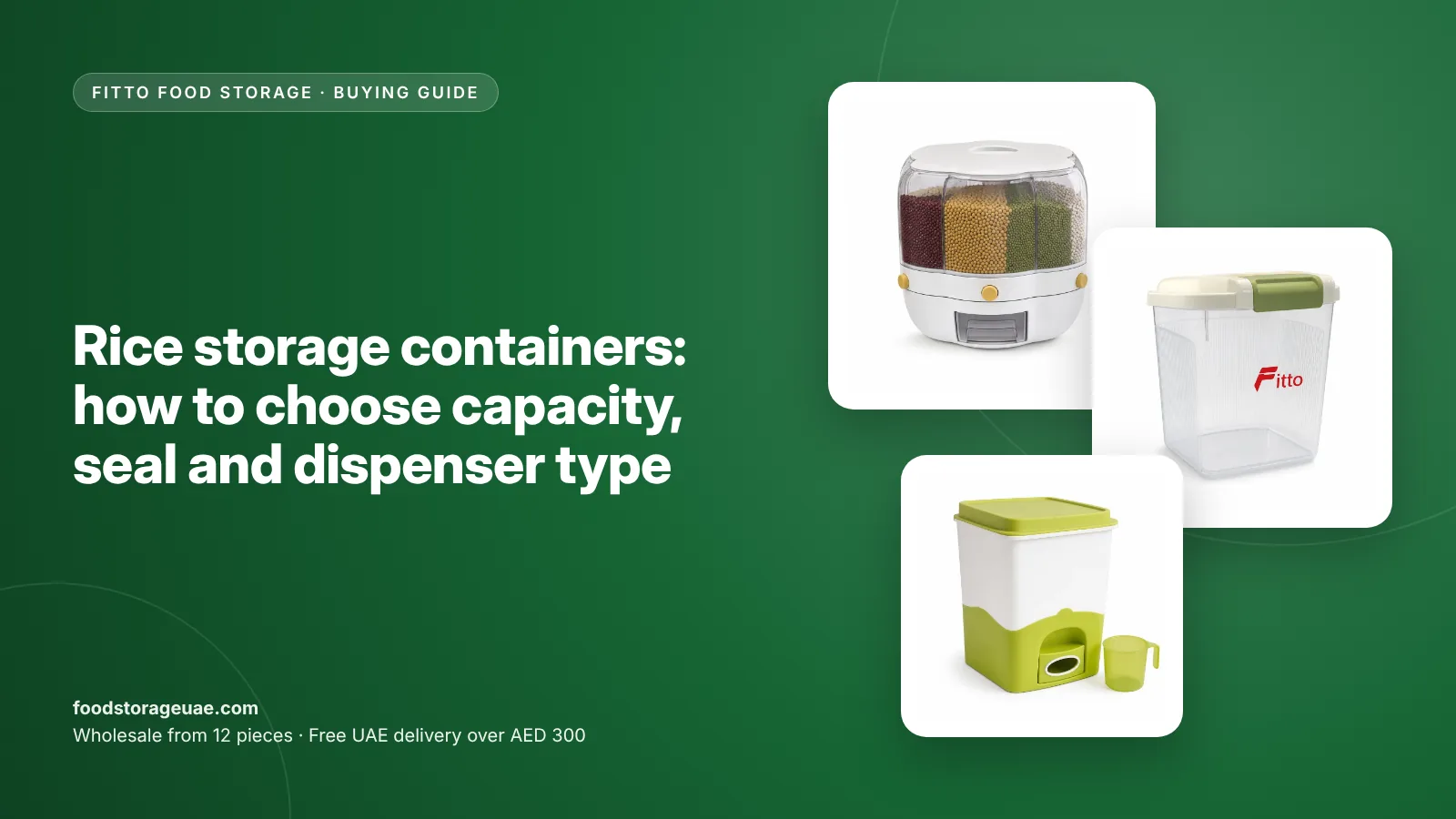
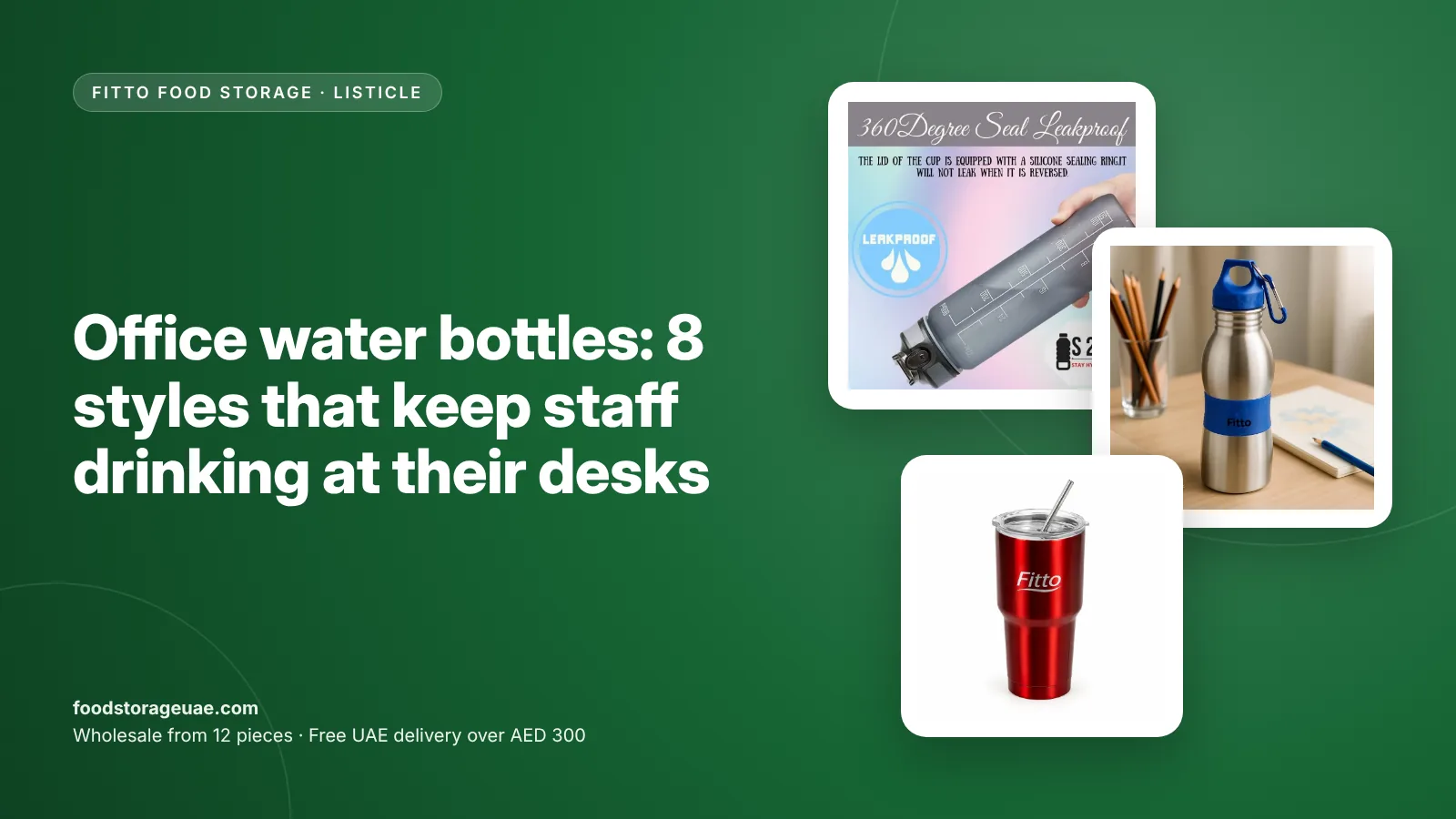
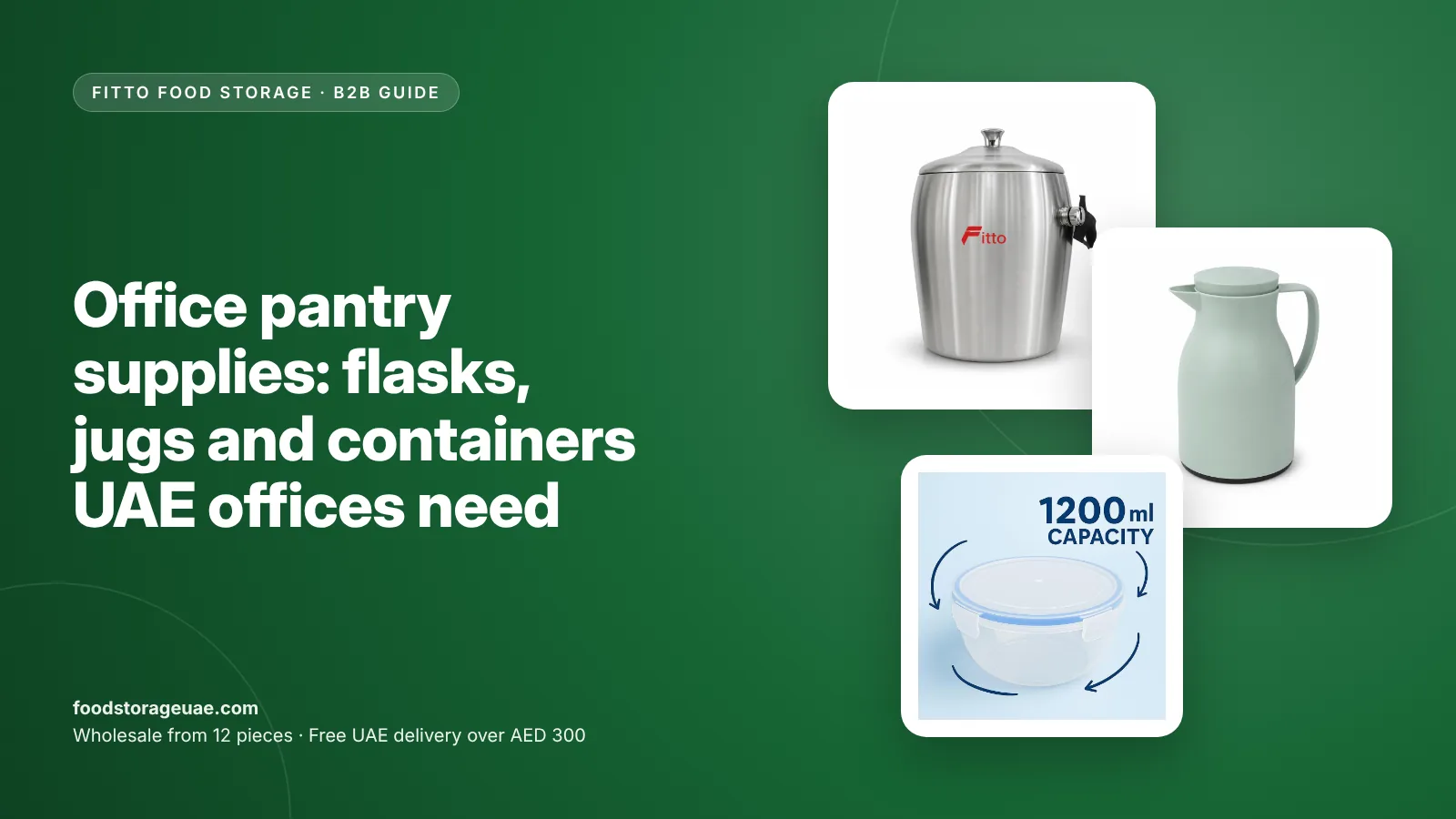
Food storage safety: how to keep food fresh in the UAE heat
By FITTO Trade Desk · Last updated 29 October 2026
Food storage safety in the UAE comes down to four habits: keep the fridge at 5°C or below and the freezer at −18°C, get cooked food into the fridge within two hours (one hour on hot days), store it in clean airtight containers, and label everything with a date. Humidity is the second enemy, so seal dry goods too.
Key takeaways
- Keep the fridge at 5°C or below and the freezer at −18°C or colder; a cheap fridge thermometer tells you if they are.
- Refrigerate cooked food within two hours, or within one hour when the air is above 32°C.
- Split large batches into shallow containers so they cool quickly.
- Use airtight containers for dry goods as well as leftovers; humidity spoils rice, flour and spices.
- Label each container with contents and date, and use the oldest first.
A pot of biryani left on the hob through a long afternoon, a bag of groceries forgotten in the car, a jar of spices that clumps by August. In UAE kitchens, heat and humidity turn small storage slips into wasted food, upset stomachs and, for cafés, failed inspections. This guide sets out the temperatures, times, containers and habits that keep food fresh, in general food-safety terms.
It is written for households, cafés, school canteens and caterers. At FITTO Food Storage, a wholesale food containers and jars supplier in the UAE, we supply the food storage containers (علب حفظ الطعام) these habits depend on, so we focus on practical steps rather than theory. For medical questions about food poisoning or allergies, speak to a doctor.
Why does UAE heat make food storage harder?
Bacteria multiply fastest between about 5°C and 60°C, and a UAE kitchen sits inside that range most of the year. Summer humidity on the coast also pushes moisture into dry goods, which leads to clumping, mould and pantry pests.
Three local factors make the difference:
- Warm rooms. Kitchens with a hob, oven and dishwasher running are often the warmest rooms in a villa or apartment, even with air conditioning.
- Hot cars. A parked car in summer gets far hotter than the outside air, so chilled shopping warms up quickly on the drive home.
- Busy fridges. Large family meals, Ramadan iftars and weekend gatherings fill fridges to the door, which blocks the cold air that keeps food chilled.
None of this needs special equipment to fix. It needs a working thermometer, the right containers and a few routines that everyone in the kitchen follows.
What temperatures keep food safe?
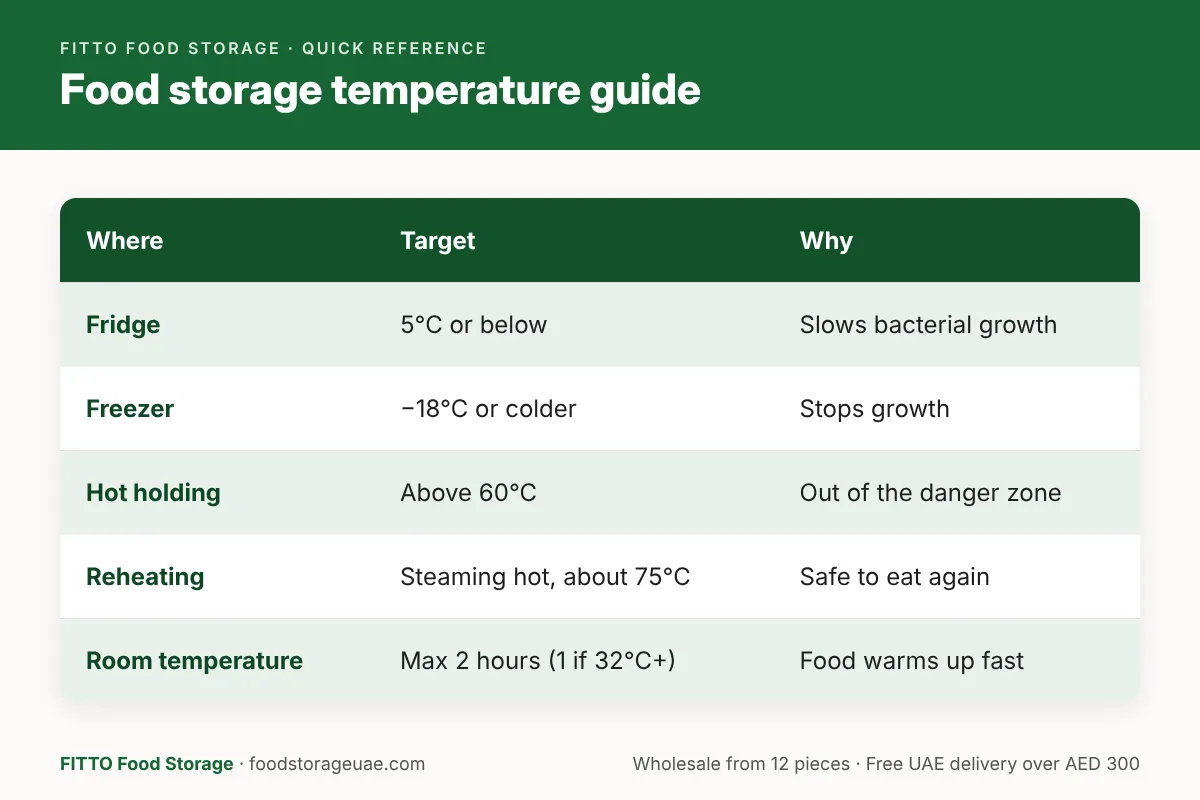
Keep chilled food at 5°C or below, frozen food at −18°C or colder, and hot food above 60°C until it is served. Food left between those points for long periods is where problems start.
| Where | Target temperature | Why it matters |
|---|---|---|
| Fridge | 5°C or below | Slows bacterial growth in chilled food |
| Freezer | −18°C or colder | Stops growth; quality still drops over time |
| Hot holding (buffets, hot pots) | Above 60°C | Keeps cooked food out of the danger zone |
| Reheating | Steaming hot throughout, about 75°C at the centre | Brings leftovers back to a safe temperature |
| Room temperature | Avoid more than 2 hours (1 hour above 32°C) | Food warms into the danger zone |
These figures follow widely used food-safety guidance. Some authorities use 4°C as the fridge limit or 63°C for hot holding, so cafés and caterers should check the exact rules of their emirate.
A fridge thermometer costs little and settles arguments. Put it on the middle shelf and check it in the afternoon, when the kitchen is warmest. If it reads above 5°C, turn the dial colder, clear space for air to move and check the door seal.
How long do leftovers keep in the fridge and freezer?
As general guidance, cooked leftovers keep 3–4 days in the fridge, and cooked rice only about one day. Frozen leftovers stay safe longer but are best eaten within 2–3 months for quality.
| Food | Fridge (5°C or below) | Freezer (−18°C) |
|---|---|---|
| Cooked leftovers (curries, stews, pasta) | 3–4 days | 2–3 months for best quality |
| Cooked rice | About 1 day; reheat only once | Freeze promptly if keeping longer |
| Soups and sauces | 3–4 days | 2–3 months for best quality |
| Raw chicken and minced meat | 1–2 days | Several months; follow the pack |
| Hard-boiled eggs | Up to 1 week | Not recommended |
These timings are drawn from general guidance such as the US Department of Agriculture's FoodKeeper and the UK NHS advice on rice. Always follow the use-by date on packaged food. If something smells or looks wrong, throw it away; when in doubt, do not taste it to check.
How should you cool and store cooked food?
Portion cooked food into shallow containers, let the steam settle for a short while, then refrigerate it within two hours. Large pots cool too slowly in the centre, even inside a fridge.
- Portion. Spoon food into shallow containers no deeper than about 5 cm, so heat escapes fast.
- Vent. Leave lids slightly open until the steam stops, but do not leave food out for hours.
- Chill. Move containers into the fridge within two hours of cooking, or within one hour on a hot day.
- Seal and label. Close lids fully once cool, then write the contents and date on a label.
- Space. Leave gaps between containers so cold air can circulate.
- Reheat once. Reheat only what you will eat, until it is steaming hot all the way through.
Cooked rice deserves extra care. The NHS advises cooling it within an hour and eating it within a day, because spores of a common bacterium can survive cooking and grow in warm rice.
For batch cooks, our meal prep containers guide covers portion sizes and reheating.
Which containers keep food freshest in humid kitchens?
Airtight containers with a sealed lid work best, because they keep moisture, smells and pests out and stop fridge food drying out. Choose the material by the job: glass for reheating and acidic food, polypropylene (PP) for light everyday use, stainless steel for durability.
| Job | Best fit | Watch out for |
|---|---|---|
| Fridge leftovers you will reheat | Glass with a locking lid | Weight; avoid sudden temperature changes |
| Freezer portions of soup or sauce | Freezer-safe PP container | Leave space at the top for expansion |
| Packed lunches and takeaway | Lightweight, leak-resistant PP | Replace when scratched or warped |
| Rice, flour, sugar, spices | Airtight jars or boxes with seals | Dry containers fully before refilling |
| Strong-smelling food (garlic, curry) | Glass, which does not hold smells | Plastic can stain with turmeric |
Look for the words "airtight", "freezer safe" or "microwave safe" on the product before using a container that way. Avoid reusing thin takeaway tubs for long-term storage; they are made for single use and warp with repeated washing and heating. For a deeper comparison, see glass vs plastic food containers and our guide to airtight food containers.
How do you store dry goods against humidity and pests?
Decant rice, flour, pulses, spices and snacks from opened packets into airtight containers, and keep them in a cool cupboard away from the hob, oven and dishwasher. Moisture and warmth are what attract weevils and mould.
- Decant on the day you open. A rolled-down packet lets humid air and insects in.
- Dry before refilling. Wash, then dry containers completely, as a few drops of water can make flour clump.
- Mind the location. Cupboards on an outside wall or above the oven run warmer. Choose an inside wall where possible.
- Check before long trips. If the home will be closed in summer with the air conditioning off, use up perishables, seal dry goods and clear the fridge of anything that will not keep.
Clear containers let you spot clumping, insects or damp at a glance, before the problem spreads to the whole shelf.
How do you keep food safe between the shop, the car and home?
Make the supermarket your last stop, carry chilled and frozen items in an insulated cooler bag, and put them in the fridge first when you get home. A summer car heats up far faster than most people expect.
Pack cold items together, as they keep each other cool. On long drives or beach and desert trips, add ice packs and keep the bag in the shade, not the boot in direct sun. Unpack chilled food before dry goods.
How should packed lunches be stored in UAE heat?
Use an insulated lunch bag with an ice pack for anything perishable, and keep the bag out of direct sun. If a fridge is available at school or work, use it.
Chill the food overnight in its container, so it starts the day cold. Pack a frozen water bottle as a second ice pack. Throw away perishable leftovers that have been out of the fridge all day rather than bringing them home for later.
How do labelling and rotation reduce waste?
Label every container with what is inside and the date it was made or opened, then use the oldest first. This "first in, first out" habit cuts waste at home and is standard practice in professional kitchens.
A roll of masking tape and a marker is enough at home. Put new food behind older food on each shelf. Once a week, clear anything past its safe time and wipe the shelves.
What should cafés, canteens and caterers add?
Professional kitchens need written routines on top of good habits: temperature logs, dated labels, separate storage for raw and ready-to-eat food, and staff who know the rules. Your emirate's food-safety authority sets the exact requirements.
- Log temperatures of fridges, freezers and hot-holding units at set times each day.
- Separate raw and cooked. Store raw meat and fish below ready-to-eat food, in sealed containers.
- Standardise containers. Matching sizes stack neatly, make portions consistent and simplify labelling.
- Check the rules. Dubai Municipality, the Abu Dhabi Agriculture and Food Safety Authority (ADAFSA) and other municipalities publish requirements and training for food businesses.
Our food storage containers trade guide explains materials, seal types and sizes for a professional range.
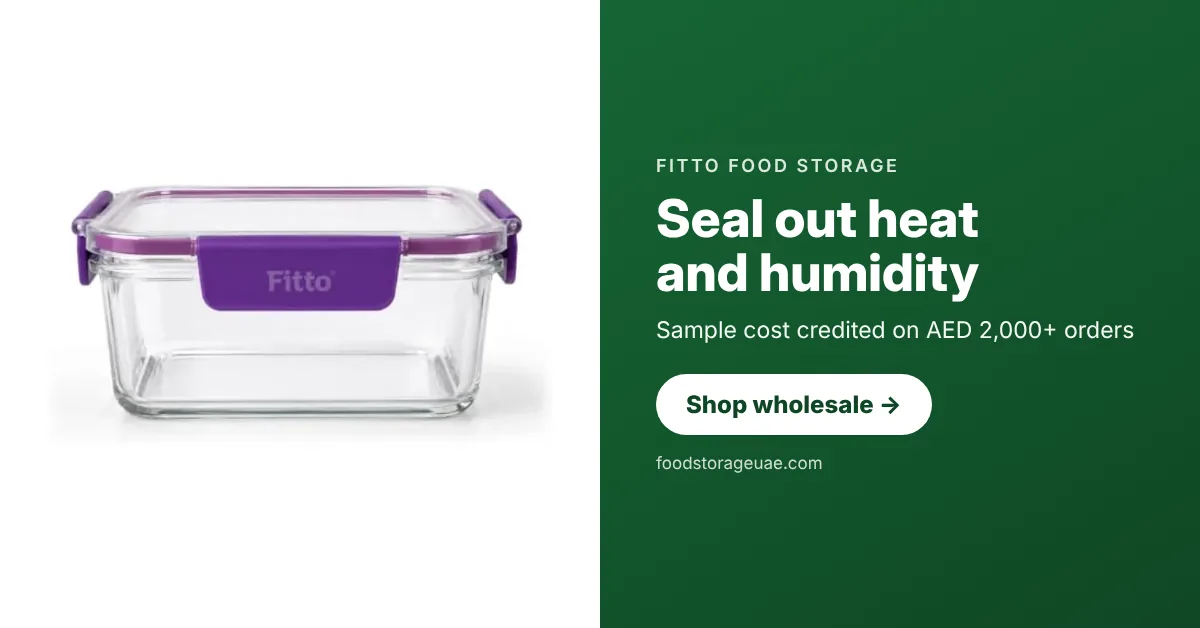
FITTO Trade Pick: Containers that keep up with UAE heat Stock the 800 ml airtight PP container for fridge leftovers, the 2300 ml freezer-safe container for soups and batch cooking, the 800 ml glass container with 4-side locking clips for reheating, and the insulated cooler tote for the drive home. Order a sample of each to test the seals; its cost is credited on a bulk order of AED 2,000+ within 30 days.
The bottom line
In UAE heat, food stays fresh when it spends as little time as possible between 5°C and 60°C. Check your fridge temperature, cool food fast in shallow airtight containers, seal dry goods against humidity and label everything with a date.
Browse wholesale food containers and jars and lunch boxes and bags, or request a quote for a mixed range. Want to check a seal first? Order a sample or WhatsApp us on +971 55 672 6947. Wholesale prices start from 12 pieces, and delivery is free across all seven emirates on orders over AED 300. FITTO Food Storage: fit for the way you store.
FAQ
Can I put hot food straight into the fridge?+
Yes, warm food can go into the fridge once the steam has settled; you do not need to wait until it reaches room temperature. Split large amounts into shallow containers first, so the centre cools quickly and the rest of the fridge stays cold. Leaving food on the counter for hours is the bigger risk.
Why does my rice or flour get insects in summer?+
Pantry insects such as weevils thrive in warm, humid conditions and get in through open packets or tiny gaps. Decant dry goods into airtight containers as soon as you open them, keep them in a cool cupboard away from the oven and check stored grains every few weeks.
Is it safe to freeze food in plastic containers?+
Yes, if the container is labelled freezer safe. Polypropylene containers made for freezing handle low temperatures well. Leave a little space at the top, because liquids expand as they freeze, and let frozen containers thaw in the fridge before heating, so the plastic is not stressed.
How can I tell if my fridge is cold enough?+
Place a fridge thermometer on the middle shelf and read it after the door has been closed for a while, ideally in the afternoon. It should show 5°C or below. If it reads higher, set the dial colder, remove some items so air can circulate and check the door seal for gaps.
Do glass containers keep food fresh longer than plastic?+
The seal matters more than the material. Glass and plastic containers with airtight lids both protect food well. Glass does not absorb smells or stains and suits reheating, while plastic is lighter and less likely to break, which suits lunch boxes and children.