Cereal dispensers: how to choose for home pantries and hotel buffets
By FITTO Trade Desk · Last updated 29 October 2026
The right cereal dispenser depends on who serves and where it sits: homes do well with a 2 L airtight container with a pouring spout or one sealed countertop unit. Hotel buffets need clear, easy-refill countertop dispensers that portion cleanly. Small kitchens gain most from wall-mounted or rotating multi-compartment dispensers that free up the counter.
Key takeaways
- Pick by space and traffic: countertop for buffets, wall-mounted or rotating for tight kitchens, a pour-spout container for most homes.
- As a rule of thumb, 1 litre holds only about 120 g of cornflakes but around 450 g of granola, so size by the cereal, not the box.
- A good seal matters in the UAE, where humid air can soften flakes within days.
- Never top up old cereal with new: empty, wash, dry, then refill.
Open cereal boxes go stale fast in a humid kitchen, and a buffet scoop invites spills and hygiene complaints. Every soft batch thrown away costs money.
This guide settles which dispenser type, size and features fit your space, and it is written for households, hotels, serviced apartments and cafés across the UAE. At FITTO Food Storage, a wholesale food containers and jars supplier in the UAE, cereal and dry-food dispensers (موزع حبوب) are a regular question from both home and hospitality buyers.
What does a cereal dispenser do that a box or jar does not?
A dispenser keeps dry food sealed and lets people take a portion without touching the rest. That protects freshness and hygiene together.
A box flap rarely reseals properly, and a plain jar needs a scoop that every hand touches. A dispenser keeps food covered until it leaves through a spout, knob, drum or hatch. The trade-off is more parts to clean, so choose one you can take apart and dry fully.
Countertop, wall-mounted or rotating: which cereal dispenser suits you?
Countertop dispensers suit buffets, wall-mounted units suit small kitchens and staff pantries, and rotating units suit homes storing several dry foods in one spot. Pour-spout containers are the cheap, easy-to-wash middle ground.
| Type | Portion control | Cleaning | Footprint | Best for |
|---|---|---|---|---|
| Countertop dispenser | Good: small, repeatable portions | Moderate: canister, outlet and seal come apart | Needs counter depth | Hotel and café buffets, busy family breakfasts |
| Wall-mounted multi-compartment | Good: one compartment per food | Moderate: wipe-clean, needs a reach | Frees the counter; needs a solid wall | Small kitchens, staff pantries, serviced apartments |
| Rotating drum or barrel | Good for rice and grains | Moderate: empty fully to wash | Larger unit for counter or shelf | Families storing rice and several staples |
| Airtight container with pour spout | Fair: you control the pour | Easy: few parts, wide opening | Fits a cupboard shelf | Most homes, one cereal, flour |
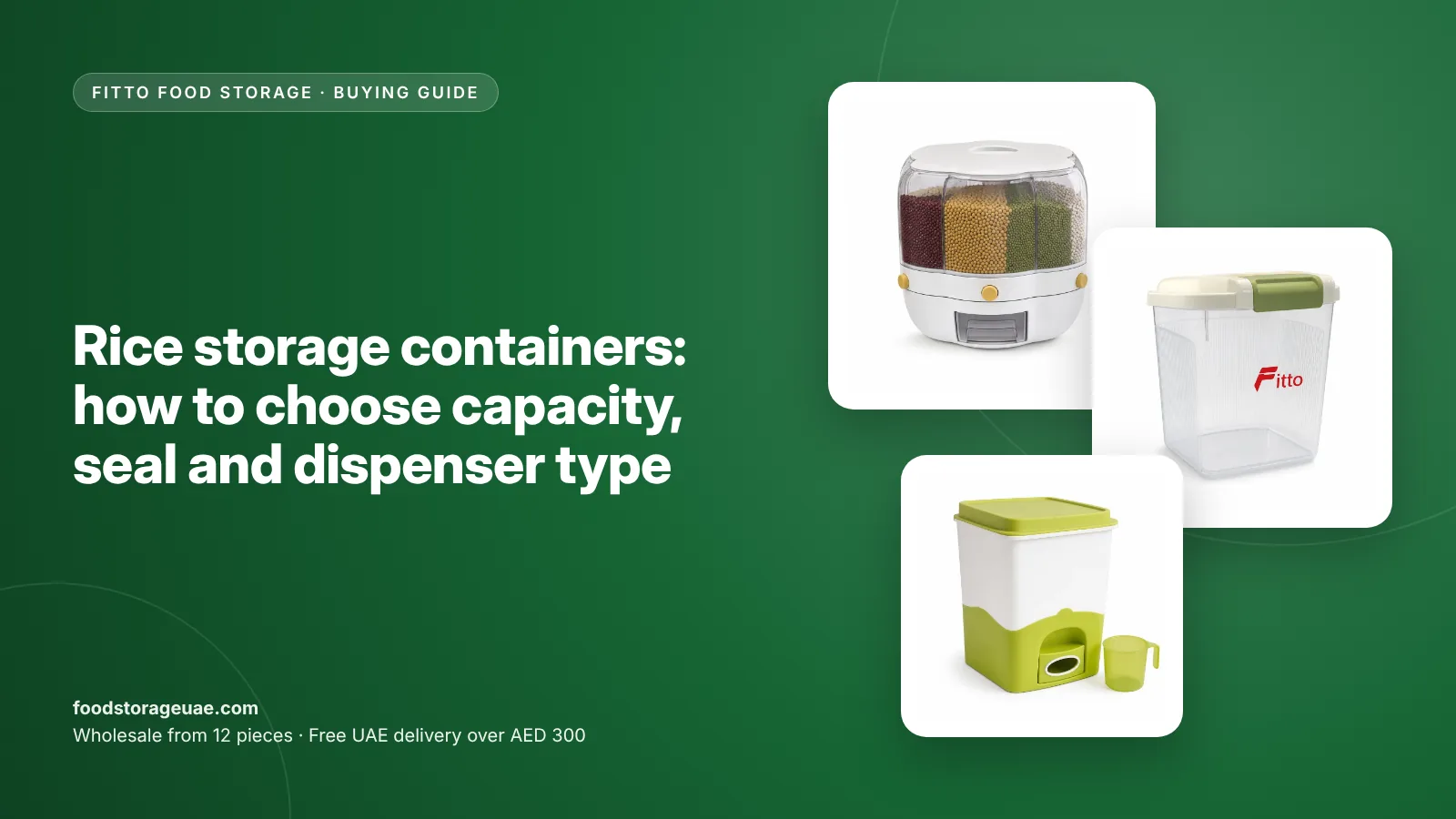
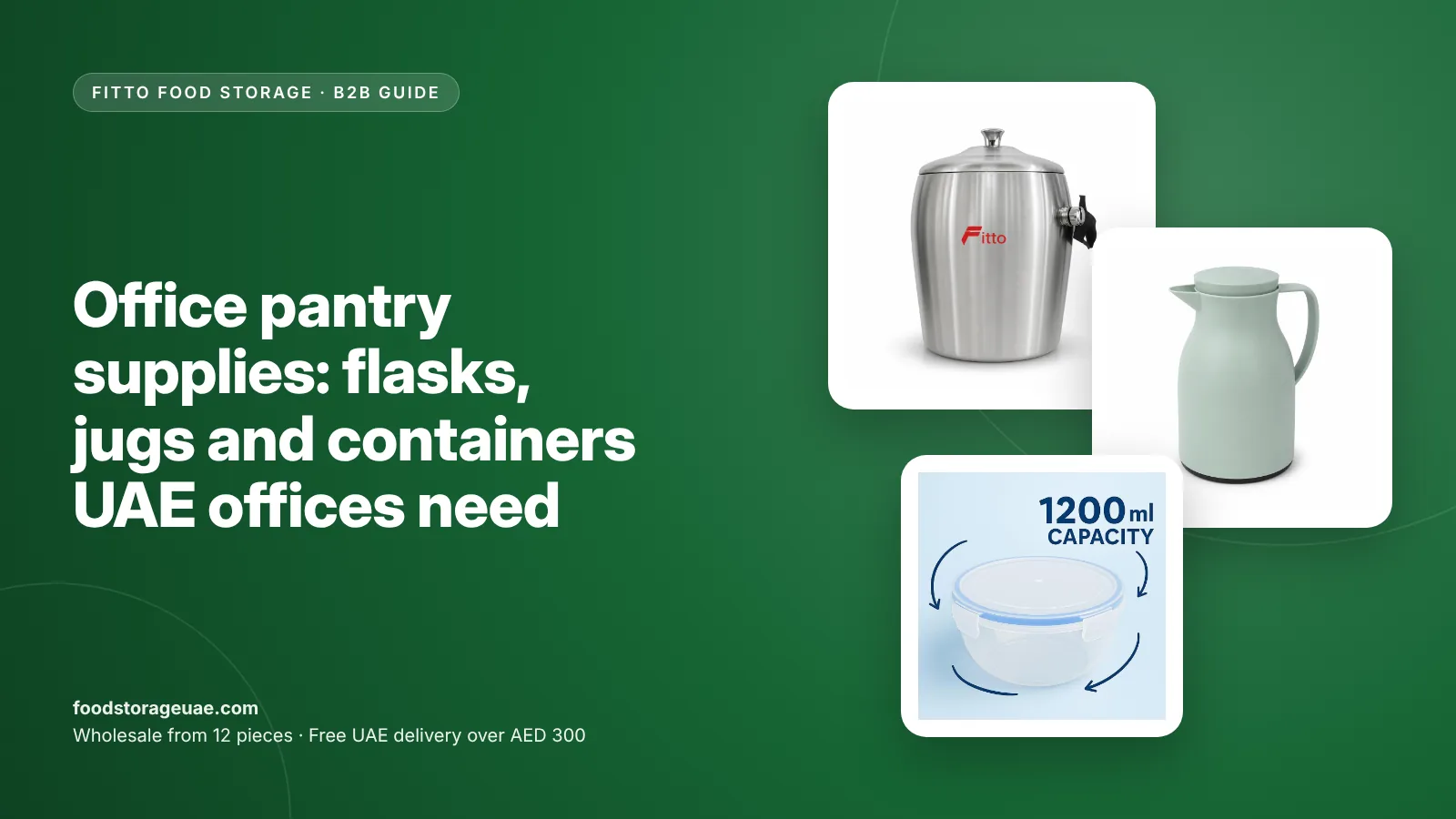
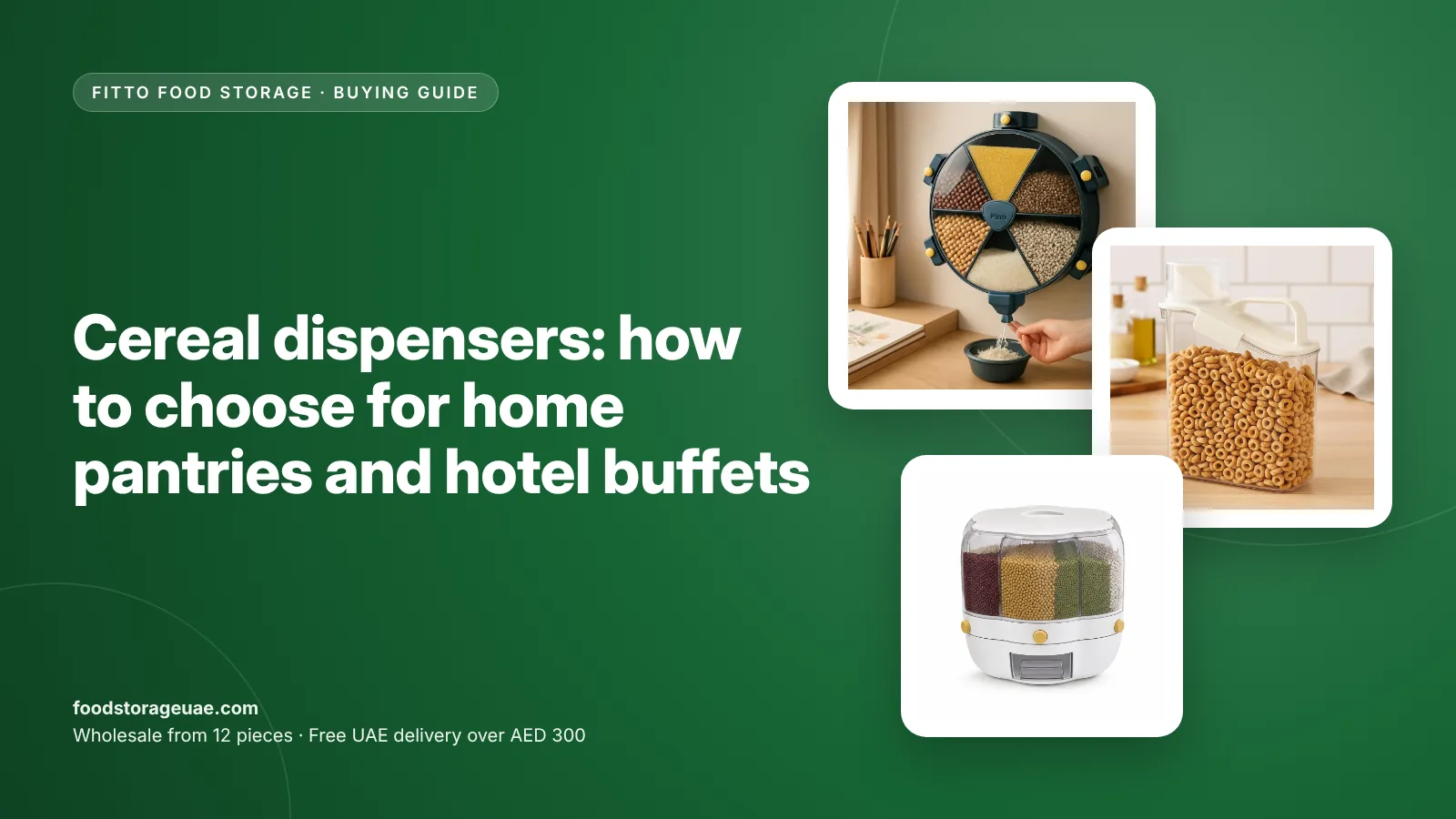
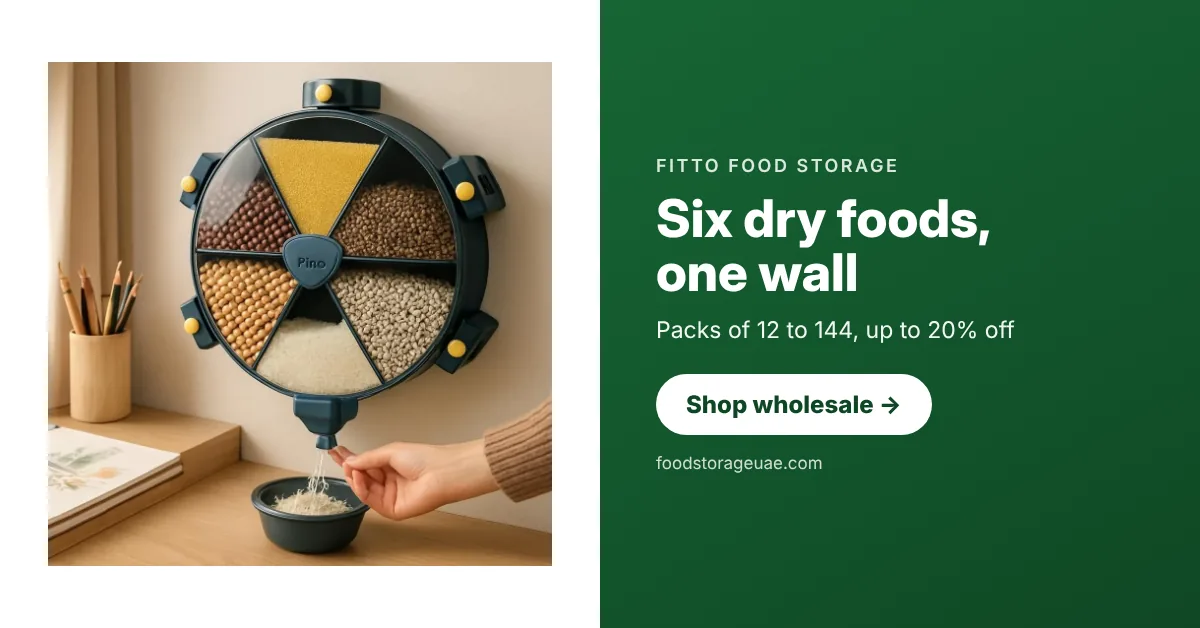
The FITTO wall-mounted rotatable grain dispenser has six sealed compartments that rotate, so cereal, oats, rice and nuts sit within one arm's reach. The FITTO rotating rice storage dispenser, 10 L measures about 40 x 35 x 35 cm, so it needs a deep shelf or a clear corner of the counter.
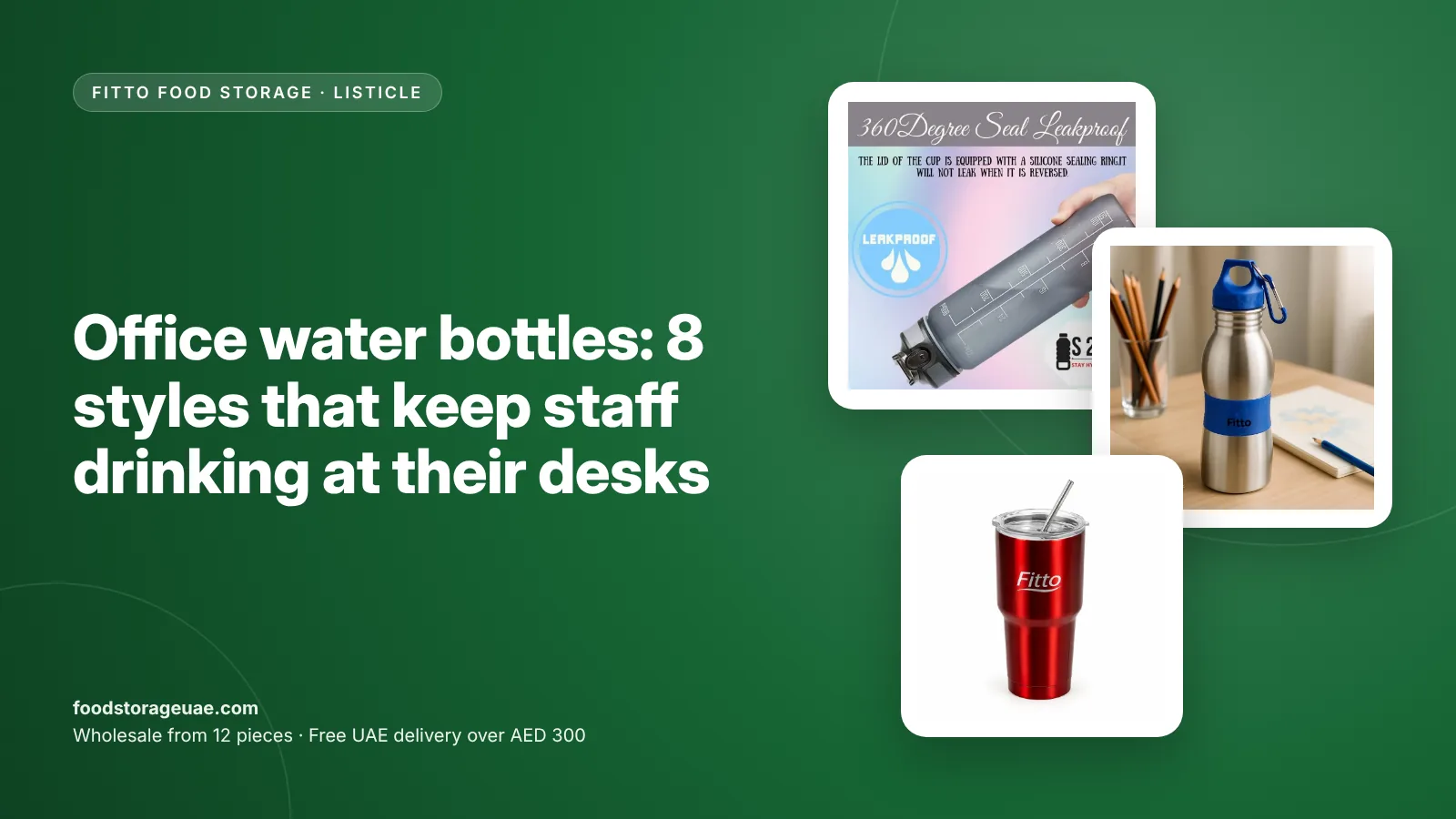
For one cereal, the FITTO 2 L airtight cereal container has a silicone seal, a large pouring spout and a measuring cup. The orange and clear dry food cereal dispenser is a sealed countertop unit with a wide top opening for refills.
How much capacity do you need?
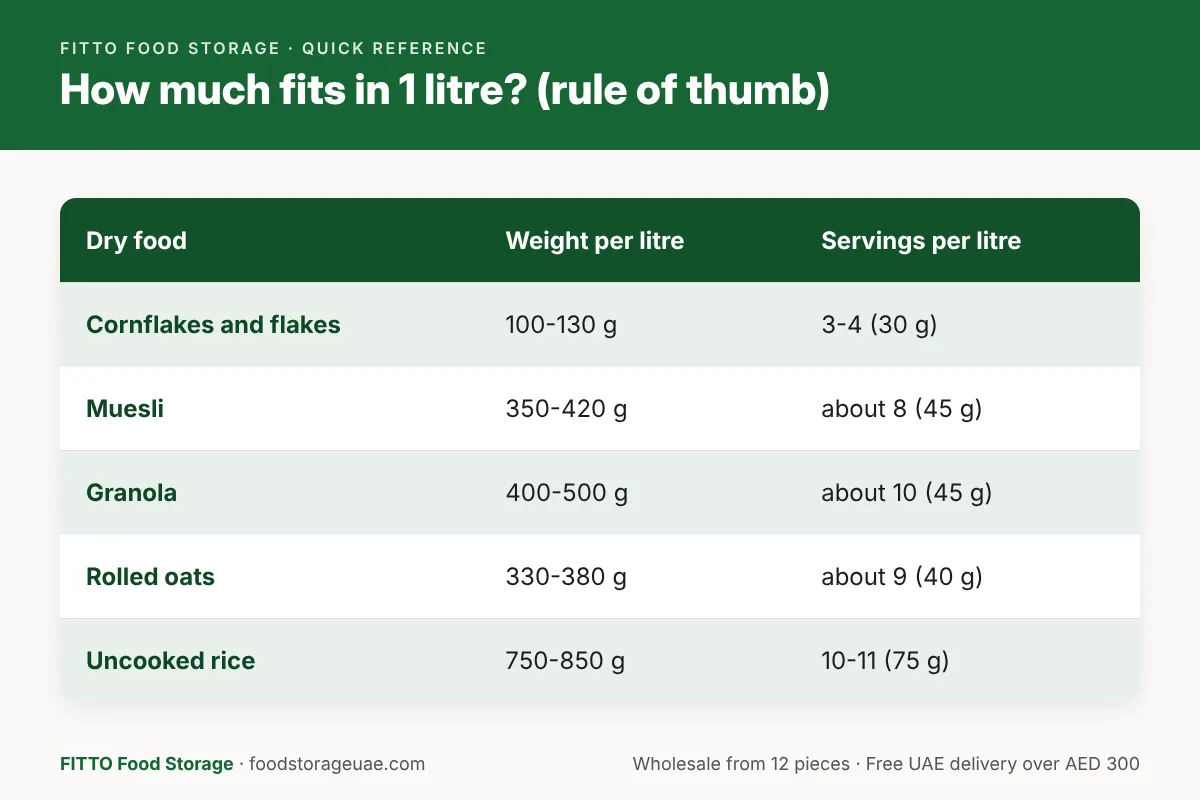
Size a dispenser by weight per litre and servings per day, not by the number of boxes. Light flakes take up far more space than dense granola, oats or rice.
These are rules of thumb from typical cup weights and pack servings; check your own label.
| Dry food | Approx. weight per litre | Typical serving | Servings per litre |
|---|---|---|---|
| Cornflakes and other flakes | 100-130 g | 30 g | 3-4 |
| Muesli | 350-420 g | 45 g | about 8 |
| Granola | 400-500 g | 45 g | about 10 |
| Rolled oats | 330-380 g | 40 g | about 9 |
| Uncooked rice | 750-850 g | 75 g | 10-11 |
A family of four eating 30 g of flakes each uses about a litre a day, so a 2 L container covers two breakfasts. The same container holds nearly three weeks of granola for one person.
A buffet serving about 60 bowls of flakes needs 15-20 litres. Two or three dispensers with planned refills beat one giant canister that sits half-full for days.
What should hotel and café buffets look for?
Buffets need clear canisters, a controlled portion per turn and parts staff can wash and dry between services. Looks matter too, as guests face it all morning.
- Portion per turn: a knob or lever releasing a small, repeatable amount cuts waste on light flakes.
- Clear body: staff see levels from across the room and refill in time.
- Stable base: the unit must not tip when a guest turns the knob hard.
- Hand stripdown: parts that come apart without tools actually get cleaned.
- Labels: a card beside each canister with the cereal name and allergens such as nuts, gluten and milk.
Keep dispensers away from coffee machines, steam from hot dishes and direct sun, which soften cereal and fog clear canisters.
For the rest of the kitchen behind the buffet, see our restaurant food storage containers kit list.
Which features matter for home pantries?
At home, prioritise an airtight seal, a size that matches how fast you eat the food and a shape that fits your shelf.
- Seal: look for a silicone gasket or locking lid; our guide to airtight food containers shows how to test one.
- Shelf height: measure the gap before ordering a tall dispenser.
- Rice and grains: a rotating or front-spout bin saves lifting sacks; as a rule of thumb, 10 L holds about 8 kg of rice.
- Wall mounting: use suitable plugs in solid walls and cavity fixings on plasterboard.
For the full shelf-by-shelf list, see our pantry storage essentials.
FITTO Trade Pick: Dispensers for compact kitchens and breakfast rooms Pair the wall-mounted rotatable grain dispenser for small kitchens and staff pantries with the 2 L airtight cereal container for everyday shelves. Both come in packs of 12 to 144 pieces, with up to 20% off per piece on the largest pack.
How do you clean and refill a cereal dispenser?
Empty the canister, wash and dry every part, then refill; never pour new cereal on top of old. Topping up leaves stale crumbs at the bottom that never get used.
- Remove the remaining cereal and take the canister, lid, seal and outlet apart.
- Wash in warm soapy water, with a bottle brush for the outlet.
- Air-dry every part fully, ideally overnight; trapped moisture causes soft cereal.
- Reassemble, check the seal sits flat, then refill and date the batch.
As a rule of thumb, clean buffet canisters at the end of each service day and home containers each time they empty. Check care guidance before using a dishwasher.
The bottom line
Choose a cereal dispenser by space and traffic, then size it by weight per litre and how fast the food is eaten. Keep it sealed, away from steam, and clean it fully before each refill.
Browse our wholesale food containers and jars. Request a quote for a hotel, café or shop order, order samples to test in your own kitchen, or WhatsApp +971 55 672 6947. Delivery is free to all seven emirates on orders over AED 300. FITTO Food Storage: fit for the way you store.
FAQ
How long does cereal stay fresh in a dispenser?+
It depends on the cereal, the seal and the room's humidity. As a rule of thumb, most opened cereals keep their crunch for a few weeks in a well-sealed container. Granola and nut cereals can taste stale sooner because their oils age, so follow the best-before date on the pack.
Can you store rice, nuts or pet food in a cereal dispenser?+
Yes, most dry-food dispensers handle rice, lentils, oats, nuts and coffee beans, provided the pieces flow freely through the outlet. Large or oily items can jam narrow outlets. Keep pet food in its own dispenser, away from food for people, and wash it separately.
Are wall-mounted cereal dispensers hard to install?+
Most are straightforward with suitable plugs and screws in a solid wall. Plasterboard partitions, common in apartments, need cavity fixings rated for the full weight. A filled unit is much heavier than an empty one, especially with rice, so allow a safety margin.
Should a buffet cereal dispenser be glass or plastic?+
Plastic canisters are lighter, cheaper and safer around busy guests, which is why most buffets use them. Glass looks premium and resists scratches but can break if knocked. Either way, choose a clear canister that strips down easily and sits stable on its base.
Why does cereal go soft in a sealed dispenser?+
The usual causes are a canister refilled before it was fully dry, a seal not seated properly, or a spot near steam. Cereal may also be soft already if the bag stood open before decanting. Dry every part overnight and check the seal at each refill.