Restaurant food storage containers: a kit list that cuts waste
By FITTO Trade Desk · Last updated 29 October 2026
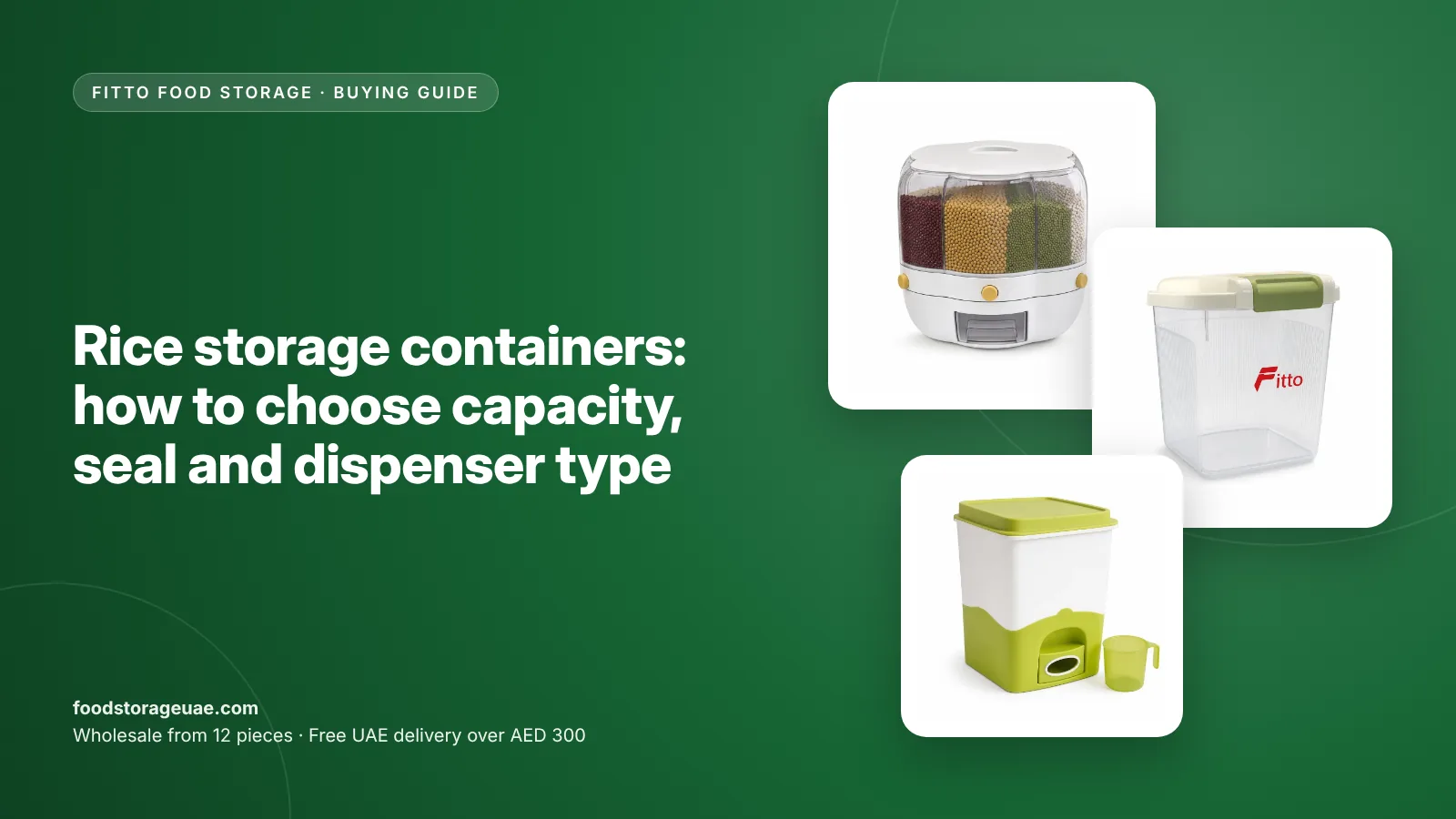
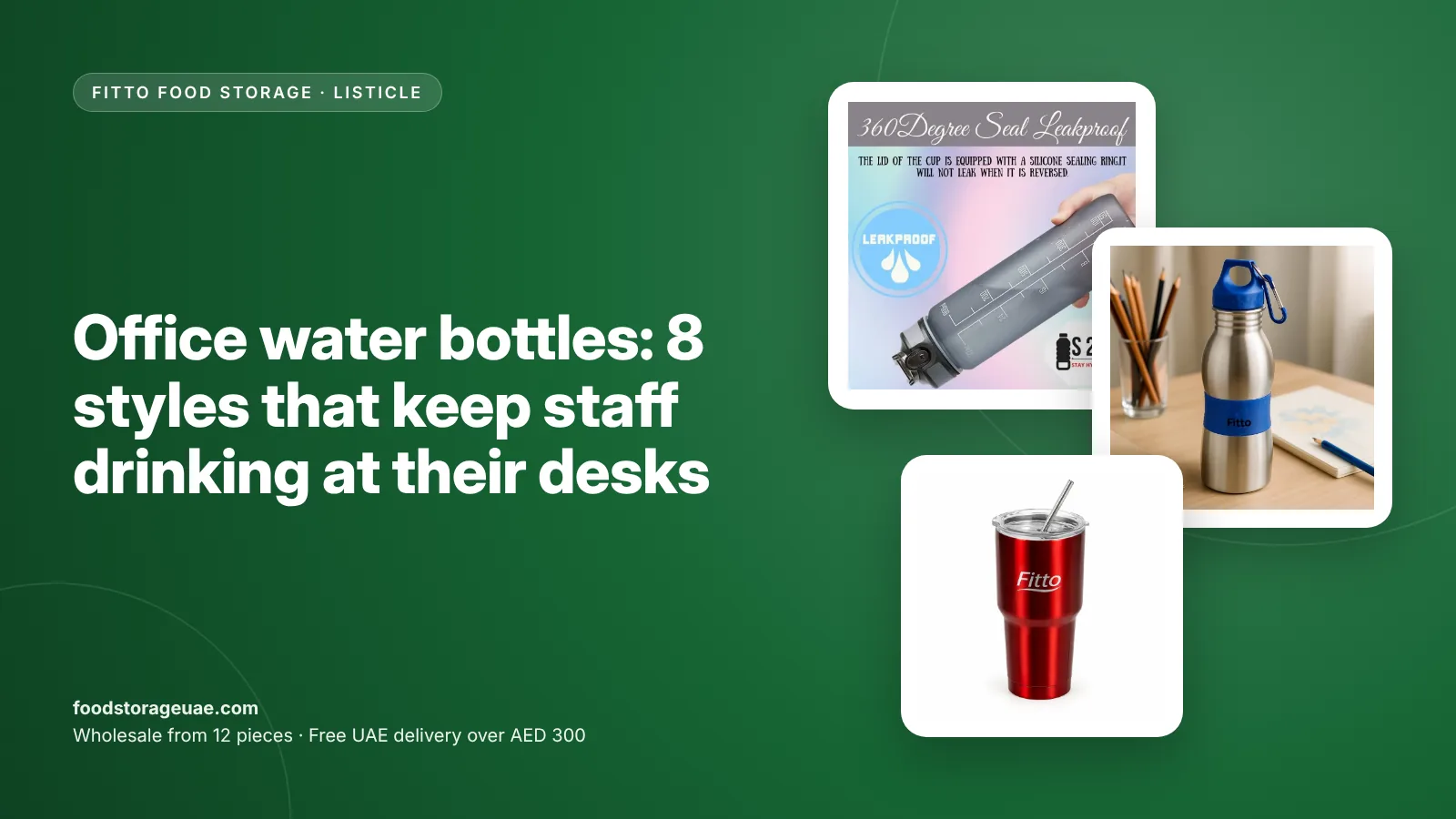
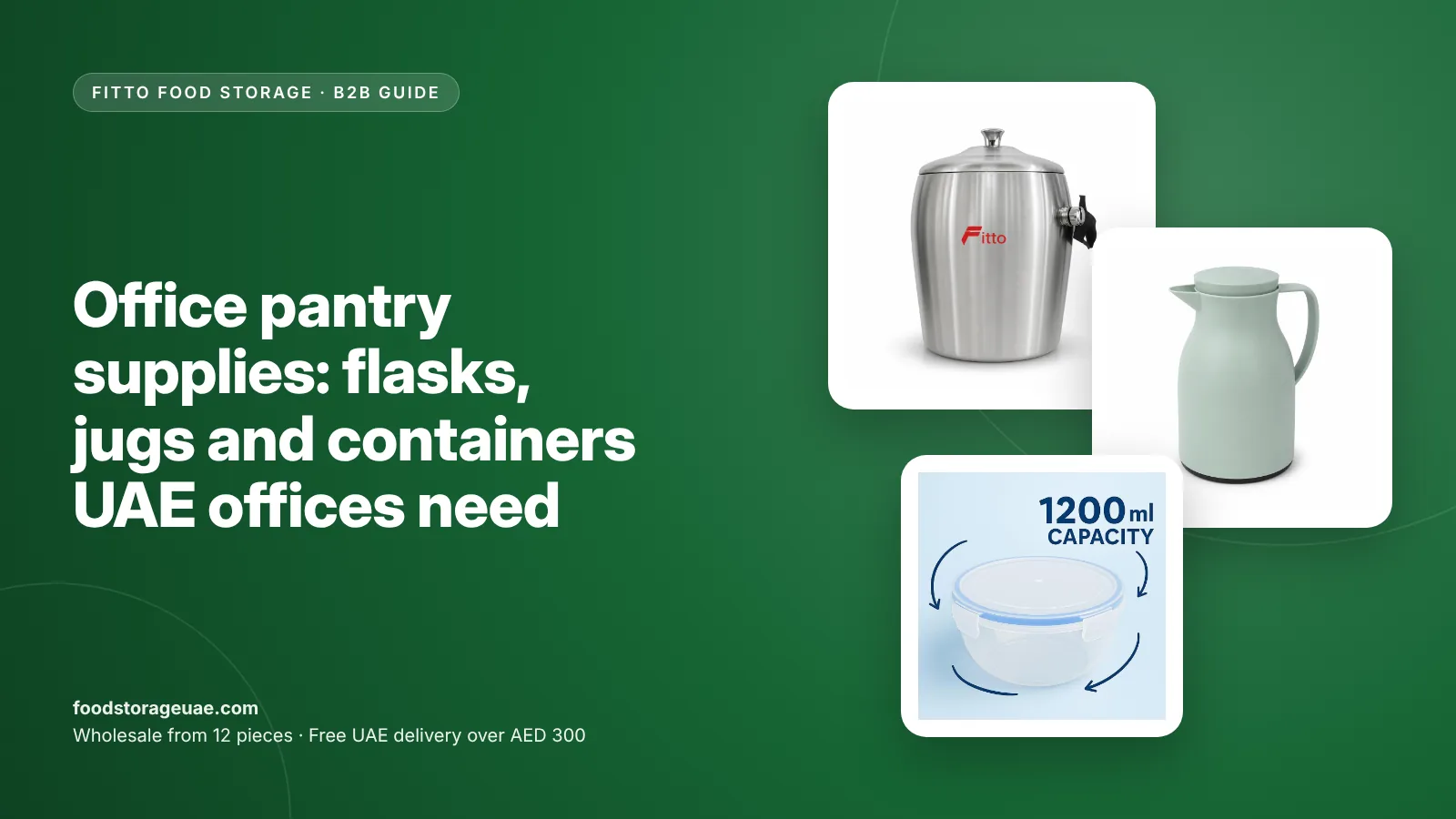
Restaurant food storage containers work best as a kit planned by station, not a pile of mismatched tubs. Use 5 L clear jars for dry stores, 2.3 L airtight boxes for sauces, 900 ml squares for the line, drain trays for herbs and stainless steel for raw protein. Then label every container and rotate first in, first out.
Key takeaways
- Plan restaurant food storage containers station by station, not by habit.
- Standardise on four to six sizes so lids swap and shelves stack.
- Count items in use × 2, plus 10–20% spares, so a clean set is always ready.
- Date labels and first-in, first-out rotation help reduce spoilage and inspection notes.
- Use clear plastic for most jobs and stainless steel for raw meat and staining foods.
Unlabelled, half-empty tubs are where restaurant waste starts: an undated sauce gets binned and an inspector writes it up. This kit list, for restaurant, café and cloud-kitchen managers, settles what to buy per station and how many. At FITTO Food Storage, a wholesale food container supplier in the UAE, kitchen buyers often ask us for this list of food storage containers (علب حفظ الطعام).
What do restaurant food storage containers need to do?
Restaurant food storage containers need to seal, stack, show what is inside and survive a commercial wash every day. A container that fails one of those four jobs costs you food or staff time.
In a UAE kitchen, dry stores run warm in summer and humid air softens flour and spices quickly. A tight seal protects dry goods and keeps garlic and fish smells away from dairy. Check four things:
- A real seal: a gasket, locking clips or a tight snap lid.
- Clear sides: staff check levels without opening the lid.
- Square or rectangular shapes: they use shelf space better than round tubs.
- Stated material and use: PP, PET or steel, with freezer, microwave and dishwasher use on the product page.
Which containers does each kitchen station need?
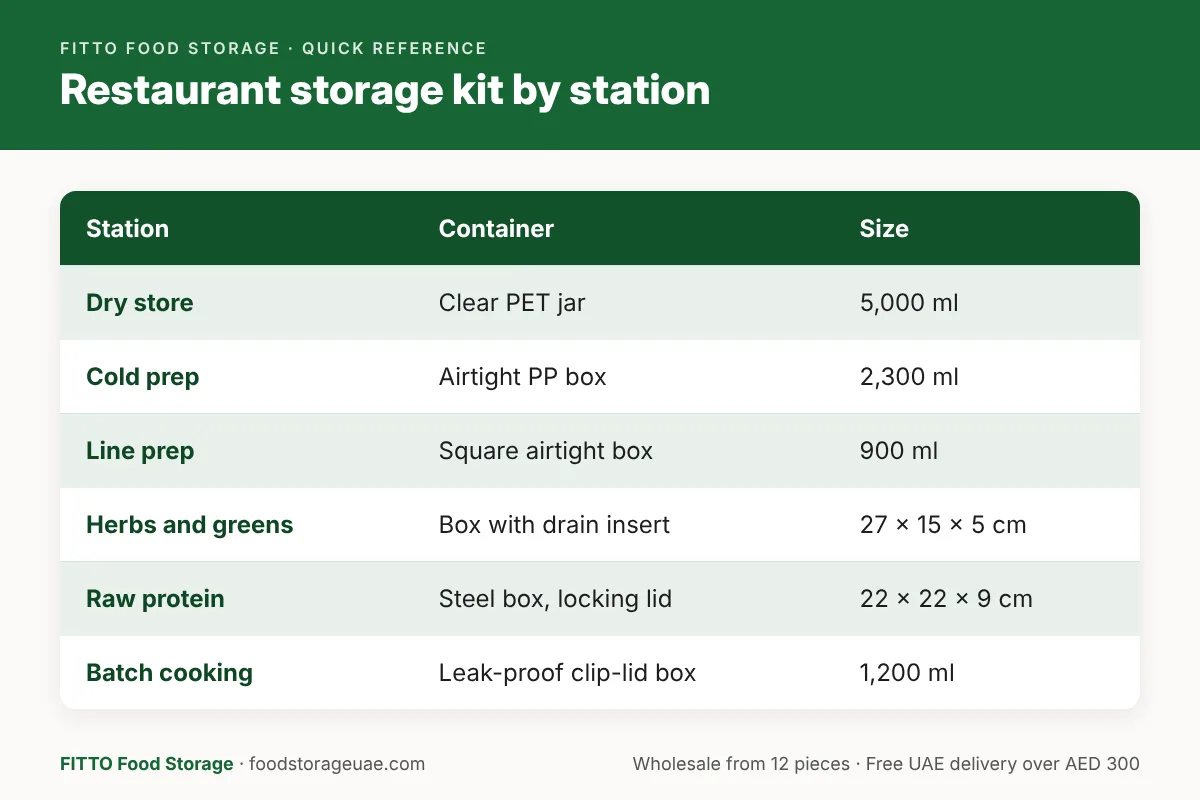
Each station needs a different mix of sizes and materials. Build the kit around the jobs, then cap the range so lids stay interchangeable.
| Station | What it holds | Container type | Size | Why it works |
|---|---|---|---|---|
| Dry store | Flour, rice, sugar, pulses | Clear PET jar with lid | 5,000 ml | Wide opening for scoops; level visible at a glance |
| Cold prep | Sauces, marinades, stocks | Airtight PP container | 2,300 ml | Listed as freezer, microwave and dishwasher safe |
| Line mise en place | Cut veg, garnishes, toppings | Square airtight container | 900 ml | Fits a reach-in shelf; quick to swap mid-service |
| Herbs and greens | Washed herbs, salad leaves | Clear box with drain insert | 27 × 15 × 5 cm | Insert lifts leaves above collected water |
| Raw protein | Chicken, marinated meat | Stainless steel square, locking lid | 22 × 22 × 9 cm | Does not stain; clear lid shows contents |
| Batch cooking | Rice, curries, portioned prep | Leak-proof clip-lid container | 1,200 ml | Clips help keep it closed when stacked |
Keep raw protein on the lowest shelf, below ready-to-eat food; a different material makes that easy for new staff to spot.
How many containers does a restaurant need?
Count every item each station holds, multiply by two and add 10–20% spares. One set is in use, one is clean, and spares cover breakage.
- List every item each station holds.
- Group the items by container size using the table above.
- Multiply each group by 2 for the in-use set and the clean set.
- Add 10–20% spares for breakage and lost lids.
- Round up to whole packs. FITTO sells every line in packs of 12 to 144 pieces, and larger packs lower the price per piece.
Worked example: a cloud kitchen holding 18 line items in 900 ml squares needs 36, plus about 6 spares. That is 42, so it orders four packs of 12 and keeps the extra six as cover.
How should restaurants label and rotate stored food?
Label every container with the item, the prep date and the use-by date, then rotate first in, first out. That habit often saves more food than any container upgrade.
- Label the side of the container, not only the lid, because lids get swapped.
- Store new batches behind or below older ones, so cooks reach the oldest first.
- Check dates at the start of every shift and discard anything past its use-by.
- Keep a waste log for two weeks to see which items you over-prep.
As a rule of thumb, kitchens hold chilled food at 5 °C or below and frozen food at -18 °C or below. Your emirate's food code sets the actual limits, so confirm them with your local authority, such as Dubai Municipality.
Plastic or stainless steel: which suits a commercial kitchen?
Use clear plastic for most prep and dry stores, and stainless steel for raw protein and strongly coloured or acidic food. Most restaurants need both.
| Feature | Clear PP / PET plastic | Stainless steel |
|---|---|---|
| See contents | Yes, through the sides | Through the clear lid only |
| Weight | Light | Heavier |
| Staining (turmeric, tomato) | Can stain over time | Does not stain |
| Freezer use | Yes, on lines listed as freezer safe | Yes |
| Microwave | Yes, on lines listed as microwave safe | No |
| Unit cost | Lower | Higher |
For a busy café, clear plastic usually wins on cost and speed. For a curry kitchen with turmeric-heavy marinades, steel earns its higher price.
FITTO Trade Pick: Build your back-of-house kit in one order Pair 5 L clear PET jars for dry stores with 2,300 ml airtight containers for sauces and stainless steel locking containers for protein. Order one sample of each size first; we credit the sample cost on a bulk order of AED 2,000+ within 30 days.
How do you keep containers in good condition?
Wash, dry fully and store containers with the lids off. Trapped moisture causes smells and warped lids.
- Remove silicone gaskets weekly, wash them separately and refit them dry.
- Check the product page before dishwasher or microwave use; not every line is rated for both.
- Replace any container with a crack, a deep scratch or a lid that no longer clicks shut.
For more on seal types, read our guide to airtight food containers. For temperatures and rotation in hot months, see food storage safety in the UAE heat.
What does a starter kit look like for a small kitchen?
A 40-cover restaurant or single-brand cloud kitchen can start with about 100 containers across five sizes. Adjust to your own item count.
- Dry store: 12 × 5 L jars.
- Cold prep: 24 × 2,300 ml containers for sauces, stocks and marinades.
- Line: 36–48 × 900 ml squares, split between two reach-ins.
- Greens: 6–12 drain-insert boxes for herbs and salad leaves.
- Protein: 6–12 stainless steel squares, kept on the bottom shelf.
These are starting points: a bakery café needs more dry storage, a grill more steel.
The bottom line
A restaurant food storage kit works when it is planned by station, capped at a few sizes and kept in rotation with clear labels. Count items × 2 plus spares, mix plastic and steel by job, and test sizes on your own shelves before filling the walk-in.
Browse our wholesale food containers and jars, or compare materials in our food storage containers trade guide. For a mixed kitchen kit, request a quote, order samples or WhatsApp +971 55 672 6947; delivery is free to all seven emirates on orders over AED 300. FITTO Food Storage: fit for the way you store.
FAQ
What size containers do restaurants use most?+
Most kitchens rely on four to six sizes: jars of about 5 L for dry goods, boxes of around 2 L for sauces, squares of about 900 ml for line prep, plus drain trays and steel boxes. Capping the range keeps lids interchangeable and reorders simple.
Are plastic food containers allowed in commercial kitchens?+
Food-grade plastic containers are widely used in commercial kitchens. Choose containers made for food contact, such as polypropylene or PET, and replace damaged ones. Requirements can vary between emirates, so confirm details with your local food-safety authority before an inspection.
How long can prepared food stay in a container in the fridge?+
It depends on the food, how it was cooked and cooled, and the fridge temperature. Follow your food-safety plan and local authority guidance. Label every container with prep and use-by dates, and discard anything past that date rather than guessing from smell.
Should sauces be stored in round or square containers?+
Square and rectangular containers use shelf space better and stack more steadily, so they suit most walk-ins. Round containers are easier to scrape clean, which some cooks prefer for thick sauces. Many kitchens store in squares and transfer to round pots at the pass.
Can I order a mixed kit of different container sizes?+
Yes. Mixed cartons, different pack sizes and regular supply are arranged on request, so send your station list through the request-a-quote form. Larger packs lower the price per piece, which helps once you standardise on a few sizes.