Is it safe to microwave plastic food containers?
By FITTO Trade Desk · Last updated 29 October 2026
Microwaving plastic food containers is generally considered safe only when the container is labelled microwave safe, which usually means polypropylene (PP, resin code 5). Vent or lift the lid, heat in short bursts and stop using containers that are warped, cracked or deeply scratched. Single-use tubs, foam trays and drinks bottles do not belong in the microwave.
Key takeaways
- Look for a microwave-safe symbol or the words "microwave safe"; no label means no microwave.
- PP (code 5) is the plastic most often made for reheating; foam (code 6) and PET bottles (code 1) are not.
- Retire containers that are warped, cracked, cloudy or deeply scratched.
Guessing which tub can go in the office microwave ends in warped lids and melted takeaway boxes. This quick answer covers the label, the plastics and the reheating habits that work, in general safety terms. At FITTO Food Storage, a wholesale food containers and jars supplier in the UAE, we stock both PP and glass microwave-safe containers (علب آمنة للميكروويف) made for reheating.
How can you tell if a plastic container is microwave safe?
Check the base or lid for a microwave-safe symbol, usually wavy lines or a small microwave icon, or the printed words "microwave safe". If there is no mark, do not use it in the microwave.
Symbols vary between makers, so the printed words are the clearest sign. Check the lid separately, as it is not always microwave safe when the base is. The recycling number shows the plastic type, a useful second clue.
Which plastics are microwave safe, and which are not?
Polypropylene (PP, code 5) is the plastic most often designed for microwave use, because it tolerates heat well. Foam, thin single-use tubs and drinks bottles are not made for heating.
| Resin code | Plastic | Common uses | In the microwave? |
|---|---|---|---|
| 1 | PET | Water bottles, clear jars | No; not made for heating |
| 2 | HDPE | Milk and juice bottles | Not unless labelled |
| 5 | PP | Food containers, lunch boxes | Yes, when labelled microwave safe |
| 6 | PS (incl. foam) | Foam trays, disposable cups | No |
| 7 | Other (mixed types) | Some bottles and lids | Only if labelled |
This is a general guide; the label on each product always wins.
How do you reheat food safely in a plastic container?
Use a labelled container, vent the lid, heat in short bursts and stir, then check the food is steaming hot all the way through.
- Check the label on both the base and the lid.
- Vent the lid. Lift one corner, or remove it and cover with a microwave-safe plate, so steam can escape.
- Heat in short bursts of one to two minutes, stirring between them.
- Switch to glass for oily or sugary food. Fats and sugars can get much hotter than water and may warp or mark plastic.
- Let it stand for a minute, check the food is steaming hot throughout, and lift the container with a cloth.
Our food storage safety guide covers leftovers.
When should you stop using a plastic container in the microwave?
Replace a plastic container once it is warped, cracked, cloudy, deeply scratched or no longer seals.
Turmeric and tomato stains are mostly cosmetic, but a bent base or a lid that no longer closes should go. Daily meal-prep users will replace containers sooner than occasional users.
Is glass a better choice for reheating?
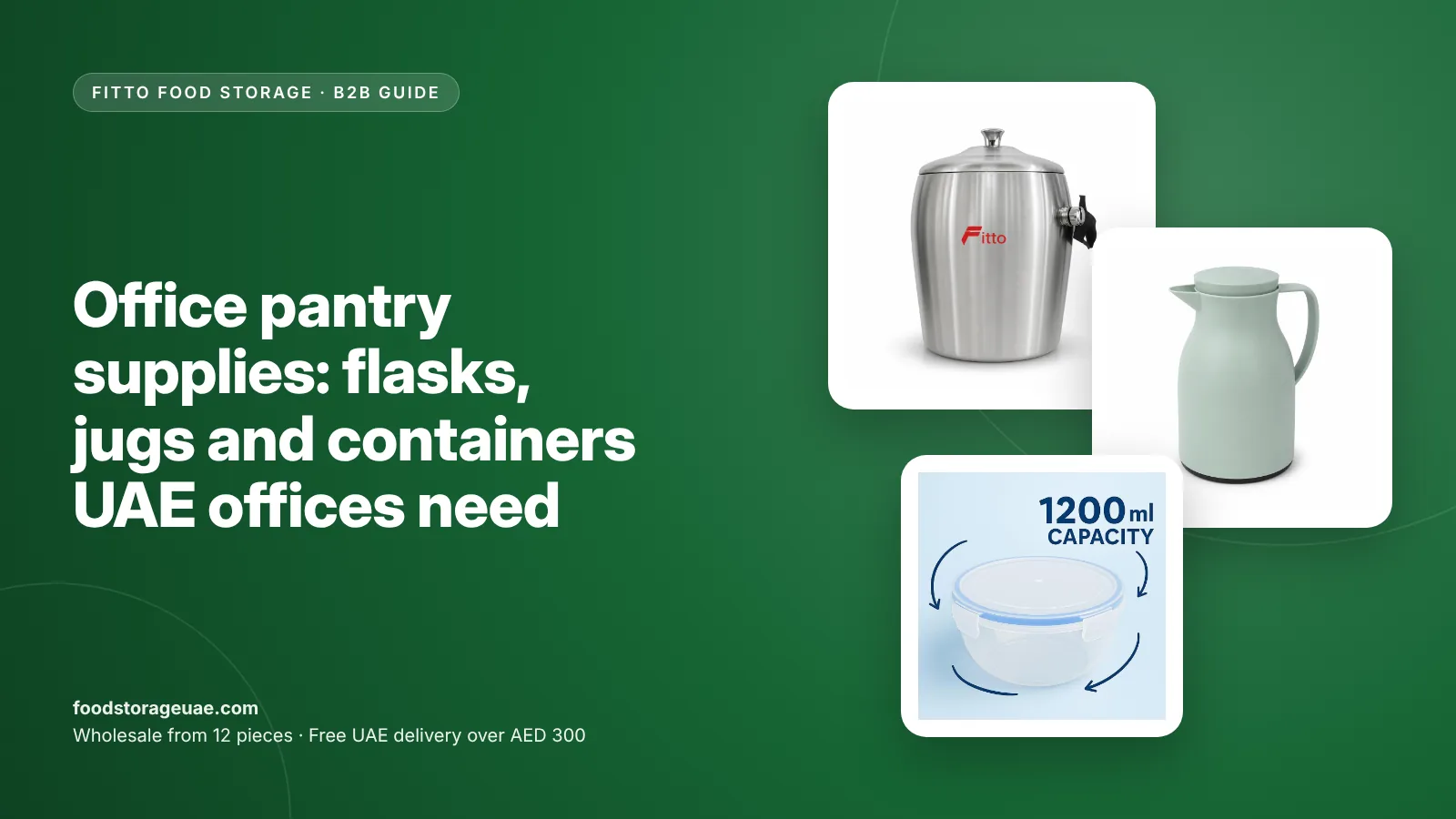
Glass suits daily reheating or anyone who prefers not to heat plastic. It does not stain or hold smells, but it is heavier and can break.
See glass vs plastic food containers for weight and breakage, and the meal prep containers guide for lunch sizes. Avoid moving glass straight from freezer to microwave, as sudden temperature changes can crack it.
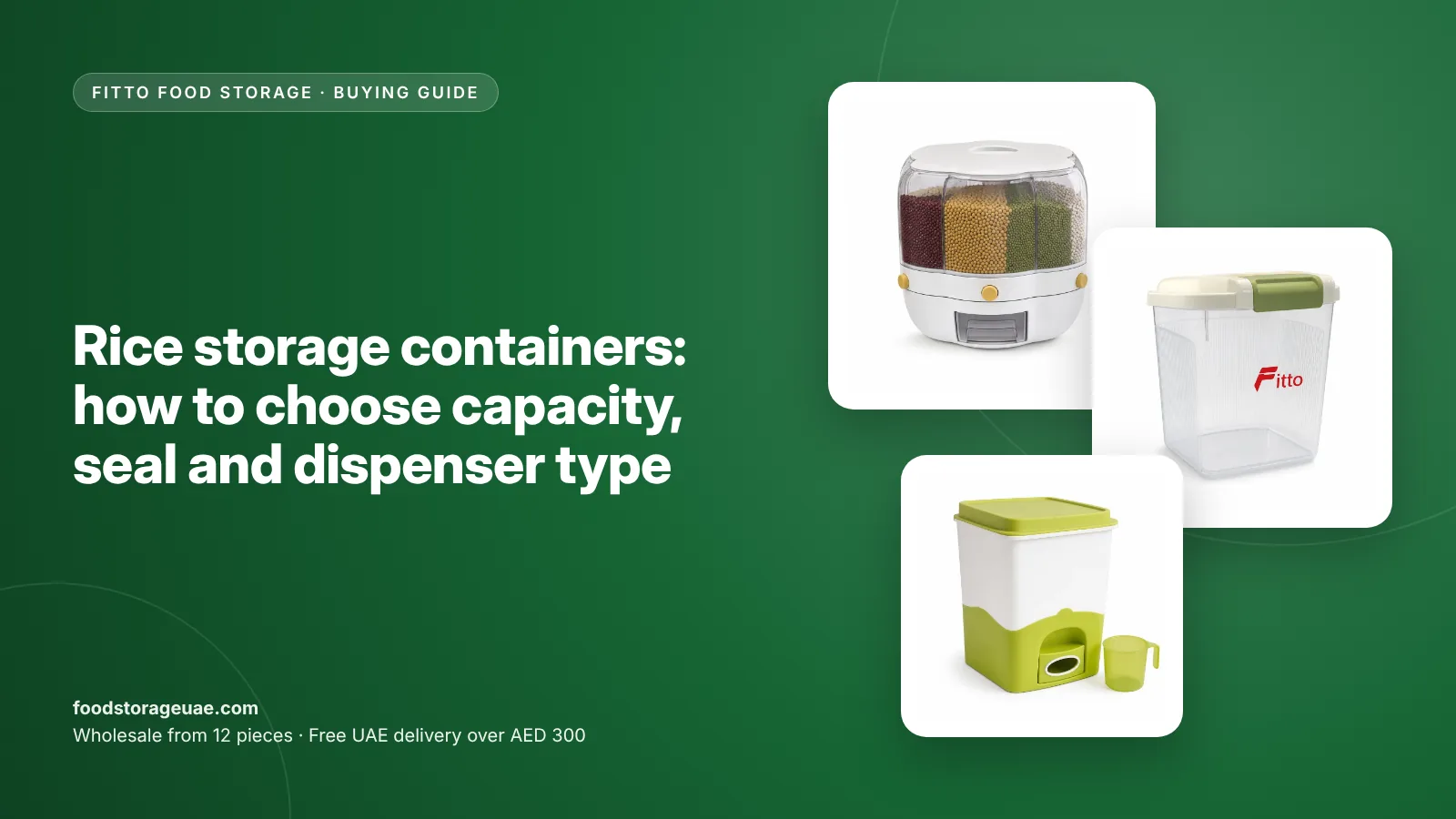
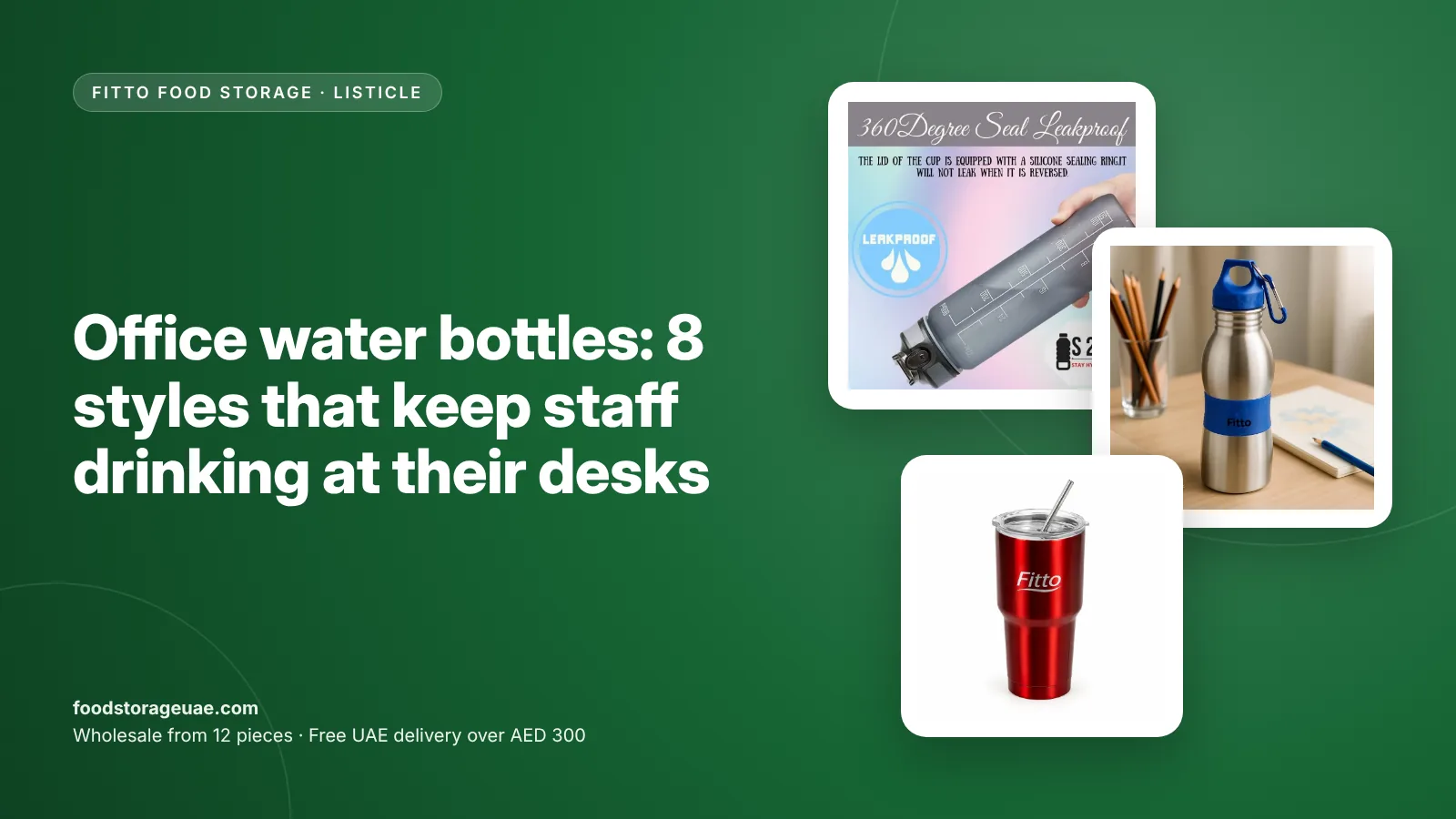
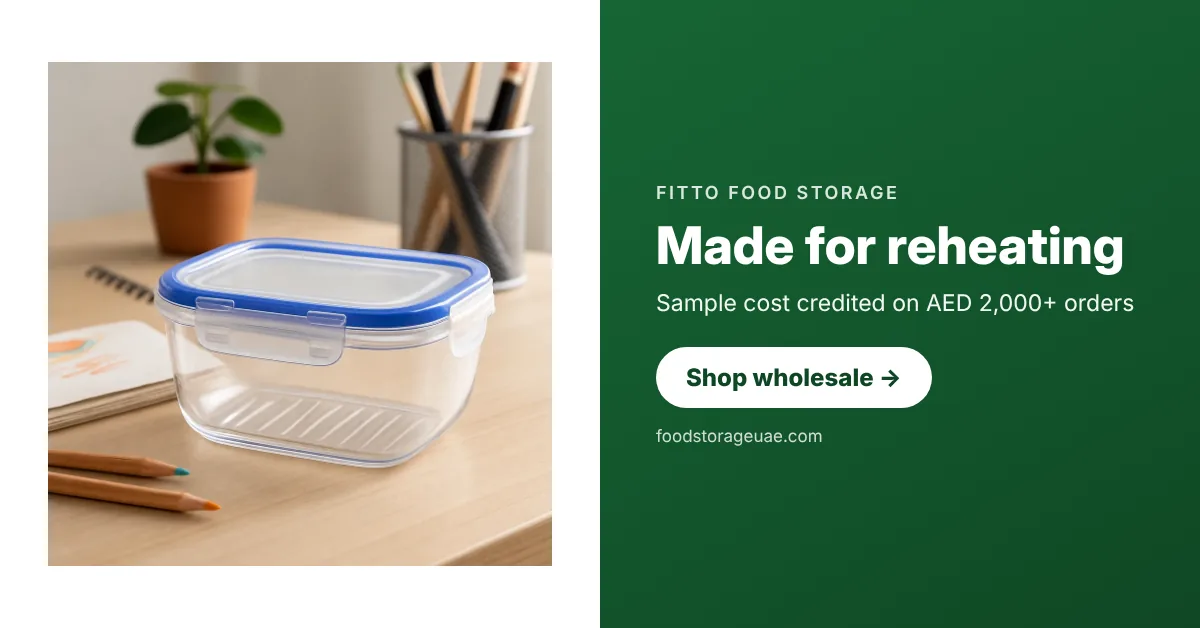
FITTO Trade Pick: Containers made for reheating The 1.4 L rectangular container is BPA-free and microwave, freezer and dishwasher safe, and the 2300 ml PP container suits family-size portions. For daily reheating, the 3-piece glass set (400, 640 and 1040 ml) moves from fridge to microwave or oven. Order a sample to test them; its cost is credited on a bulk order of AED 2,000+ within 30 days.
The bottom line
Microwave plastic only when the container says microwave safe, which usually means PP. Vent the lid, heat in short bursts, keep oily food for glass, and replace containers that warp or crack.
Browse wholesale food containers and jars and lunch boxes and bags, request a quote, order a sample or WhatsApp us on +971 55 672 6947. Delivery is free across all seven emirates on orders over AED 300. FITTO Food Storage: fit for the way you store.
FAQ
Does BPA-free mean a container is microwave safe?+
No. BPA-free means the plastic is made without bisphenol A, but it says nothing about heat. A BPA-free container may still warp if it is not designed for the microwave, so look for a separate microwave-safe symbol or wording.
Can I microwave takeaway containers?+
Only if the container is marked microwave safe. Many thin takeaway tubs are made for single use and soften when heated, and foam boxes should never go in. The safer habit is to tip the food onto a plate or into a microwave-safe container first.
Can I microwave a plastic container with the lid on?+
Lift one corner or remove the lid, even if the lid is microwave safe. A sealed lid traps steam, which builds pressure, warps the lid and makes food spatter. A loosely placed lid or plate keeps food moist without the pressure.
Why do plastic containers stain in the microwave?+
Hot, oily sauces with tomato or turmeric leave colour in the surface of plastic, and heat sets the stain faster. Staining is usually cosmetic; reheat curries and tomato dishes in glass to avoid it.