Kids drinkware: the complete guide for parents, schools and retailers
By FITTO Trade Desk · Last updated 29 October 2026
Good kids drinkware matches the child's stage: a free-flow cup or small bottle for babies and toddlers, a 400-640 ml leak-resistant bottle for school, and cups with lids and straws for parties. Check the lid, the weight when full, how many parts need cleaning and the age guidance on the label before you buy or stock.
Key takeaways
- Choose by stage, not by cartoon: the right capacity, lid and grip change a lot between age 1 and age 10.
- For most school days, a 400-640 ml bottle is enough; a full 640 ml bottle weighs well over half a kilo.
- Flip-top and straw lids are easiest for small hands, but straws and valves need a brush every day.
- Kids bottles should never be left in a hot UAE car; heat can warp lids and spoil drinks quickly.
- A sensible retail range covers three stages, three lid types and two or three price points.
Most kids drinkware is bought twice. The first bottle leaks in a school bag, is too heavy for a four-year-old or grows black spots inside a straw. Parents lose money, nurseries deal with wet bags and shops field returns.
This guide settles what actually matters, stage by stage. It is written for parents, nursery and school staff, and toy and baby retailers across the UAE. At FITTO Food Storage, a wholesale kids drinkware supplier in the UAE, these are the questions we hear most from both families and shop buyers.
What counts as kids drinkware?
Kids drinkware is any cup, bottle or tumbler sized and designed for children to drink from on their own. It runs from small feeding bottles and training cups to school water bottles (مطارة مياه للأطفال) and party cups with straws.
It overlaps with feeding bottles and adult sports bottles, so shops do better when the three ranges sit near each other. In practice, it falls into four groups:
- Feeding and training: small bottles of around 220-330 ml with handles, used before and alongside a first cup.
- Everyday cups: cups with fitted lids and straws for home, nursery and party use.
- School bottles: 400-700 ml bottles with flip-top, straw or carry lids and often a strap.
- Treat and seasonal cups: slush cups, character cups and gift sets for birthdays, Eid and summer.
Which drinkware suits which age?
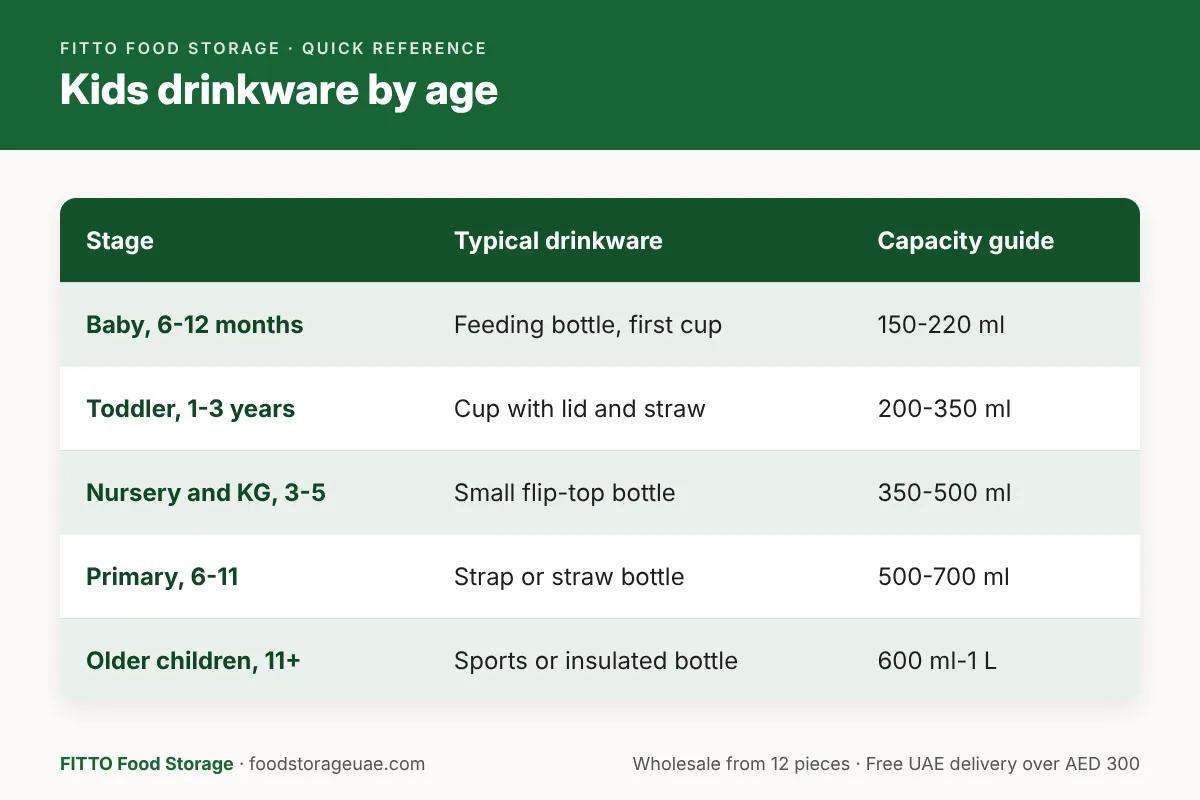
Match the lid and capacity to what the child can manage alone: small, light and easy to grip for toddlers, larger and more leak-resistant as children start school. Always check the age guidance printed on the product label as well.
The table below is a rule-of-thumb guide built from how children typically develop grip and sipping skills. Children vary, so treat it as a starting point and follow your paediatrician's advice for babies and toddlers.
| Stage | Typical drinkware | Capacity guide | What to check first |
|---|---|---|---|
| Baby, around 6-12 months | Feeding bottle with handles; first open or free-flow cup | 150-220 ml | Age guidance on the label, soft teat or spout, two handles |
| Toddler, 1-3 years | Cup with lid and straw; small bottle with handles | 200-350 ml | Light when full, lid that a child cannot pull off |
| Nursery and KG, 3-5 years | Small flip-top or straw bottle | 350-500 ml | One-hand opening, fits the bag pocket, name label space |
| Primary, 6-11 years | School bottle with strap or carry lid | 500-700 ml | Leak resistance on its side, weight, easy refill |
| Older children, 11+ | Sports bottle or insulated bottle | 600 ml-1 L | Durability, cold retention, cleaning access |
Two points catch buyers out. Water weighs about 1 g per ml, so a full 640 ml bottle carries roughly 640 g before the bottle itself. And the step from nursery to primary is about independence: the child must open, drink and close the bottle alone.
What do health services say about first cups?
Many health services, including the UK's NHS, suggest introducing a cup from around six months and favour open or free-flow cups over valved spouts. The reasoning is that sipping, rather than sucking, is a skill worth learning early.
That is general guidance, not a rule for every child, so parents should follow their paediatrician. Retailers can help by stocking both free-flow and straw options with the age guidance visible.
Which materials are used for kids drinkware?
Most kids drinkware is polypropylene (PP) or another BPA-free plastic, with stainless steel and silicone used for older children and specific parts. Each material trades weight, durability, clarity and price differently.
Here is a plain comparison of the materials you will meet most often:
- Polypropylene (PP, resin code 5): light, tough, cheap and common in cups, lids and straws. It is usually opaque or slightly cloudy. Most kids cups and bottles use it for at least part of the body or lid.
- Tritan and other clear copolyesters: clearer than PP, so parents can see how much a child has drunk, but usually dearer. Our Tritan vs polypropylene comparison covers the differences in detail.
- Stainless steel: heavier but hard to break, and double-wall versions keep water cold for longer. It suits older children rather than toddlers, because weight and dents become an issue.
- Silicone: used for straws, spouts, seals and sleeves. It is soft on teeth and gums but can hold smells if not dried properly.
"BPA-free" on a label tells you the plastic was made without bisphenol A. It does not tell you how long the product will last or whether it is dishwasher-safe. Check those points separately on the label or product page.
For a deeper look at weight, cold retention and cost by material, read our stainless steel vs plastic water bottles comparison.
Flip-top, straw or screw cap: which lid suits children?
For children under about five, a flip-top or straw lid is usually easiest because it opens with one hand and does not get lost. Screw caps are simple to clean but can be lost and are hard for small hands to tighten properly.
Each lid type solves one problem and creates another:
| Lid type | Strength | Weakness | Best for |
|---|---|---|---|
| Straw lid | Child can sip without tipping the bottle | Straw and valve need daily brushing | Toddlers, car journeys, nursery |
| Flip-top spout | One-hand opening, quick drinking | Hinge can trap residue | Nursery and primary school |
| Screw cap | Fewest parts, easy to clean | Easy to lose; may leak if not tightened | Older children, home use |
| Cup with lid and straw | Familiar cup shape, less tipping than an open cup | Not built for a school bag | Home, parties, nursery tables |
Leaks rarely come from the bottle body. They come from a lid that was not fully closed, a seal that was left out after washing, or a straw lid carried upside down. Show children how to close the lid until it clicks, and tell parents to check that the silicone seal is in place after every wash.
How should kids drinkware cope with UAE heat?
Treat heat as the main enemy: never leave plastic kids bottles in a parked car, and pack fresh water every morning rather than topping up yesterday's. Summer heat in the UAE speeds up both plastic wear and bacterial growth.
A car parked in the summer sun gets far hotter inside than the air outside. That heat can warp plastic lids, loosen seals and spoil any drink left behind, so bottles come indoors every time.
For school days and summer camps, a few habits help:
- Fill with chilled water, not ice-packed to the brim. Leave a small gap so the lid seals properly.
- Use water as the default. Juice and milk spoil faster in warm bags and leave residue in straws.
- Add a cold option for long days. An insulated bottle suits older children who are outdoors for sport.
- Wash and fully dry overnight. A bottle left wet and closed in a warm room develops smells quickly.
Schools and nurseries often ask parents to send named, refillable bottles. A plain bottle with space for a name sticker is easier to label than one covered in print.
How do you keep kids bottles and cups clean?
Wash every bottle, lid and straw daily in warm soapy water, use a narrow brush for straws and spouts, and let all parts dry fully apart before reassembling. Once a week, check seals and straws for marks or cracks.
Straws, valves, flip spouts and silicone rings trap milk, juice and saliva. A simple daily routine prevents most smell and mould complaints:
- Take the lid apart, including the straw and any removable seal or valve.
- Rinse with warm water, then wash with a mild washing-up liquid.
- Push a narrow brush through straws and spouts, and scrub the lid threads.
- Rinse well and leave all parts to air-dry separately, open side down on a rack.
- Reassemble only when every part is dry.
Dishwasher use depends on the product, so check the label first. A bottle brush set with a small detail brush makes the routine much faster, and it is worth stocking next to bottles at the till. Our step-by-step guide on how to clean a water bottle covers smells and weekly deep cleaning.
When should you replace kids drinkware? Replace a straw, spout or seal that is cracked, chewed, cloudy with stains that will not wash out, or that smells after washing. Replace the bottle itself if the lid no longer closes firmly.
What should a school or nursery look for?
Schools and nurseries need drinkware that children can open alone, that is easy to name, and that survives a drop onto a hard floor. Consistency across a class also makes supervision easier.
For staff, the practical checks are:
- Independence: can a three- or four-year-old open and close the lid without help?
- Capacity: 350-500 ml suits most KG children for a school morning; refill points matter more than a larger bottle.
- Identification: a strap, a colour or a plain area for a name label.
- Hygiene: as few parts as possible, because staff may need to help with washing on trips.
- Bag fit: the bottle should stand upright in the side pocket of a typical school bag.
If your school issues a standard bottle, test one with a few children for a week before ordering a whole year group. For the lunch side of the bag, see our guide to leakproof kids lunch boxes.
What does a sensible kids drinkware range look like for a shop?
A strong starter range covers three age stages, three lid types and two or three price points, rather than many versions of one popular bottle. That spread answers most customer questions without tying up cash.
A baby shop sells first cups, a stationer sells school bottles in August and a toy shop sells party cups all year, so weight the range to your own customers.
A simple way to plan a range:
| Range slot | Example product type | Why it sells |
|---|---|---|
| Baby and toddler | 220 ml or 330 ml feeding bottle with handles | Repeat purchase as babies grow |
| Home and party | Cups with lids and straws in mixed colours | Birthdays, Eid gatherings, play dates |
| School entry | 400 ml flip-top bottle | Light, small and easy for KG children |
| School core | 600-640 ml straw or strap bottle | The back-to-school best-seller |
| Treat line | Slush cup with dome lid and straw | Impulse buy in summer and holidays |
| Add-on | Bottle cleaning brush set | Small basket add-on at the till |
Display tips that help sell through:
- Group by age, not by brand. Parents shop by "for my four-year-old".
- Show the lid open and closed. A sample bottle on the shelf lets customers test the flip-top.
- Put capacity in large print. Many parents are choosing between 400 ml and 640 ml.
- Time the stock. School bottles peak before the late-August return and the January term; party cups follow birthdays, Eid and the summer holidays.
Assorted-colour lines are packed in mixed colours, so plan your display for variety rather than one colour per hook.
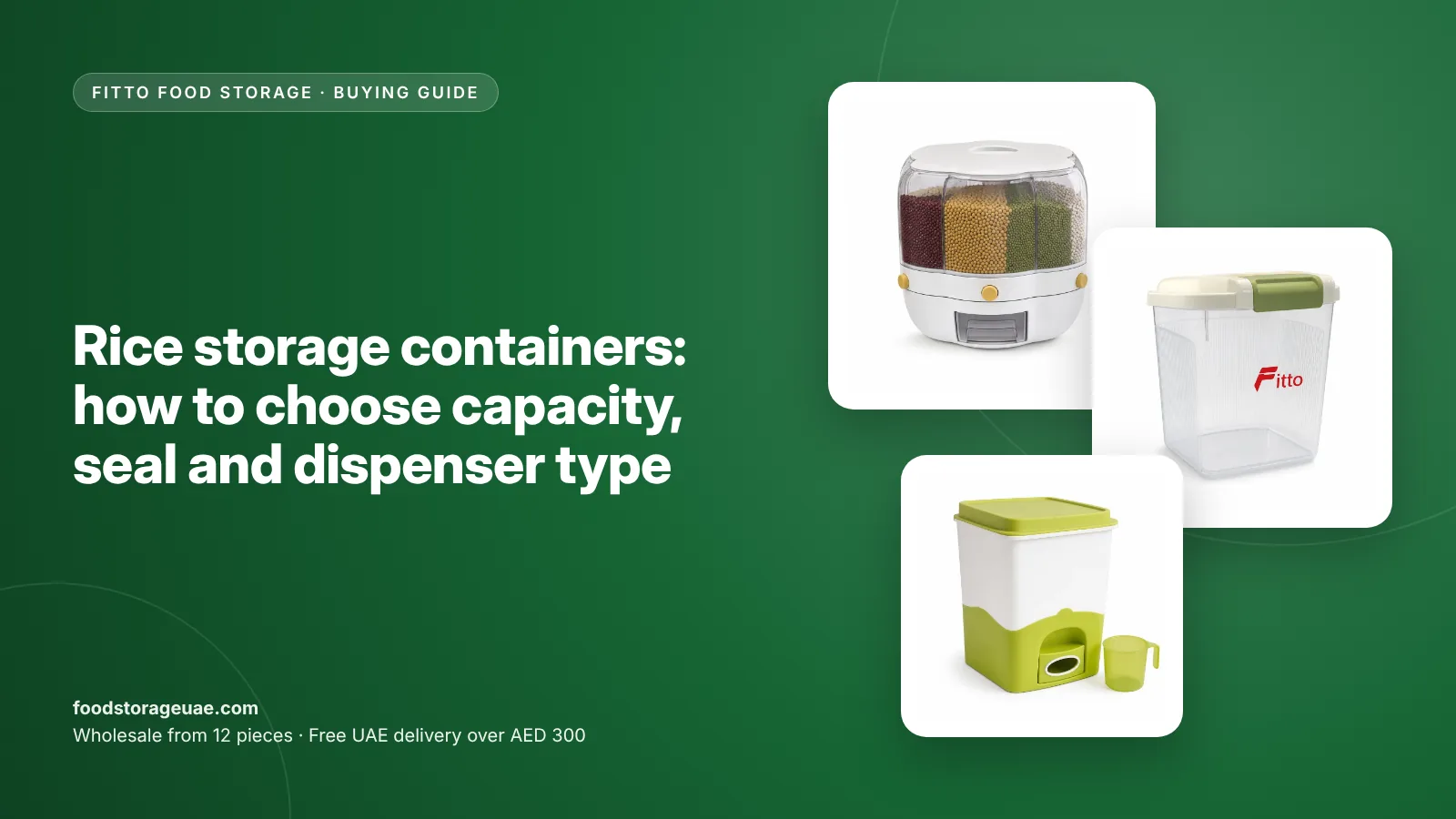
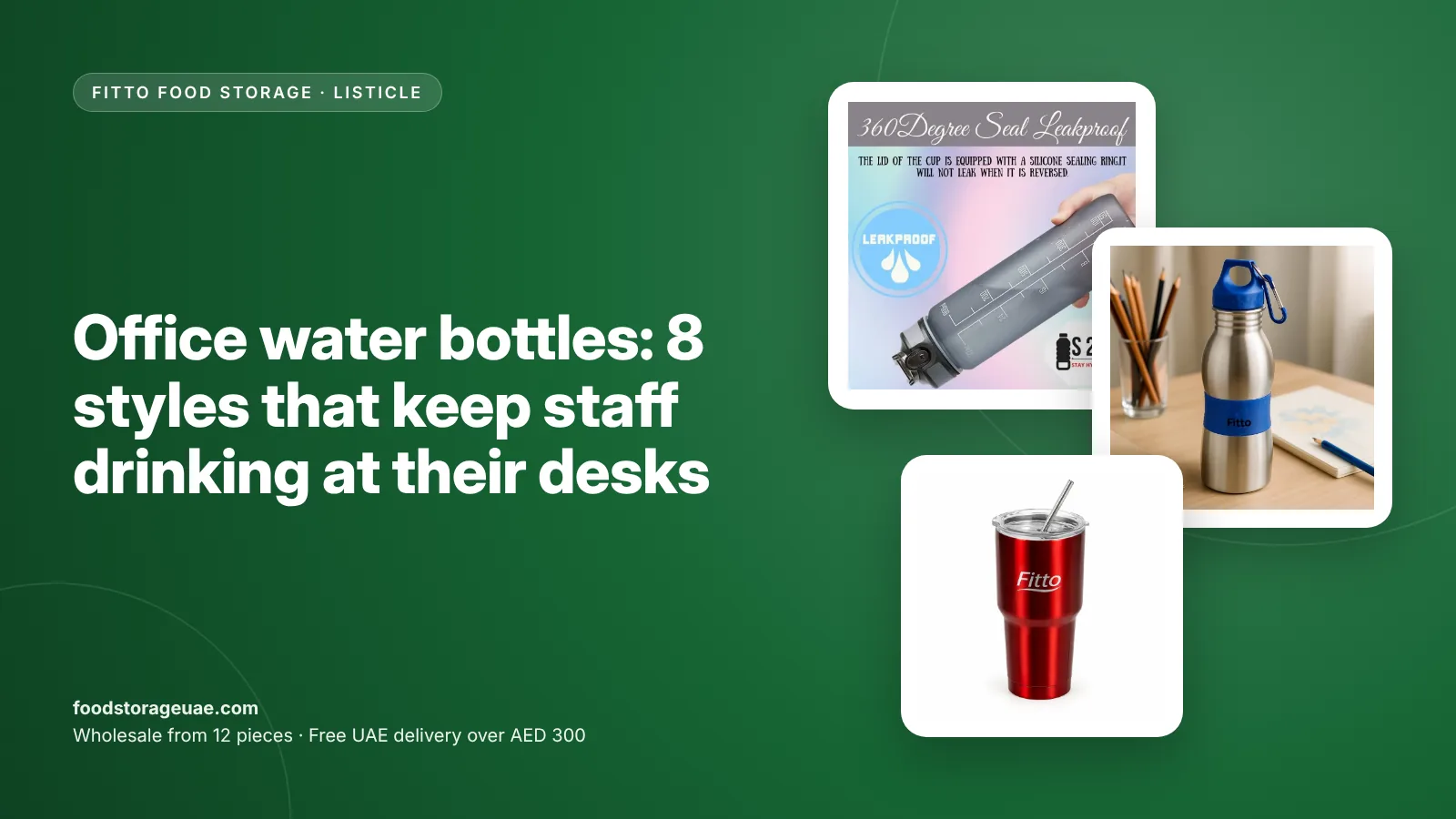
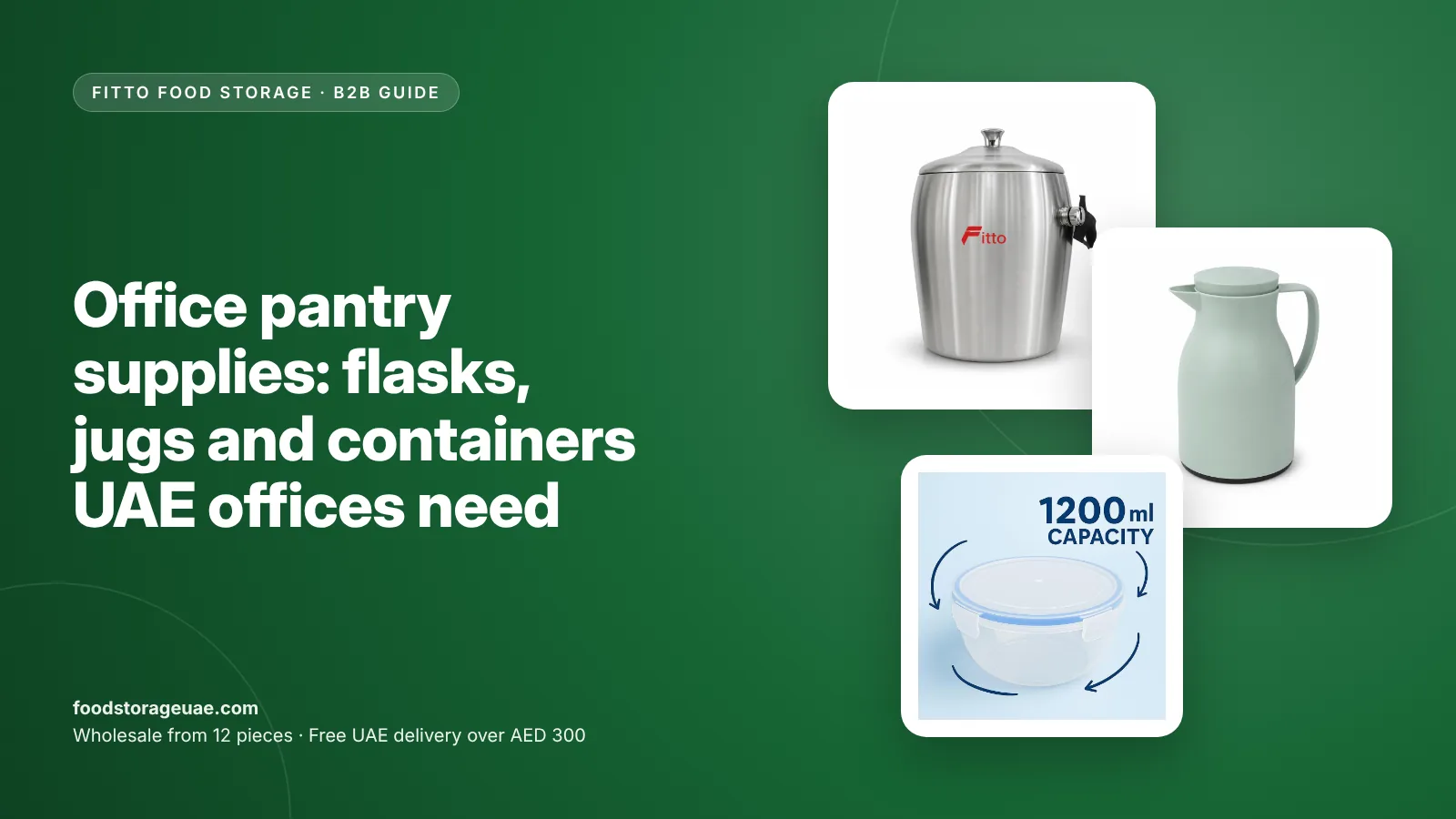
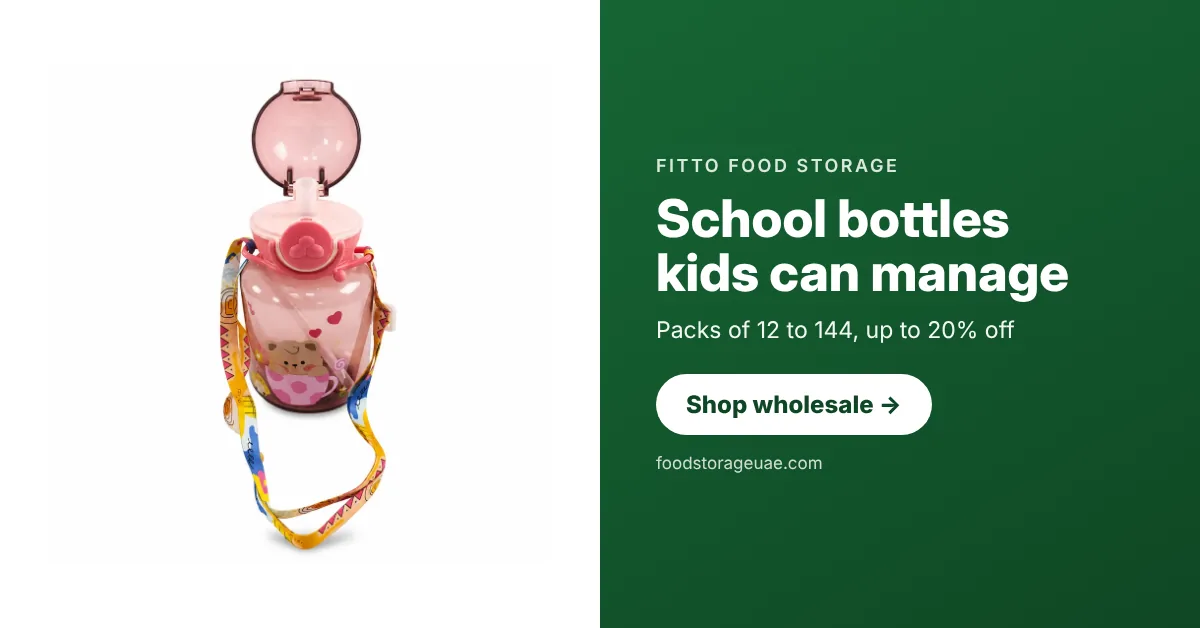
FITTO Trade Pick: A starter kids range in one order Pair the 640 ml cartoon bottle with shoulder strap and the 400 ml flip-top bottle for school, the 5-piece cups with lids and straws set for parties and the 220 ml feeding bottle with handles for babies. Every line comes in packs of 12 to 144 pieces, with up to 20% off per piece on the largest pack.
Which mistakes cost parents and shops the most?
The costliest mistakes are buying too large for the child's age, choosing complicated lids that nobody cleans properly, and stocking one design too deep. Each one leads to a second purchase or a return.
- Too big, too early: a 1 L bottle for a five-year-old ends up half-full and heavy, or left at home.
- Lids with too many parts: if a valve is fiddly, it will not be cleaned daily, and it will smell within weeks.
- One-design stock: a single character can fall out of fashion mid-season; plain colours and simple prints sell steadily.
The bottom line
Kids drinkware works when it fits the child's stage: a light, easy lid for little hands, a 400-640 ml leak-resistant bottle for school, and simple parts that get cleaned every day. For shops, a range across ages, lid types and price points beats a deep stack of one design.
Browse our wholesale kids drinkware, water bottles and feeding and nursing essentials. Request a quote for a mixed school or shop order, order samples to test with your own customers, or WhatsApp +971 55 672 6947. Delivery is free to all seven emirates on orders over AED 300. FITTO Food Storage: fit for the way you store.
FAQ
What age can a child start using a straw cup?+
Many children manage a straw cup from around 9-12 months, though some start earlier or later. Health services generally suggest introducing a cup from about six months, with open or free-flow cups encouraged. Follow your paediatrician's advice, check the age guidance on the product label and supervise young children while they drink.
What size water bottle should a primary school child carry?+
For most primary school days, a 500-700 ml bottle is enough if the school has refill points. Younger children in KG often do better with 350-500 ml, because a full larger bottle is heavy. On hot days or sports days, add an extra bottle rather than buying a much larger one.
Are plastic kids bottles safe for hot drinks?+
Most plastic kids bottles are designed for cold or room-temperature drinks, not hot ones. Hot liquid can also burn a child through a straw. Check the temperature guidance on the label, and use a purpose-made insulated food flask or cup for warm drinks for older children only, with adult supervision.
How often should kids bottle straws be replaced?+
There is no single interval, because use and cleaning vary. Inspect straws and spouts weekly and replace them when they are chewed, cracked, stained inside or smell after washing. Many parents keep a spare straw or second bottle so one can dry fully while the other is in use.
Can kids drinkware go in the dishwasher?+
Some kids cups and bottles are dishwasher-safe and some are hand-wash only, especially those with printed designs, insulated walls or soft silicone parts. Check the label or product page first. Place small parts in a top-rack basket, and dry everything fully before reassembling to avoid trapped moisture.