How to clean a water bottle properly, and how often
By FITTO Trade Desk · Last updated 29 October 2026
To clean a water bottle properly, wash it daily with hot soapy water and a bottle brush, take the lid, straw and seal apart, and air-dry every part open. Once a week, soak all parts in warm water with baking soda or diluted white vinegar. In UAE heat, empty and wash it instead of topping up.
Key takeaways
- Wash daily, deep-clean weekly, and clean sooner after juice, milk or protein shakes.
- The lid, straw and silicone seal hold most of the grime, so take them apart every time.
- Dry everything open: a damp, closed bottle is where smells and mould start.
- Match the method to the material; insulated steel and clay need gentler handling.
- Replace seals, straws or bottles that stay stained or smelly after a deep clean.
A bottle that smells "off" usually gets thrown away, even when a ten-minute clean would have saved it. This guide, for everyday users, parents and gym members, covers how to clean a water bottle (طريقة تنظيف قارورة الماء) and how often. At FITTO Food Storage, a wholesale water bottle supplier in the UAE, we wrote it so retailers can pass the routine on too.
How often should you clean a water bottle?
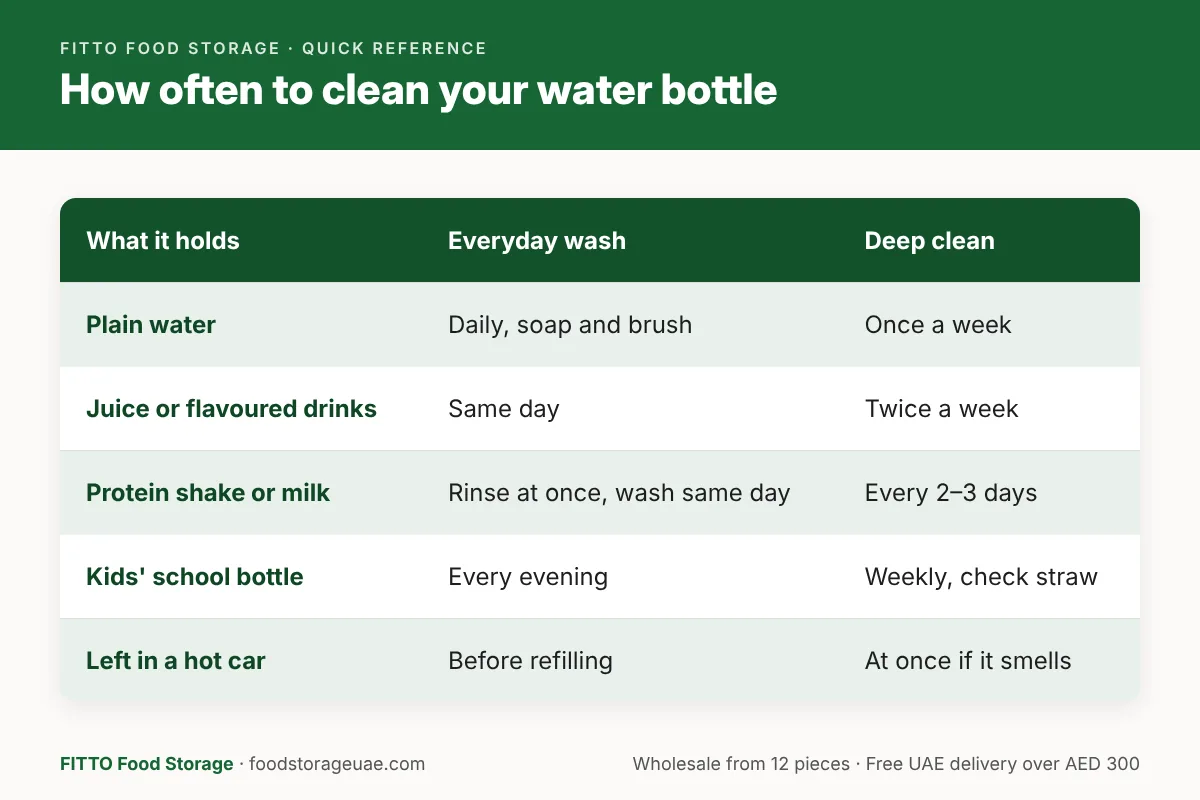
Wash a reusable bottle every day you use it and give it a deep clean once a week. Anything other than plain water needs washing sooner.
These intervals are rules of thumb; shorten them in summer.
| What the bottle holds | Everyday wash | Deep clean |
|---|---|---|
| Plain water only | Daily, with soap and a brush | Once a week |
| Juice, flavoured or electrolyte drinks | Same day, after use | Twice a week |
| Protein shake or milk | Rinse at once, wash the same day | Every two to three days |
| Kids' school bottle | Every evening | Once a week, plus a straw check |
| Left in a hot car | Before refilling | Straight away if it smells |
How do you clean a water bottle every day?
Take it apart, wash every part with hot soapy water and a brush, rinse well and dry it open.
- Empty it fully rather than topping up yesterday's water.
- Take it apart: lid, straw, mouthpiece and any removable seal or valve.
- Wash the body with hot water, a little washing-up liquid and a long-handled bottle brush, scrubbing the base and shoulder.
- Clean the lid and threads with a small detail brush, including any flip-spout channel.
- Rinse well until no soap taste remains.
- Air-dry upside down with all parts separate, and reassemble only when fully dry.
How do you deep-clean a bottle once a week?
Soak the body and all parts in warm water with baking soda or diluted white vinegar, then brush, rinse and dry.
- Baking soda: one to two teaspoons in warm water; soak the bottle and parts for 15–30 minutes, then brush.
- White vinegar: equal parts vinegar and water; soak for a few hours or overnight, then rinse well.
- Bottle-cleaning tablets: follow the pack instructions.
Two safety rules: never mix vinegar with bleach or other cleaners, as the mix can release harmful gas, and never shake baking soda and vinegar together in a closed bottle, as the fizz builds pressure.
How do you clean straws, flip lids and seals?
Brush straws through both ends, push a small brush through spouts and lift out silicone seals to wash them separately. These parts stay damp longest.
- Straws: run a thin straw brush through both ends and pull off soft mouthpieces to wash inside.
- Flip-top spouts: open fully, brush the channel and soak the lid weekly.
- Seals: ease the ring out with a teaspoon handle, never a knife, and wash the ring and its groove.
Black spots on a seal or inside a straw are usually mould; if a deep clean does not shift them, replace the part.
Does the bottle material change how you clean it?
Yes: the routine is the same, but heat, scrubbing and chemicals affect each material differently. Check the care label first.
| Material | Everyday cleaning | Watch out for |
|---|---|---|
| Insulated stainless steel | Hot soapy water and a brush | Dishwasher heat can harm paint and the vacuum seal; no chlorine bleach |
| Plastic (Tritan or PP) | Warm, not boiling, soapy water | Abrasive scourers scratch, and scratches hold residue |
| Glass with sleeve | Remove the sleeve, then wash as normal | Sudden hot-cold changes can crack it |
| Clay | Plain water and a brush | Porous clay can absorb soap; dry fully before capping |
| Collapsible silicone | Open it out and wash the folds | Holds smells; use a baking-soda soak |
Our Tritan vs polypropylene water bottles comparison and stainless steel vs plastic water bottles guide explain how each material handles smells. For tea and coffee flasks, see our flasks and thermos trade guide.
Why do bottles smell faster in UAE heat?
Warm, damp, closed bottles give bacteria and mould ideal conditions, and UAE summers supply the warmth. The smell signals residue building up, not the plastic or steel "going bad". A parked car gets far hotter than the air outside, so a half-full bottle left there all day is a classic cause.
- Carry the bottle home empty, with the lid loose.
- Rinse straight after protein shakes or juice.
- Keep a spare bottle in rotation, so one can dry fully.
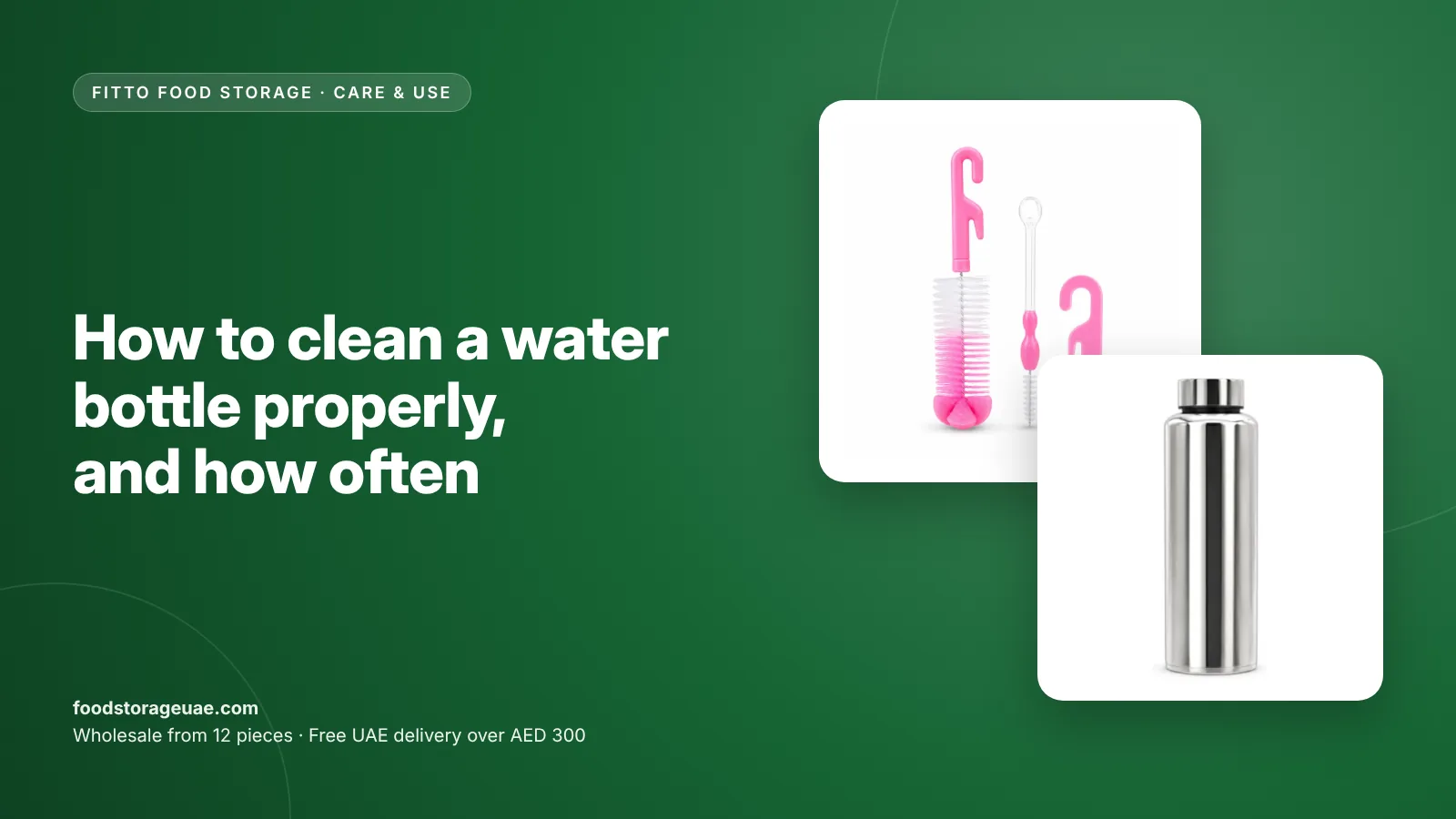
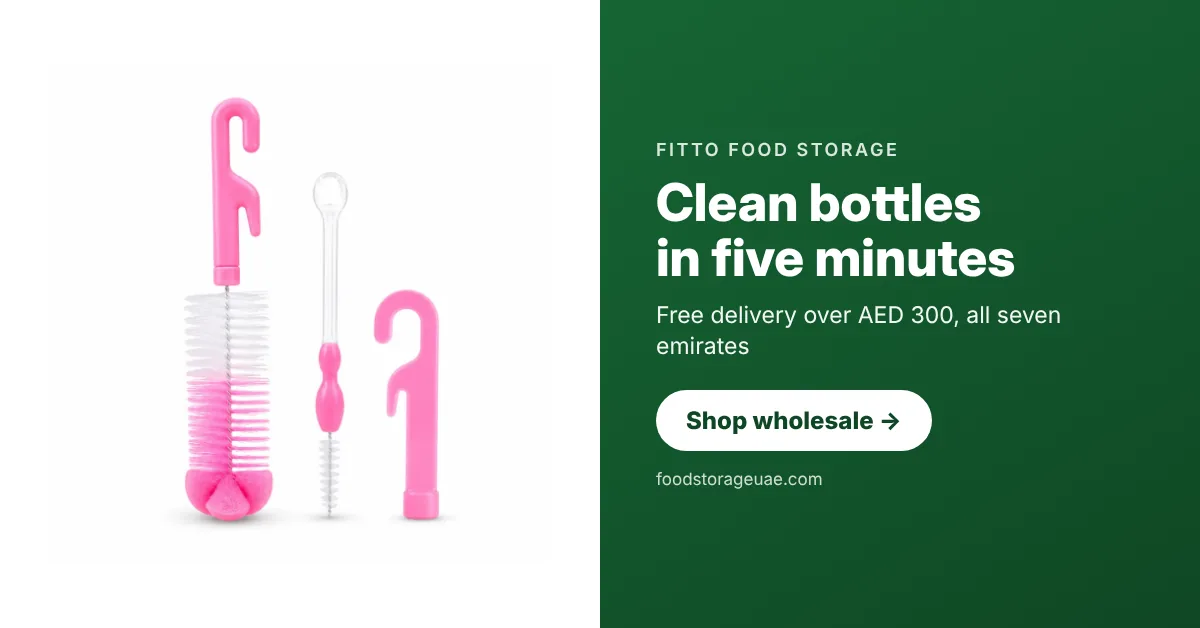
FITTO Trade Pick: Bottles and brushes that make daily cleaning quick Pair the bottle cleaning brush set with small detail brush with the 750 ml stainless steel bottle with screw cap, whose simple cap has fewer parts to clean. Free delivery to all seven emirates on orders over AED 300.
The bottom line
Wash your bottle daily, deep-clean it weekly and always take the lid, straw and seal apart. Dry everything open, keep bottles out of hot cars and replace parts that stay stained.
Browse our wholesale water bottles range or request a quote for mixed packs. You can order a sample at the single-piece price first, or WhatsApp us on +971 55 672 6947. FITTO Food Storage: fit for the way you store.
FAQ
Can I put my water bottle in the dishwasher?+
Only if the care label says it is dishwasher-safe, usually on the top rack. Insulated steel bottles are often hand-wash only, because high heat can damage the paint and vacuum seal. Lids with straws and valves clean better by hand, as jets rarely reach narrow channels.
How do I get rid of a musty smell in a water bottle?+
Soak every part in warm water with baking soda, or in equal parts white vinegar and water, then brush and rinse well. Dry it upside down with the lid off for a full day. If the smell returns quickly, replace the seal or straw.
Is it safe to use bleach to clean a water bottle?+
Most bottles do not need it; soap, baking soda or vinegar handle everyday residue. If you use a bleach product, follow its label for dilution and rinsing, never mix it with other cleaners, and avoid chlorine bleach on stainless steel, which it can damage.
What are the black spots inside my bottle lid?+
They are usually mould growing where moisture stays trapped, such as under a seal or inside a straw. Remove the seal, scrub the groove and soak the parts. If the spots remain after a deep clean, replace the part rather than keep using it.
How often should I replace a reusable water bottle?+
There is no fixed date. Replace it when it has cracks, deep scratches that hold residue, a lid that no longer seals, or a smell that returns soon after a deep clean. Soft straws usually need replacing sooner than the bottle itself.