Tritan vs polypropylene water bottles: clarity, smell and price compared
By FITTO Trade Desk · Last updated 29 October 2026
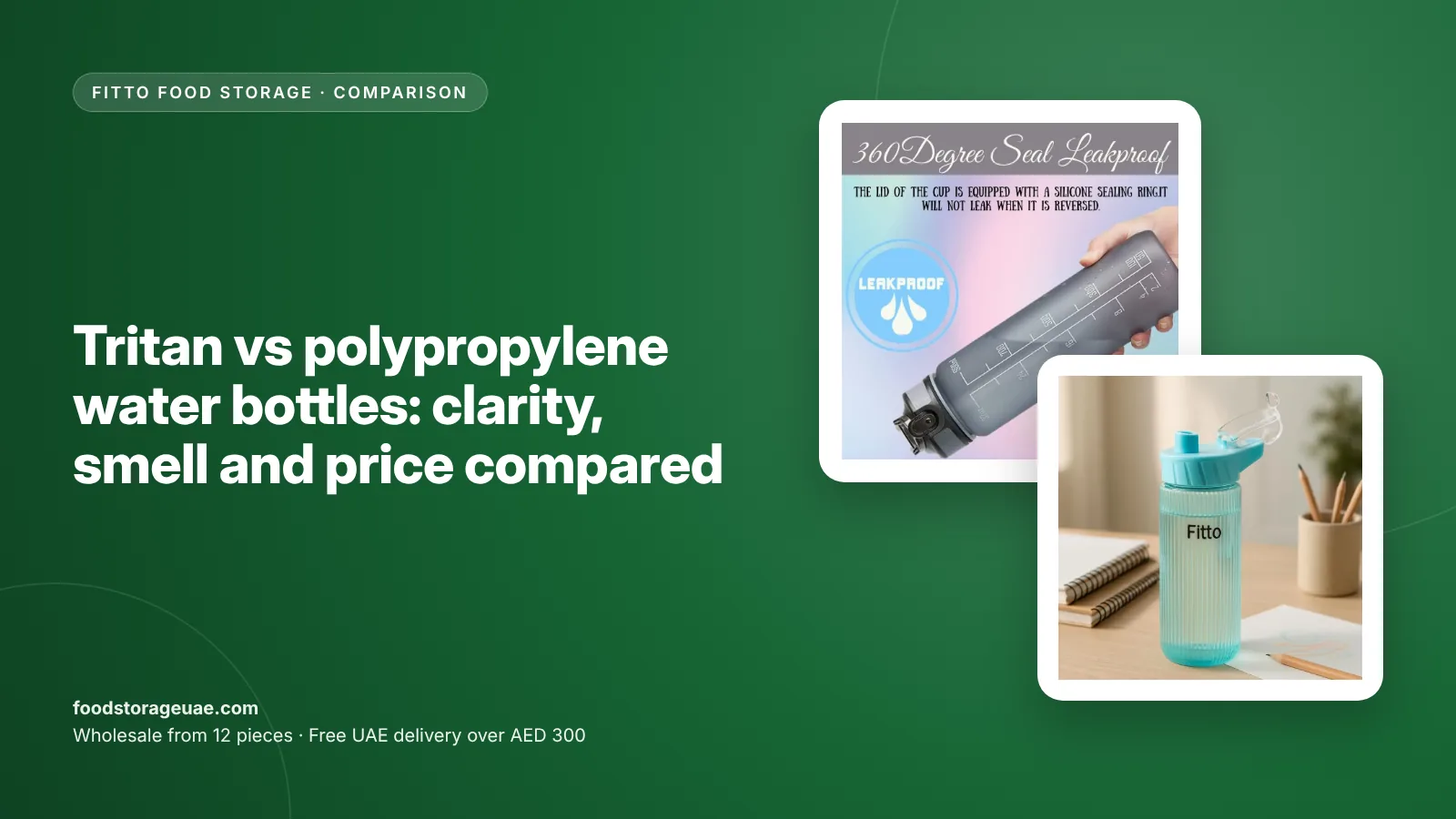
In the Tritan vs polypropylene water bottles choice, Tritan wins on glass-like clarity, toughness and resisting smells, so it suits premium and gym bottles. Polypropylene (PP, resin code 5) is lighter and cheaper, so it suits kids, giveaway and price-led bottles. Neither is designed for boiling drinks, and both are commonly sold BPA-free.
Key takeaways
- Tritan looks and feels closer to glass and holds fewer smells and stains.
- PP is lighter and lower in cost, but looks frosted and can pick up strong odours.
- For premium retail and gym shelves, Tritan earns its higher price.
- For school packs, events and value shelves, PP is usually good enough.
- Read the base code and the listing: "plastic" alone does not tell you which one you are buying.
A bottle that smells of yesterday's protein shake comes back to the counter, and a cloudy bottle does not sell at a premium price. The wrong plastic costs you returns or margin, so this guide compares Tritan and PP point by point.
It is for retail buyers, gym owners, online sellers and careful shoppers in the UAE, where many buyers search for "BPA-free bottle" (قارورة ماء خالية من BPA) before anything else. At FITTO Food Storage, a wholesale water bottle and food storage supplier in the UAE, this is one of the material questions we hear most.
What are Tritan and polypropylene?
Tritan is a clear copolyester plastic made to look like glass; polypropylene is a common, lightweight plastic used across food containers and bottles. Both are used for food-contact products.
Tritan is a copolyester made by Eastman. It is clear, tough and made without BPA. It usually carries resin code 7 ("other"), which confuses some shoppers. Code 7 covers many different plastics, so the code alone does not tell you which one it is.
Polypropylene (PP) carries resin code 5. It is the same plastic used in many microwave-safe food containers and lids. PP is naturally translucent rather than crystal clear, and it flexes slightly when squeezed.
"BPA-free" describes what a plastic leaves out, not which plastic it is. If you are also weighing up steel, see our stainless steel vs plastic water bottles comparison.
How do Tritan and PP bottles compare side by side?
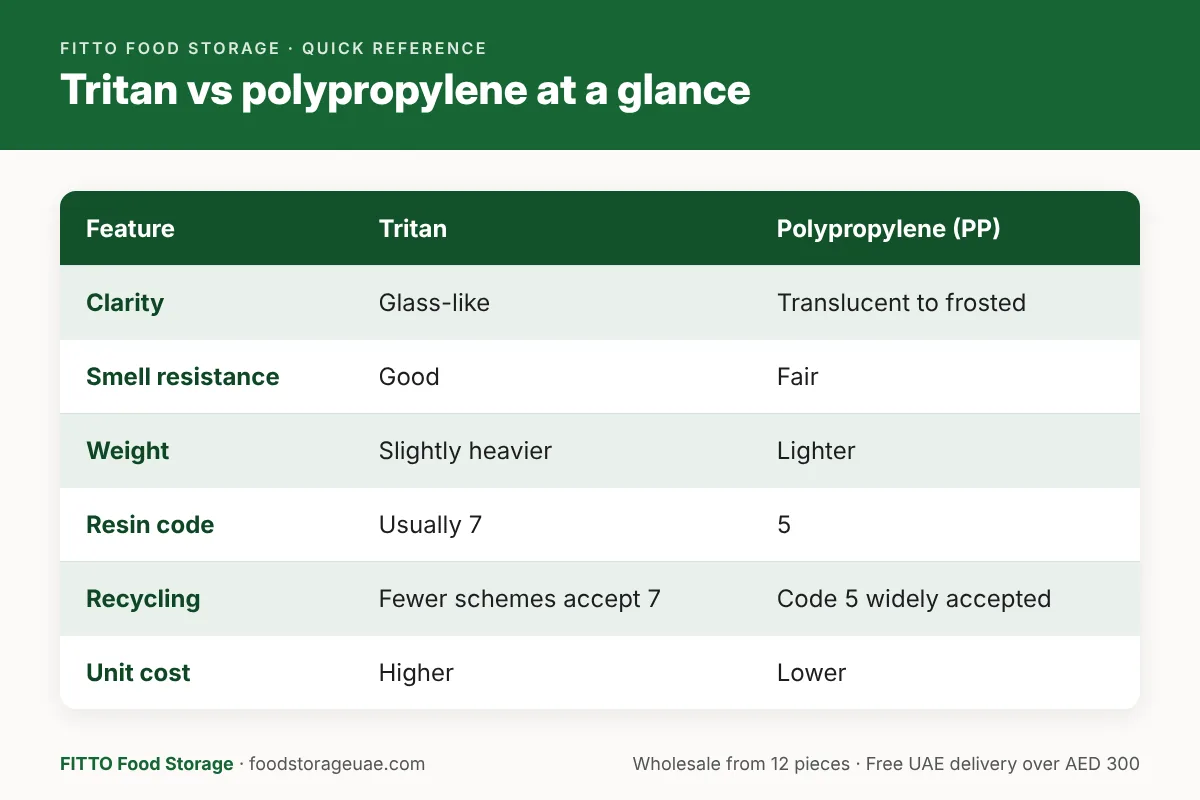
Tritan leads on clarity, toughness and smell resistance; PP leads on weight, recyclability and price. Neither wins every row.
| Feature | Tritan | Polypropylene (PP) |
|---|---|---|
| Clarity | Glass-like | Translucent to frosted |
| Smell and stain resistance | Good; rinses clean more easily | Fair; can hold coffee, juice and protein smells |
| Impact resistance | High; resists cracking when dropped | Good; flexes rather than cracks |
| Scratch resistance | Good; stays clear longer | Scuffs show more over time |
| Heat | Warm washing is fine; not for boiling drinks | Warm washing is fine; not for boiling drinks |
| Weight | Denser material, slightly heavier bottle | Lighter; one of the lightest common plastics |
| Resin code | Usually 7 | 5 |
| Recycling | Code 7 is accepted by fewer schemes | Code 5 is more widely accepted |
| Unit cost | Higher | Lower |
| Best for | Premium retail, gyms, adults | Kids, schools, events, value shelves |
The weight gap is small: PP is roughly 0.9 g per cubic centimetre against roughly 1.2 for copolyester.
Which plastic holds smells and stains less?
Tritan holds smells and stains less than PP, which is why it is popular for gym and premium bottles. PP's surface picks up strong flavours and colours over time, the same way a PP food box can turn orange from tomato sauce.
In UAE use, smell complaints usually come from protein shakes, flavoured drinks and bottles left closed in a hot car, where warmth speeds up bacterial growth. Habits matter more than material: tell customers to rinse after each use, wash lid parts separately and dry bottles with the lid off.
Can Tritan and PP bottles take hot drinks or the dishwasher?
Both handle warm washing, but neither is designed for boiling drinks. For hot tea or coffee, an insulated steel flask is the right tool, as our flasks and thermos trade guide explains.
Many Tritan and PP bottles can go on the top rack of a dishwasher, but ratings vary, so read the label. Very hot liquid in a sealed plastic bottle can also build pressure and soften thin walls. The safe rule to pass on:
- Use plastic bottles for cold or room-temperature drinks.
- Wash lids and straws by hand unless the product says otherwise.
- Do not leave bottles in hot cars for long periods.
- Choose a steel flask for hot drinks.
Which costs less per piece, and does it matter?
PP bottles cost less per piece than Tritan bottles of the same size, because PP is a cheaper raw material. Whether that matters depends on who is buying.
For a school pack, an event giveaway or a supermarket shelf, unit cost drives the decision. For a gym front desk or a premium gift shelf, buyers look first and check price second, and a clear Tritan bottle with time markers supports a higher shelf price.
Which bottle should each buyer stock?
Stock Tritan for buyers who pay for looks and smell resistance, and PP for buyers who pay for price and lightness. Many shops carry both at two price points.
| Buyer | Better choice | Why |
|---|---|---|
| Gyms and sports shops | Tritan | Clear, tough, resists shake smells |
| Premium retail and gifting | Tritan | Glass-like look supports a higher price |
| Schools and nurseries | PP | Light, low cost, flexes when dropped |
| Events and giveaways | PP | Lowest cost per piece |
| Supermarkets and value shelves | PP | Fast sell-through at entry prices |
| Office desks | Either | Tritan for looks, PP for budget packs |
For range planning across all bottle types, see our water bottles wholesale guide. For style picks by sport, read sports water bottles: 9 styles to stock.
How can you tell which plastic a bottle is made from?
Check the base for a resin code and the label or listing for the material name. A "5" or "PP" means polypropylene; Tritan is usually named on the label.
Four quick checks in store:
- Look at the base. A triangle with "5" means PP. A "7" means "other", which may be Tritan or another plastic.
- Hold it to the light. Tritan looks crystal clear; PP looks milky or frosted, even when tinted.
- Squeeze gently. PP flexes more; Tritan feels stiffer.
- Read the listing. If it says only "BPA-free plastic", the material is not named, so judge it by the checks above or ask the seller.
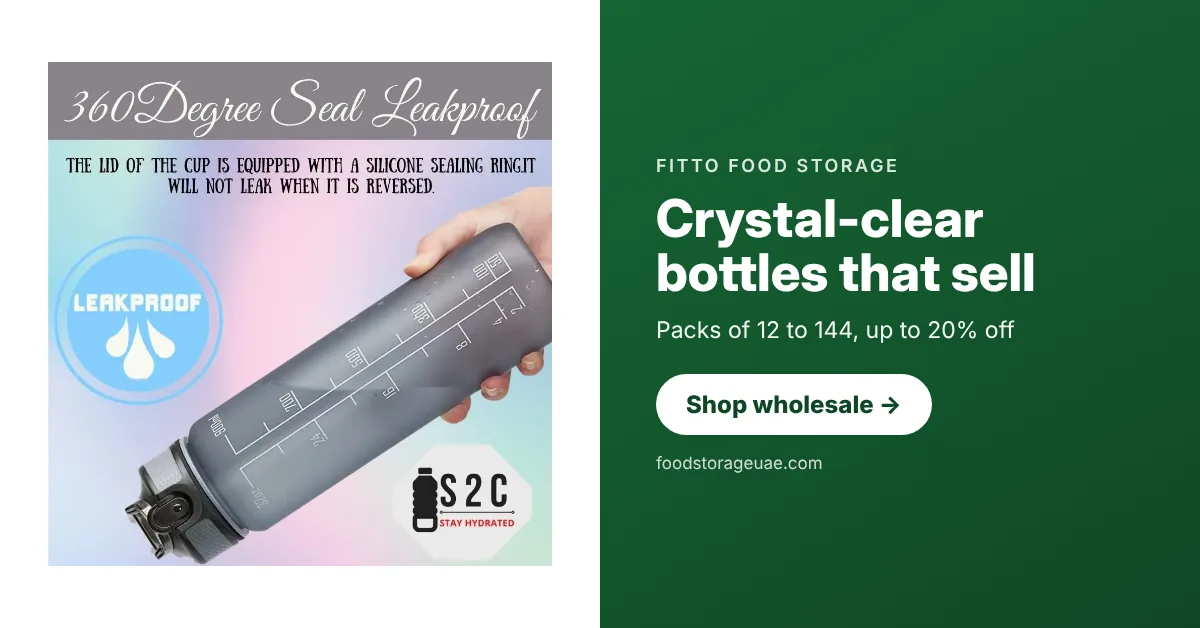
FITTO Trade Pick: Clear bottles that sell themselves on the shelf Put the 1 L Tritan motivational bottle with time markers on gym and premium shelves, and the 750 ml BPA-free plastic sport bottle in value packs. Wholesale prices start from 12 pieces, with up to 20% off per piece on packs of 144.
The bottom line
Tritan is the better plastic when clarity and smell resistance justify a higher price. PP is the sensible choice when weight and unit cost matter most. Match the material to the buyer, and most shops will find room for both.
Compare bottles in our wholesale water bottles range, request a quote for mixed packs, or order a sample, credited on a bulk order of AED 2,000+ within 30 days. Questions? WhatsApp +971 55 672 6947. FITTO Food Storage: fit for the way you store.
FAQ
Is Tritan safer than polypropylene?+
Both are widely used for food-contact bottles and both are commonly sold BPA-free. Neither is automatically "safer"; what matters is that the bottle is made for food contact and used as intended. Use plastic bottles for cold or room-temperature drinks, and follow the care instructions on the label.
Why does my plastic bottle smell even after washing?+
Smells usually come from residue in the lid, straw or gasket, or from a bottle closed while still damp. Take the lid apart, wash every part, soak with warm water and baking soda, and dry everything open before closing it again.
Can I put boiling water in a Tritan bottle?+
It is better not to. Most Tritan bottles are made for cold and room-temperature drinks, and some are rated for warm liquids, but ratings vary by product. For hot tea, coffee or soup, use an insulated stainless steel flask, which is designed to hold hot liquids and keep them warm.
Why is resin code 7 on my Tritan bottle?+
Code 7 means "other" and covers plastics that do not fit codes 1 to 6. Tritan falls into this group. Because many different plastics share code 7, the code alone does not tell you the material, so check the label or listing for the name Tritan.
Which plastic bottle is best for school children?+
PP bottles suit most school use. They are light, low in cost and flex rather than crack when dropped. Choose a leakproof lid that small hands can open and close. Tritan is a good upgrade for older children who look after their bottles, as it stays clear for longer.