Flasks and thermos wholesale in the UAE: the complete trade buyer's guide
By FITTO Trade Desk · Last updated 29 October 2026
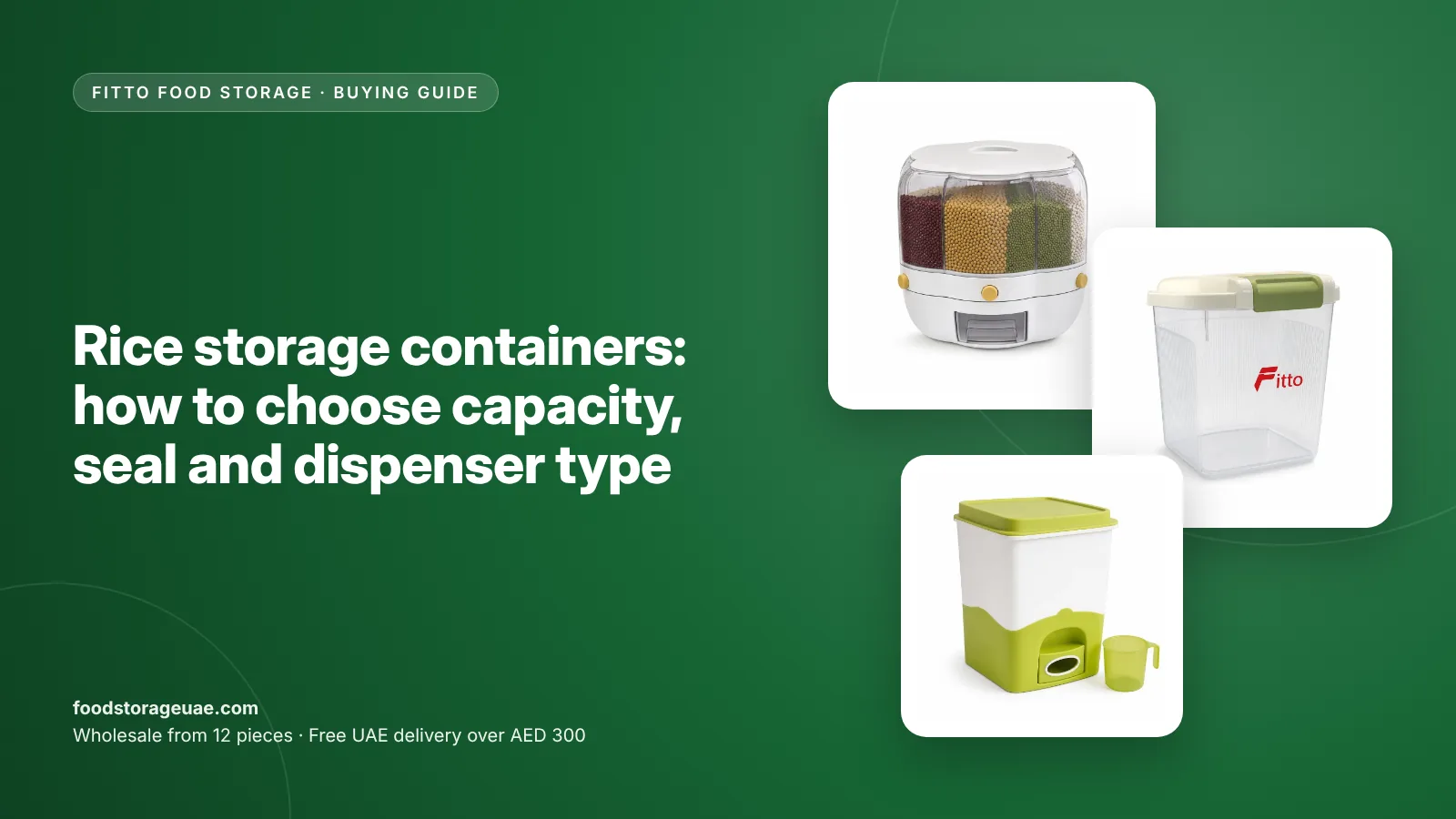
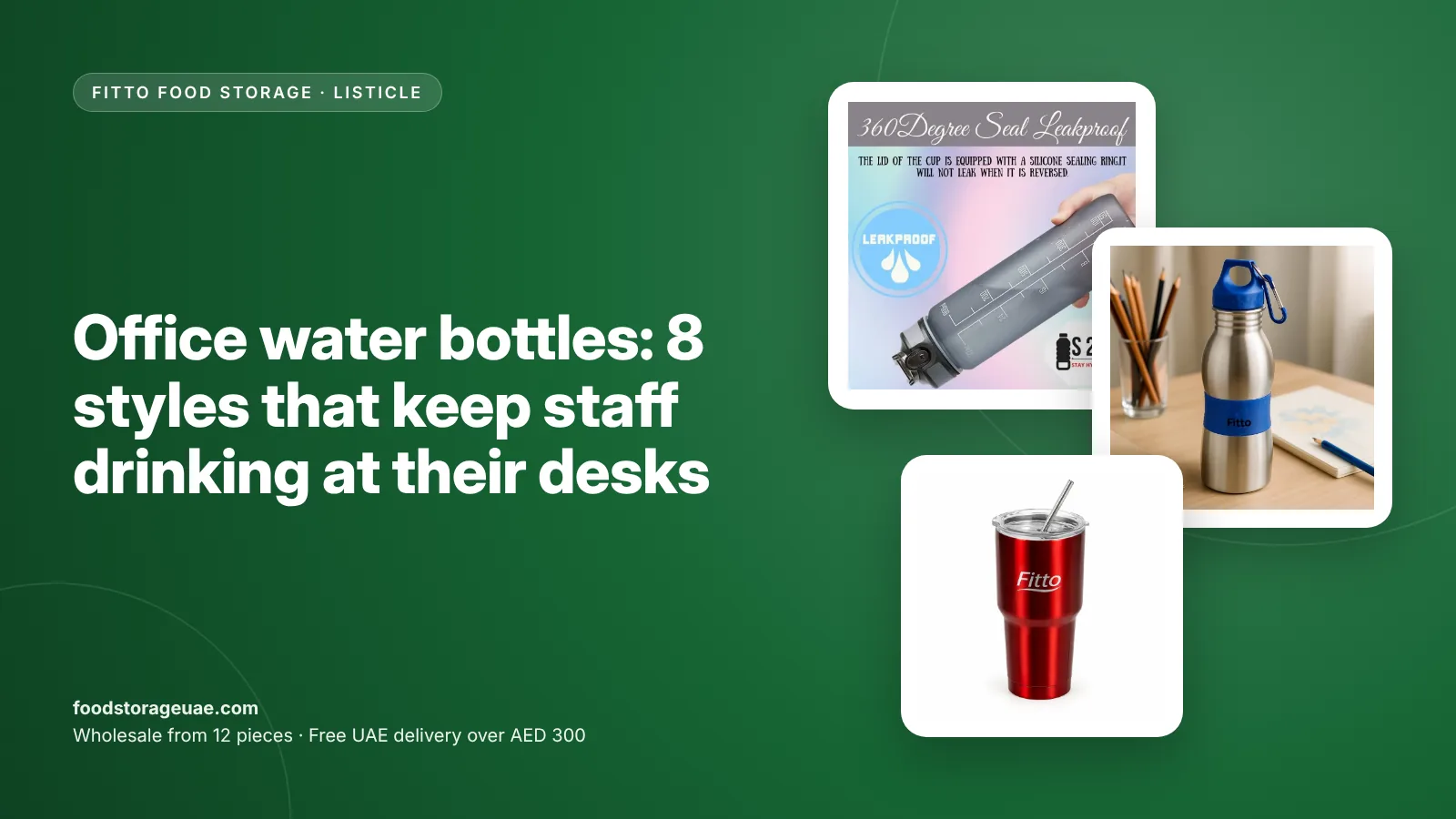
Flasks and thermos products keep drinks hot or cold with a vacuum between two walls. For flasks and thermos wholesale in the UAE, a balanced range covers 380 ml mugs, 500 ml to 1 L personal flasks, 1–2 L serving flasks, 2.5–3.5 L thermal jugs and insulated hot pots, matched to homes, majlis, offices and catering.
Key takeaways
- Vacuum insulation does most of the work, but the lid and gasket decide whether heat and drips stay in.
- Most demand sits in four sizes: 500 ml, 1 L, 1.9–2 L and 3.5 L.
- Stainless steel liners survive knocks; glass refills keep tea and gahwa tasting clean but can crack.
- Stock by customer type (home, majlis, office, catering), not by colour.
- Test every new line with a hot-fill, leak and pour check before it reaches the shelf.
A flask that loses heat by mid-morning comes back as a complaint, and two or three returns can wipe out the margin on a carton. This guide settles what to look for, which sizes to stock and how to match each line to the buyer.
It is written for kitchenware and gift shops, office procurement teams, hotel and catering buyers, and anyone building a flask and thermos (ترمس, termos) range in the UAE or wider GCC. At FITTO Food Storage, a wholesale flasks and drinkware supplier in the UAE, these are the questions trade buyers ask us most.
How does a vacuum flask keep drinks hot or cold?
A vacuum flask has two walls with the air removed between them, so heat has almost nothing to travel through. The lid and the neck are where most heat escapes.
Heat moves in three ways: conduction, convection and radiation. A vacuum stops the first two across the walls. Many flasks also use a polished or plated inner surface to reflect radiant heat back towards the drink.
That leaves the opening. A wide mouth is easy to clean but loses heat faster; a narrow neck with a screw stopper holds temperature longer.
In practice, three things decide how a flask performs:
- Vacuum quality. If the outer wall feels warm a few minutes after you fill the flask with hot tea, the vacuum has failed.
- Lid seal. A silicone gasket that sits flat and evenly keeps heat in and stops drips.
- Fill level. A full flask holds temperature far better than a half-empty one, because there is less air inside to cool.
Treat any "hours hot" figure as a guide measured under test conditions. Real results depend on the starting temperature, how often the lid is opened and the room. For more on reading those claims, see our guide on how to choose a vacuum flask.
What types of flasks and thermos products should a UAE range include?
A practical range covers five families: insulated mugs and tumblers, personal flasks, serving flasks, thermal jugs and insulated hot pots. Each family serves a different moment of the day.
| Product family | Typical sizes | Main use | Best buyers |
|---|---|---|---|
| Insulated mugs and tumblers | 380 ml mug with lid, tumblers with lid | Coffee at the desk or in the car | Offices, commuters, gift shops |
| Personal vacuum flasks | 500 ml, 750 ml, 800 ml, 1 L | Carry-along hot or cold drinks | Students, site staff, outdoor teams |
| Serving flasks with handle | 1 L, 1.9 L, 2 L | Tea, karak and gahwa at home or majlis | Families, majlis hosts, hotels |
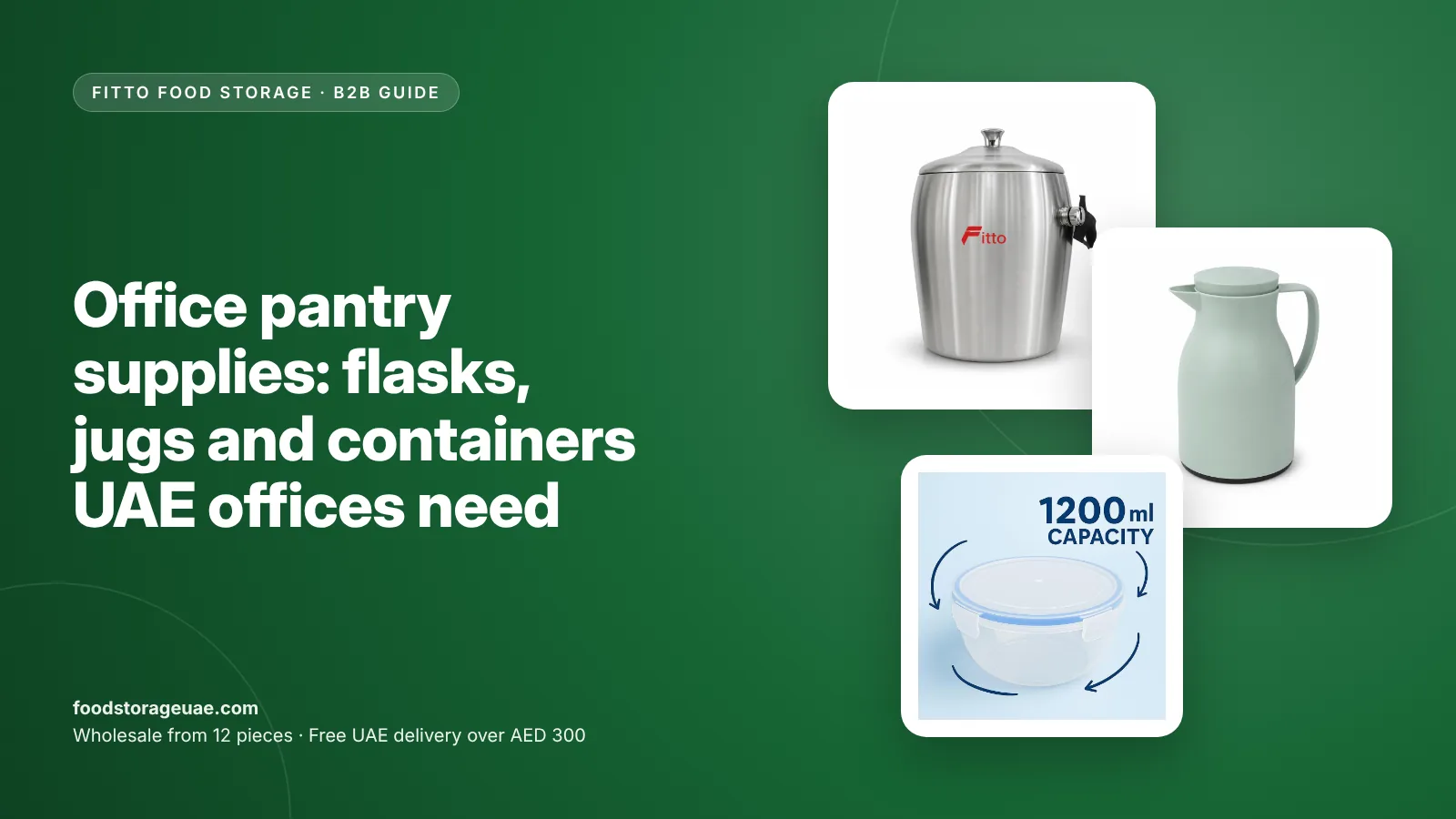
| Thermal jugs | 2.5 L, 3.5 L with spigot | Self-serve coffee and tea | Offices, catering, events |
| Insulated hot pots and casseroles | 1.5 L to 6.3 L | Keeping rice, stews and bread warm | Families who host, caterers |
Personal flasks are the everyday line. Serving flasks carry the most style variety, from ribbed bodies to floral prints and gold-tone trim. Thermal jugs and hot pots sell in lower volumes but bring in office and catering accounts.
You can see every family side by side in our Flasks & Thermos category. If hot pots are a big part of your business, our insulated hot pot sizes guide goes deeper on matching pot sizes to guest numbers.
Which flask sizes sell best, and how many cups does each serve?
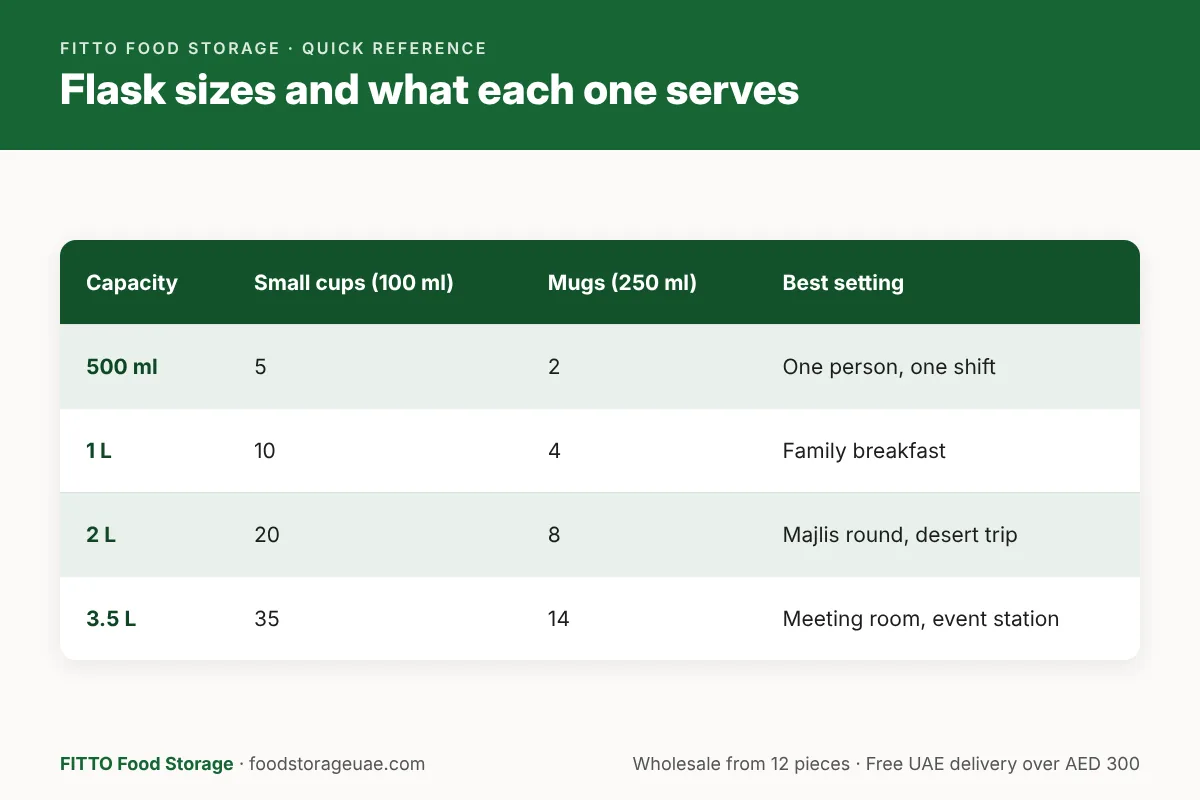
For most shops, four sizes cover the bulk of requests: 500 ml for one person, 1 L for a small household, 1.9–2 L for hosting and 3.5 L for offices and events. Start narrow and add sizes when customers ask.
A 500 ml flask suits a single commuter, student or shift worker, and gifts well when boxed with small cups. A 1 L flask is the household workhorse for breakfast or a short visit. A 1.9–2 L flask serves a larger majlis round without constant refills. A 2.5 L or 3.5 L jug with a spigot lets office or event guests serve themselves.
| Capacity | Small cups (about 100 ml) | Mugs (about 250 ml) | Typical setting |
|---|---|---|---|
| 500 ml | 5 | 2 | One person, one shift |
| 1 L | 10 | 4 | Family breakfast, small visit |
| 2 L | 20 | 8 | Majlis round, desert trip |
| 3.5 L | 35 | 14 | Meeting room, event station |
Cup counts assume a full flask and no spillage, so treat them as a planning guide. Gahwa cups (finjan) are smaller still, so a 1 L flask goes much further for Arabic coffee.
What should you check on lids, liners and materials?
Check the liner, the lid mechanism and the gasket before you check the colour. These three decide whether the flask comes back.
Stainless steel liners are the most durable choice. They survive drops, suit daily carrying and are easy to clean. If your customers ask for a specific steel grade, look for it on the product details or packaging, and do not promise a grade the listing does not state.
Glass refills sit inside a plastic or metal body, as in the 1 L plastic vacuum flask with glass refill in white and gold. Many hosts prefer glass for gahwa and tea because it does not hold flavours. The trade-off is breakage: a hard knock or a sudden temperature change can crack the refill, so steer families with small children towards steel.
Lids come in three main types:
- Screw stopper: best seal and best heat hold; slower to pour.
- Push-button pour lid: one-handed pouring, ideal for serving flasks; needs careful cleaning around the button.
- Cup lid: the outer cap becomes a cup; ideal for travel and camping.
Gaskets should be removable for cleaning. A gasket that cannot come out traps tea and milk residue, which is the root of most smell complaints in UAE heat.
Handles and finish matter for serving flasks. A sturdy handle and a defined spout make a 2 L flask easy to pour, and textured or printed bodies hide fingerprints better than plain gloss.
Which flasks suit homes, majlis, offices and catering?
Match the product to the setting: carry flasks for individuals, handled serving flasks for majlis, jugs and mugs for offices, and hot pots plus large jugs for catering. Each buyer has a different first question.
Homes and families
Families want a 1 L serving flask for breakfast and a 500 ml or 750 ml flask for work. Patterned finishes sell well as counter pieces. Hot pots of 1.5 L to 3.5 L keep rice and curries warm when dinner runs late.
Majlis hosts
Majlis buyers care about pouring, capacity and looks. A 1.9 L or 2 L handled serving flask is the core item, and gold-tone trim suits formal rooms. Many hosts keep separate flasks for gahwa, karak and hot water, so pairs and sets sell well.
Offices
Offices need a thermal jug for the meeting room, a few 1 L flasks for the pantry and 380 ml double-wall mugs with lids for staff. For a commuter versus desk comparison, see our vacuum flask vs tumbler guide.
Hotels and catering
Catering teams want a 3.5 L jug with a spigot for self-serve stations, matched hot pot sets for buffets and spare stock for breakages. Silver and black steel finishes match most buffet equipment.
Camping and outdoor trips
From November to March, desert camping drives demand for 2 L flasks with cup lids and large hot pots. Our desert camping flasks guide covers kit lists by group size.
How do UAE heat and seasons affect flask sales?
UAE demand for flasks runs all year, but it shifts: cold-drink use peaks in summer, while hot-drink and hosting use peaks from November through Ramadan. Plan stock around those two waves.
In summer, outdoor teams and students buy steel flasks to keep water cold, so a 750 ml or 1 L steel flask sells in July as readily as in January.
From November, the winter camping season, National Day on 2 December, year-end gifting and the Dubai Shopping Festival all lift sales of serving flasks and hot pots. Ramadan brings another peak for serving flasks, jugs and hot pots used at iftar. It moves about 11 days earlier each year, so check the expected start date when you plan the order.
A simple stock rhythm for shops:
- September–October: build stock of serving flasks, gift-boxed flasks and hot pots.
- November–December: top up 2 L flasks and hot pot sets for camping, National Day and gifting.
- Six to eight weeks before Ramadan: reorder serving flasks, jugs and hot pots.
- May–June: shift facings to steel bottles and personal flasks for summer.
How should a shop build a balanced flasks and thermos range?
Start with 8 to 12 lines across four tiers, then let sell-through guide the next order. Avoid stocking every colour of every size on day one.
A starter range might look like this:
| Tier | Example lines | Why it earns shelf space |
|---|---|---|
| Entry | 500 ml steel flask, 380 ml insulated mug | Impulse and everyday buyers |
| Core | 1 L serving flask with pour spout, 750 ml steel flask | Steady repeat sellers |
| Hosting | 1.9–2 L serving flask, 4-piece vacuum jug set | Bigger baskets, majlis buyers |
| Catering and office | 3.5 L thermal jug with spigot, hot pot set | Trade accounts and events |
Display tips that help sell-through:
- Group by use (carry, serve, cater), not by brand or colour.
- Show one flask open with the lid off so buyers can see the gasket.
- Keep gift-boxed flasks near the till from October to March.
Remember that a set counts as one piece on FITTO listings. One 4-piece vacuum jug set gives you jugs of 1.0, 1.3, 1.6 and 1.9 litres, so price and display it as a set rather than splitting it.
How do you test a flask line before you stock it?
Run five quick checks on a single piece: hot fill, outer-wall touch, leak test, pour test and finish check. Together they take under an hour and catch most problems that lead to returns.
- Hot fill. Fill the flask to the neck with freshly boiled water and close the lid.
- Touch the outer wall after 10 minutes. It should feel close to room temperature. A warm body means poor insulation.
- Leak test. Lay the closed flask on its side over a paper towel for 15 minutes, then turn it upside down. Any damp patch is a gasket or thread problem.
- Pour test. Pour a full cup. A good spout pours in a clean stream without dripping down the body.
- Finish check. Look at prints, trim and the base for scratches or uneven paint, which gift buyers notice first.
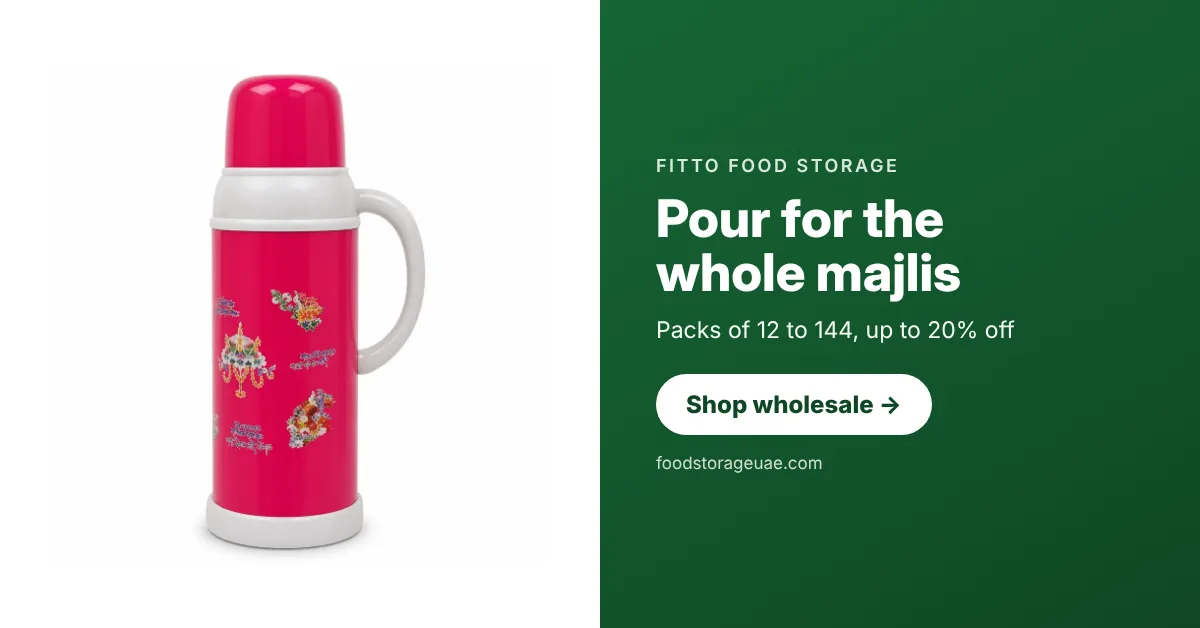
FITTO Trade Pick: Serving flasks built for majlis and office pouring Stock the 1 L vacuum flask with handle and pour spout, the 2 L insulated flask with cup lid and the 3.5 L thermal jug with serving spigot to cover homes, majlis and meeting rooms. Wholesale prices start from 12 pieces, with up to 20% off per piece on packs of 144.
How do you care for flasks so they last?
Rinse after every use, wash the lid and gasket separately and dry everything open. Most flask problems are lid problems.
- Empty and rinse the flask with warm water straight after use.
- Remove the gasket and wash it with mild soap and a soft brush.
- Clean the body with a bottle brush; a warm baking-soda soak lifts tea and coffee stains.
- Dry and store with the lid off. A sealed, damp flask develops smells fast in UAE humidity.
Do not put a flask in the dishwasher unless the product says it is dishwasher safe. Heat and harsh detergent can damage printed finishes and the vacuum seal. With glass refills, warm the refill with hot tap water before pouring in boiling water, to reduce the risk of cracking.
The bottom line
A strong flasks and thermos range is built around four sizes, sound lids and liners matched to real use. Personal flasks drive daily sales, serving flasks and jugs win hosting and office accounts, and hot pots bring in caterers. Test each line, start narrow and let sell-through shape your next carton.
Browse our wholesale flasks and thermos range or the full food storage catalogue. Request a quote for mixed cartons, or order a sample at the single-piece price, credited on a bulk order of AED 2,000+ within 30 days. Questions? WhatsApp us on +971 55 672 6947. FITTO Food Storage: fit for the way you store.
FAQ
What is the difference between a flask and a thermos?+
In everyday UAE use, the two words mean the same thing: an insulated container that keeps drinks hot or cold. "Thermos" began as a brand name and became a general term. In the trade, "flask" usually means a carry or serving bottle, while "thermal jug" means a larger pouring container for offices and events.
Which flask size should a small shop stock first?+
Start with 500 ml and 1 L. The 500 ml flask covers commuters, students and gift buyers. The 1 L flask covers families and small offices. Add a 1.9–2 L serving flask once you see majlis or hosting demand, and a 3.5 L jug if you supply offices or caterers.
Are glass-refill flasks better than stainless steel?+
Neither is better for everyone. Glass refills keep the taste of tea and gahwa clean, so many hosts prefer them for the majlis table. Stainless steel is far more durable and suits carrying, children and trips, and it usually brings a shop fewer breakage returns.
Can a vacuum flask keep water cold in a UAE summer?+
Yes. Vacuum insulation slows heat moving in as well as out, so the same flask keeps iced water cold. For best results, pre-chill it with cold water for a few minutes, fill it to the top and keep it out of direct sun and parked cars, where cabin temperatures climb fast.
Is it fine to keep karak or milky tea in a flask all day?+
It is better not to. As a general food-safety rule of thumb, drinks with milk should be kept very hot or cold and finished within a few hours, because lukewarm milk lets bacteria grow. Make a fresh batch for the afternoon, and rinse the flask and gasket as soon as it is empty.
How do I stop a flask from smelling?+
Remove and wash the gasket every time, then dry the flask upside down with the lid off. A warm water and baking soda soak lifts tea and coffee residue. Store it open, especially in humid UAE apartments where sealed flasks start to smell quickly.