Spill-proof kids cups: 10 features parents check
By FITTO Trade Desk · Last updated 29 October 2026
Spill proof kids cups depend on a lid that clicks on evenly, a straw or spout that closes, and a base that does not tip easily. Check lid fit, seal, handles, size for the child's age and how many parts need washing. No cup is fully spill-proof when thrown, so choose the features that cut the most common spills.
Key takeaways
- The lid fit does most of the work. A lid that twists or clicks on evenly leaks far less than a loose push-on lid.
- "Spill-resistant" usually means it copes with a tip-over, not with being shaken upside down.
- Match capacity to age: small hands manage a light cup better than a big one full to the brim.
- Fewer parts means easier cleaning, fewer lost valves and fewer smells.
- Shops and nurseries get fewer complaints from two or three proven designs than from ten novelty ones.
A soaked school bag or juice across a nursery table costs more than the drink. Parents lose time, nurseries lose cleaning hours and shops get the cup back as a "faulty" return. This list settles which features actually stop spills, so you buy or stock kids cups once.
It is written for parents, nurseries and baby and toy shops. At FITTO Food Storage, a wholesale food storage and drinkware supplier in the UAE, we stock kids cups with lids and straws (كوب أطفال), slush-style cups and cartoon water bottles for school and outings.
What does "spill-proof" really mean on a kids cup?
On a kids cup, "spill-proof" usually means the drink stays in when the cup tips over on a table. It rarely means the cup survives being shaken upside down in a bag, so read the label and test it.
There are three common levels, and they suit different jobs:
| Level | What it handles | Typical design | Best use |
|---|---|---|---|
| Open cup | Nothing once tipped | No lid | Supervised meals, learning to sip |
| Lid and straw | Small tips on a table | Fitted lid, open straw | Home, parties, nursery snack time |
| Closed bottle | Carrying in a bag | Flip-top or screw cap that seals | School, outings, car trips |
A lidded cup with an open straw drips if it falls straw-down. A flip-top bottle closes that channel, so it travels better.
How we chose these 10 features
We ranked features by how often their failure causes a spill or a return. Cups mostly fail in four ways: lids pulled off, straws leaking, cups tipped by small hands and parts lost or left dirty.
We left out print and colour: they sell a cup but do not keep a drink in it.
The 10 features that cut spills
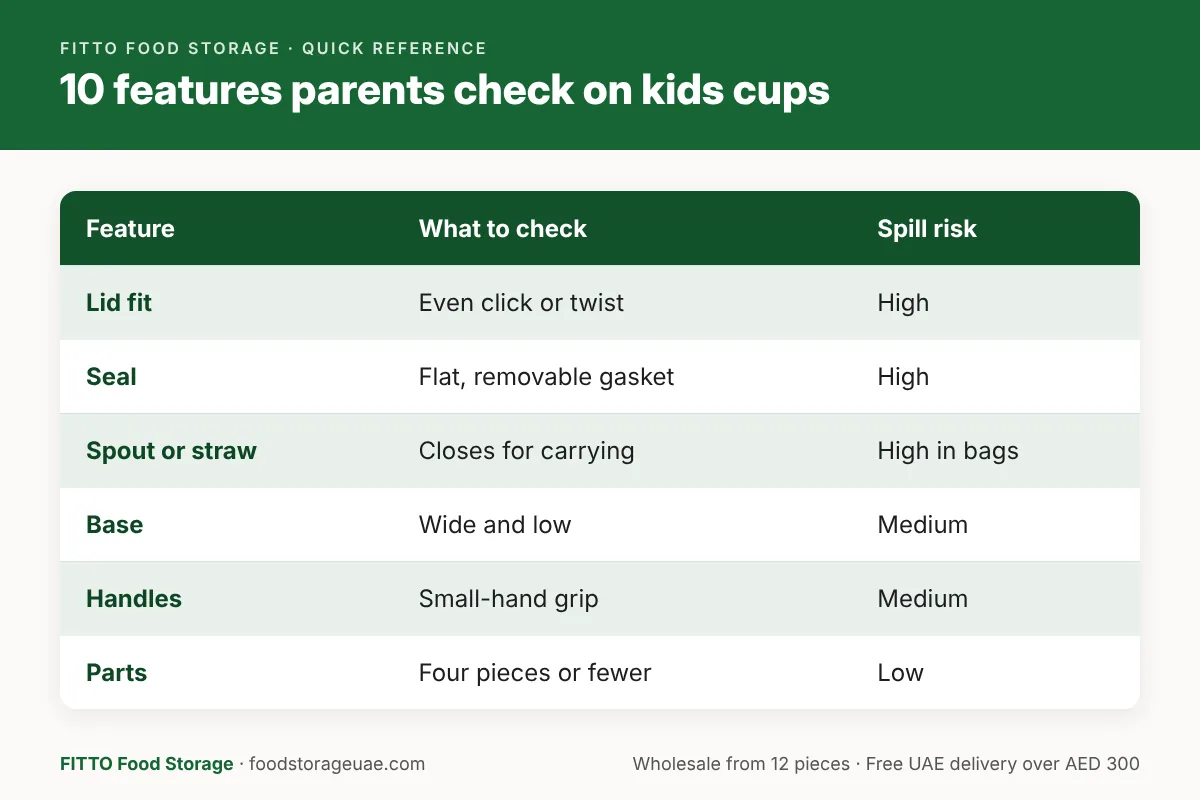
Check these in order: the first four stop most spills, the rest stop drips, mess and early replacement.
1. Lid fit
The lid should twist or click on evenly all the way round. Press its middle: if it pops or flexes, a child can pull it off.
2. A seal or gasket
A soft ring inside the lid stops drink creeping out along the thread. Check that it sits flat and lifts out for washing; a twisted gasket leaks.
3. A closing spout or straw
Straws and spouts are the weak point. A flip-top that clicks shut, or a cap over the straw, keeps the channel closed in a bag. An open straw is fine for drinking at the table.
4. A stable base
A wide, flat base resists tipping. Tall, narrow cups suit older children; toddlers do better with a lower, broader shape.
5. Handles or grip
Side handles or a textured body help small hands hold on. Many spills start with a cup slipping, not a lid failing.
6. Capacity for the age
A smaller cup weighs less when full and is easier to control. Fill to about two thirds for young children, so a tip loses less.
7. Straw width and length
A straw that reaches the bottom avoids tilting the cup. Very wide straws deliver gulps that end up on clothes.
8. Number of parts
Count the pieces: cup, lid, straw, valve, gasket. Each one is a part to wash and to lose.
9. Material and labels
Read the material and any "BPA-free" or dishwasher markings on the label. Plastic is light and does not shatter when dropped; stainless steel is heavier but keeps drinks cool.
10. Carry options
A shoulder strap or carry loop keeps a bottle off the floor and out of hands that swing it. For school, carry options matter more than lid style.
Which cup suits which age?
Younger children need light, stable cups used at the table; school-age children need closed bottles that survive a bag. Always check the age guidance printed on the product label.
| Age (rule of thumb) | Suggested cup | Why |
|---|---|---|
| Around 6–12 months | Open or free-flow cup, held with help | Learning to sip; small amounts |
| 1–3 years | Lidded cup with straw and handles | Light, stable, table use |
| 3–6 years | Lidded straw cup at home; flip-top bottle out | Starts carrying own drink |
| 6 years and up | Flip-top or screw-cap bottle with strap | School bags, sports, outings |
The NHS in the UK suggests introducing an open or free-flow cup from about six months, rather than a cup with a valve, because sipping is better for developing teeth. If your child has feeding difficulties, ask your paediatrician or health visitor which cup to use.
Which kids cups should shops and nurseries stock?
Stock one cup for the table, one for parties and one bottle for school, each in several colours. That covers most requests with a small, easy-to-reorder range.
In our kids drinkware range, three lines map onto those jobs:
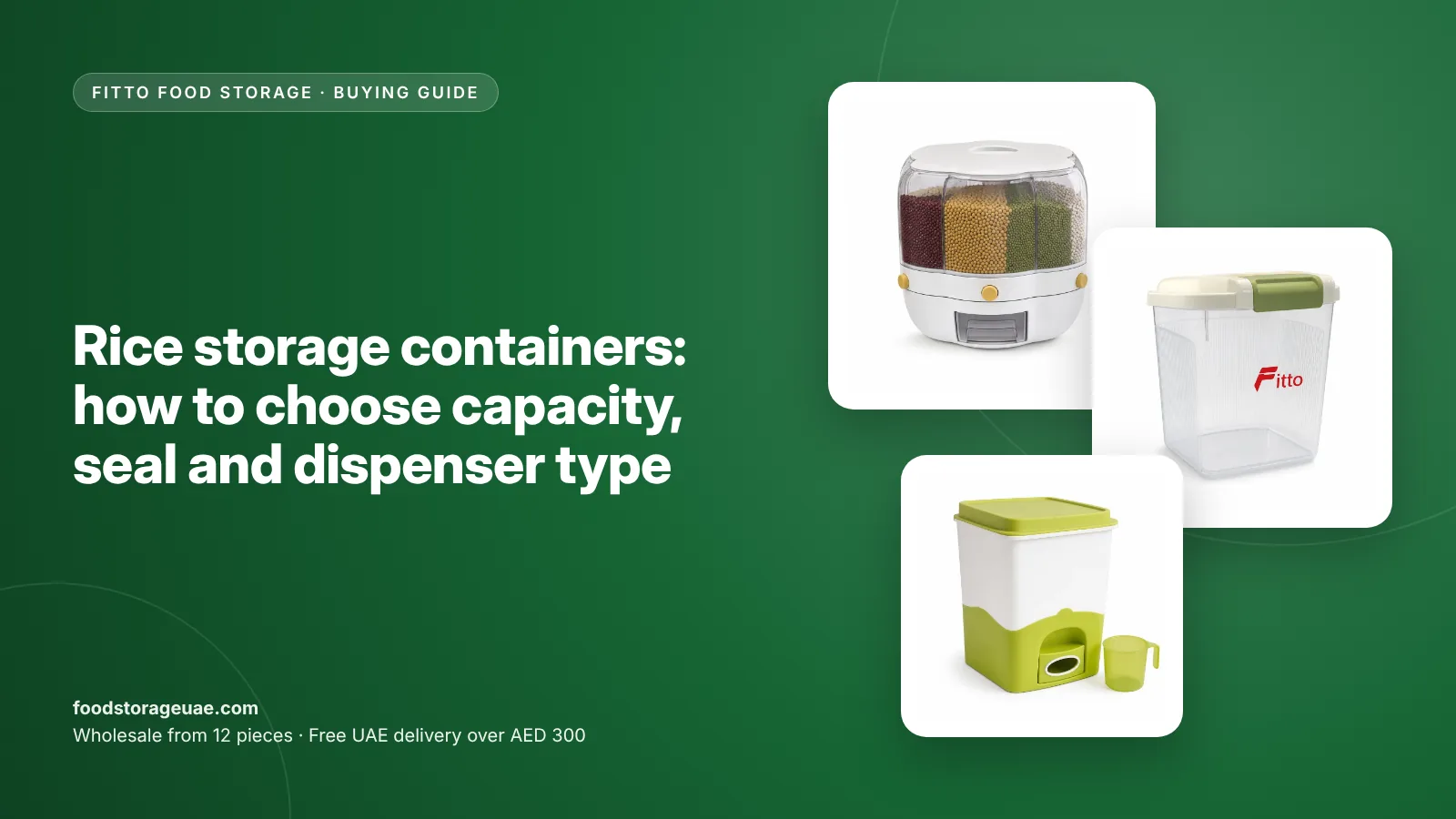
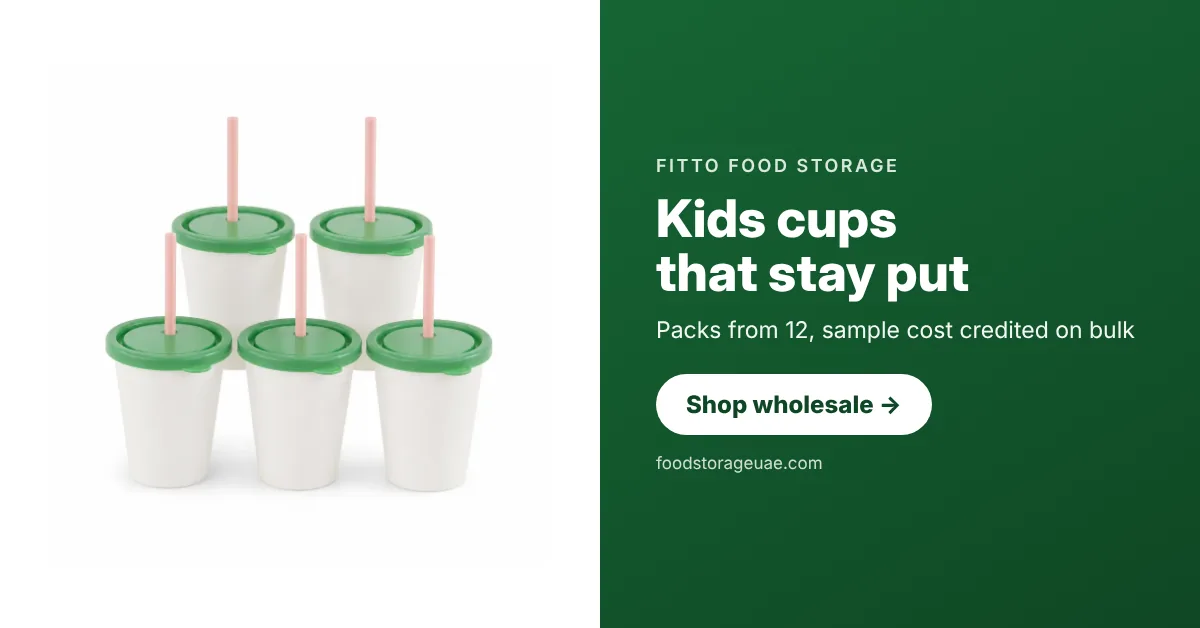
- Table and home: the plastic cups with lids and straws, 5-piece set in white, green and pink, sold for cold drinks with a fitted lid and straw.
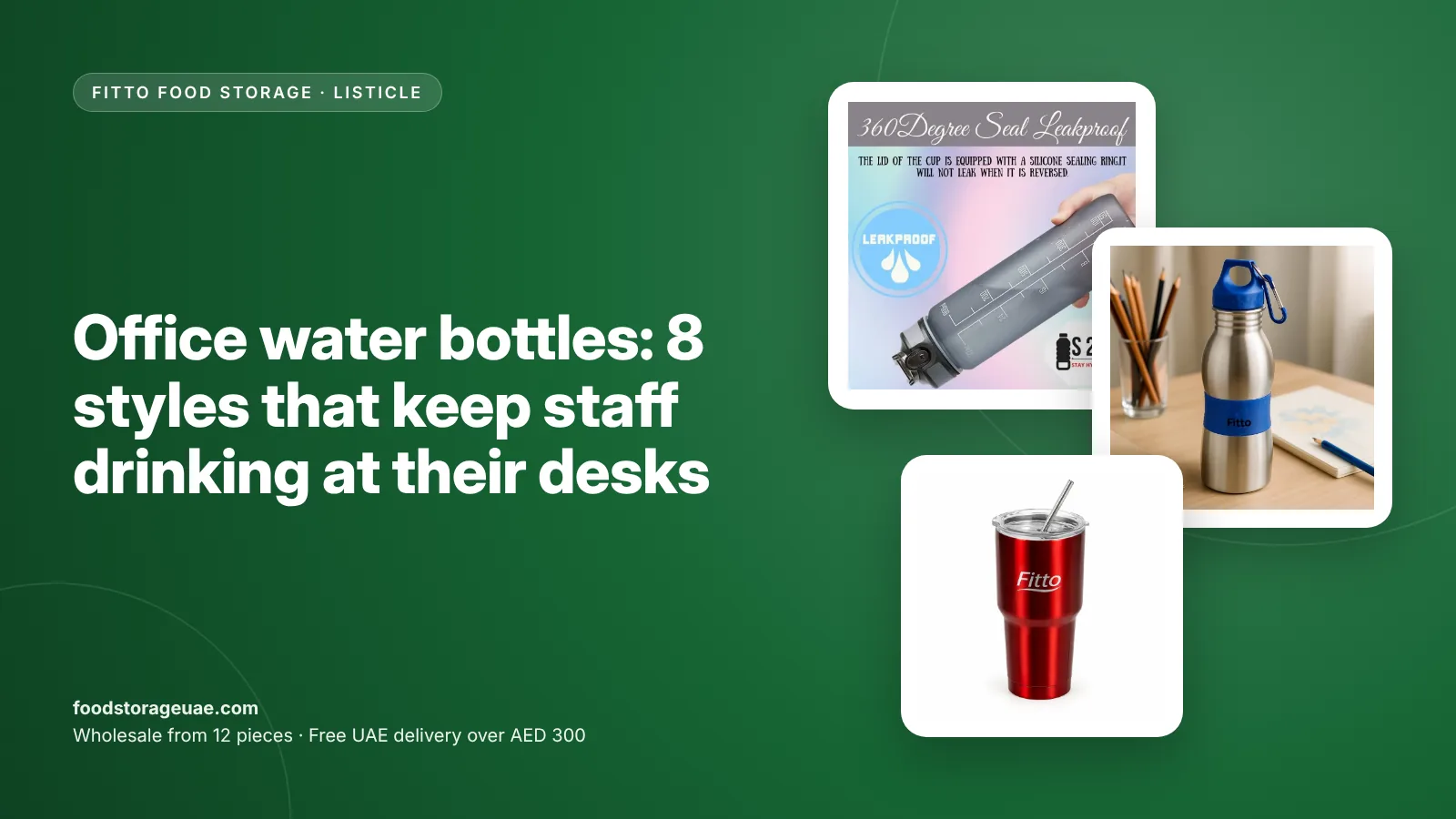
- Parties and treats: the slush cup with dome lid and straw, about 20 x 10 x 10 cm in assorted colours, popular for birthday tables and summer drinks.
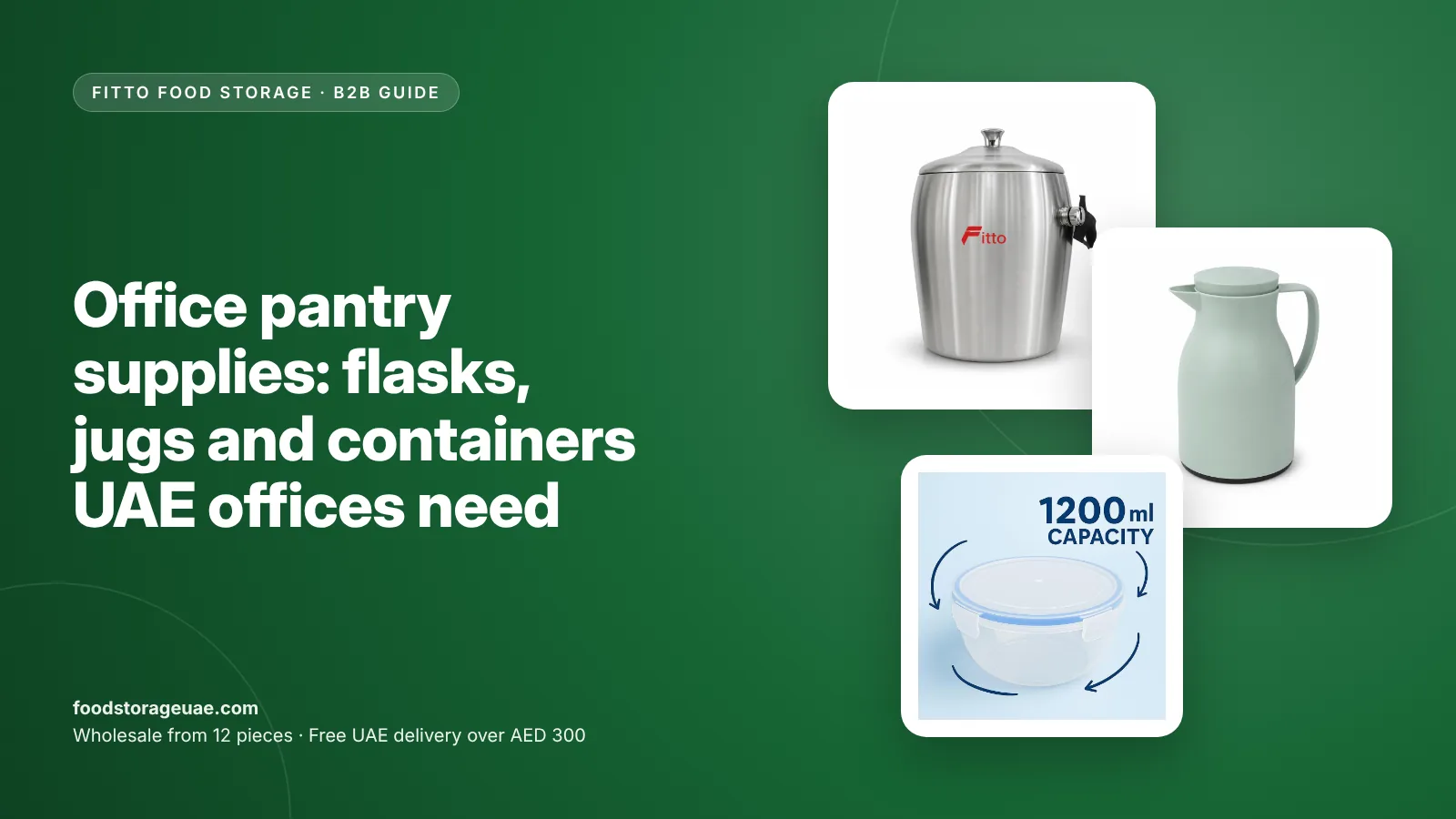
- School and outings: the 640 ml cartoon water bottle with flip-top lid and shoulder strap, which closes for carrying.
Colour still sells to children, so carry each design in more than one colour. School bottles sell fastest before the new school year in late August. Pair them with the lunch box shelf; our guide to kids water bottles that don't leak in school bags covers that range in more depth.
FITTO Trade Pick: Cups that keep tables dry Stock the plastic cups with lids and straws for home and nursery tables and the 640 ml flip-top cartoon bottle for school bags. Order a sample and test the lids yourself; its cost is credited on a bulk order of AED 2,000+ within 30 days.
The bottom line
Spill-proof kids cups come down to a lid that fits evenly, a seal, a spout that closes and a base that does not tip. Match the cup to the job: lidded straw cups for the table, closed bottles for bags. Check the age guidance on every label.
Browse our wholesale kids drinkware in packs from 12 pieces, with free delivery to all seven emirates over AED 300. For the whole category, read our kids drinkware guide or compare water bottle lid types. Request a quote, order a sample or WhatsApp +971 55 672 6947. FITTO Food Storage: fit for the way you store.
FAQ
Are straw cups spill-proof?+
A straw cup with a fitted lid limits spills when it tips on a table, but an open straw is a channel for liquid. If the cup falls straw-down or is squeezed, it can drip. For bags and car seats, choose a bottle with a flip-top or a cap that closes over the straw.
At what age can a child use a cup with a straw?+
Many children manage a straw cup between one and two years, some earlier with help. Check the age guidance on the label and supervise young children. NHS guidance suggests an open or free-flow cup from about six months, so a straw cup is one option, not a required step.
How do I stop a kids cup from leaking at the lid?+
Check that the gasket is in place and sits flat after washing. Click or twist the lid on evenly, and leave a little space below it. If it still leaks, the rim may be warped from a hot dishwasher, so replace the cup.
How often should kids cups be cleaned?+
Wash cups, lids and straws after every use, especially after milk or juice. Remove valves and gaskets and clean straws with a thin brush. Let every part dry fully before reassembling; trapped moisture causes smells and mould in humid months.
What size cup suits a toddler?+
A small, light cup filled to about two thirds suits toddlers best. A big, full cup is heavy for small hands and spills more when it tips. Save larger bottles, such as 500–650 ml, for school-age children with a longer day.