Kids water bottles: how to choose ones that don't leak in school bags
By FITTO Trade Desk · Last updated 29 October 2026
The best kids water bottles for UAE school days hold about 350–650 ml, have a lid the child can close fully without help, and stay light enough to carry when full. Check how the lid locks, how many parts it has and whether a brush reaches every corner. Then test each new bottle upside down before term starts.
Key takeaways
- Most leaks start at the lid, not the body. Choose a lid your child can shut alone, then test it upside down for 10 minutes.
- As a rule of thumb: 350–400 ml for KG, 400–500 ml for ages 6–8 and 500–650 ml for ages 9–11.
- Water adds 100 g per 100 ml, and the empty bottle adds more on top.
- Two or three tested styles cause fewer complaints than ten untested ones.
A leaking bottle soaks homework and the lunch bag before the first bell. Parents buy a replacement within the week, and the shop that sold the first one hears about it. This guide settles which sizes, lids and checks keep kids water bottles (مطارة أطفال) shut through a UAE school day.
It is written for parents, nurseries and school-supply retailers. At FITTO Food Storage, a wholesale food storage and drinkware supplier in the UAE, we sell kids bottles to shops and schools, so we focus on checks any buyer can run.
Why do kids water bottles leak in school bags?
Most kids water bottles leak at the lid: it is not fully closed, the seal ring is twisted, the straw is open, or warm air pushes water past a weak seal. The body rarely fails unless it is cracked.
- Half-closed lids. Young children often leave a flip lid resting shut instead of clicked shut.
- Seals that slip. The silicone ring comes out in the wash and goes back twisted, or not at all.
- Open straws. A straw without a bite valve drips when the bottle lies on its side.
- Heat. In a parked car or on a sunny bus seat, the air inside expands and pushes water past a weak seal.
The fix is a lid the child can close alone, a weekly seal check and a bottle carried upright on a handle or strap.
What size kids water bottle suits each age?
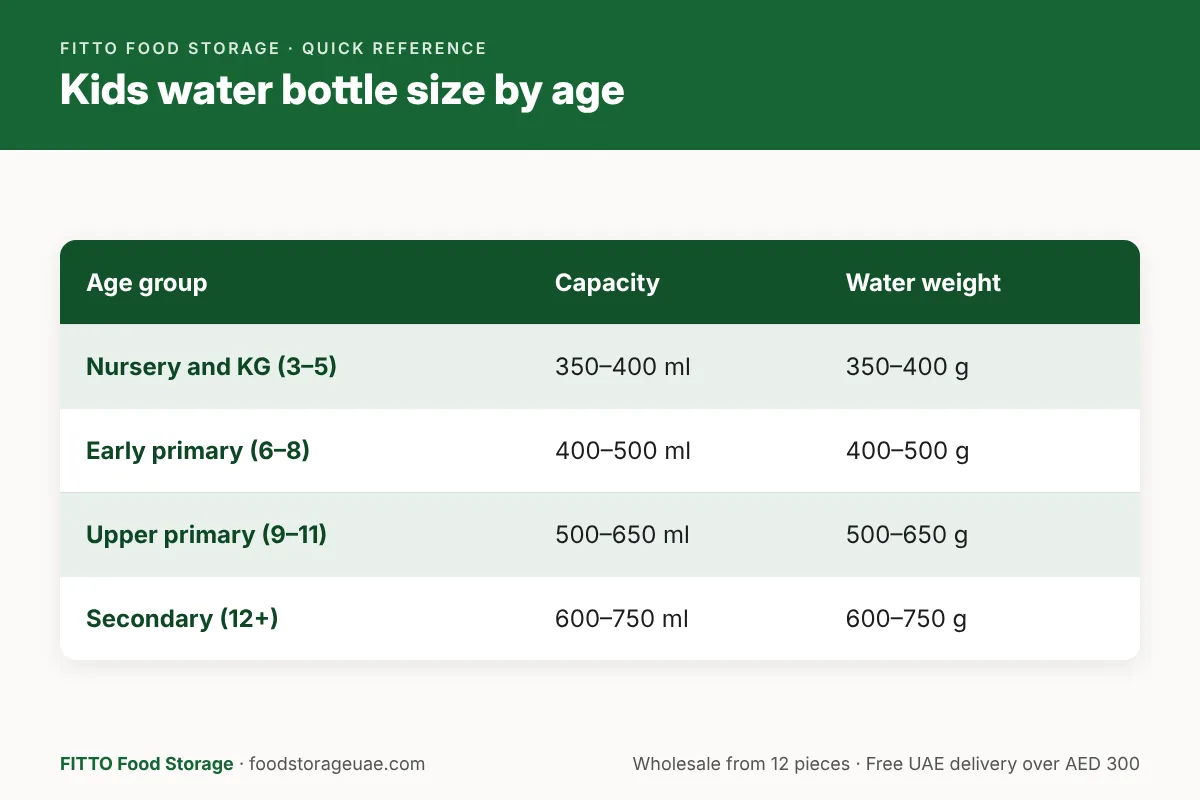
As a rule of thumb, choose 350–400 ml for nursery and KG, 400–500 ml for ages 6–8, 500–650 ml for ages 9–11 and 600–750 ml for secondary pupils. Adjust for PE days, long bus rides and refill points.
| Age group | Typical capacity | Weight of the water alone | Lid that usually works |
|---|---|---|---|
| Nursery and KG (3–5) | 350–400 ml | 350–400 g | Straw lid or flip spout |
| Early primary (6–8) | 400–500 ml | 400–500 g | Flip spout or straw with handle |
| Upper primary (9–11) | 500–650 ml | 500–650 g | Flip top, straw or strap bottle |
| Secondary (12+) | 600–750 ml | 600–750 g | Flip top or screw cap |
Then add the empty bottle, which varies widely. The FITTO 400 ml flip-top bottle lists 220 g, so it weighs about 620 g full.
The table is about carrying, not about how much a child should drink; for that, follow school guidance or ask your paediatrician.
Which lid type leaks least for children?
The lid that leaks least closes with a clear click or lock and works with one hand. Straw lids suit younger children; flip spouts and screw caps suit older ones.
- Straw lid. Easy to drink from. A bite valve limits drips but needs daily cleaning.
- Flip spout. Fast and tight when shut. The hinge takes the most wear, so check it on every wash.
- Screw cap. Reliable when fully tightened, but young children cross-thread it. Better from about age 9.
- Push-button lid. Fine on a desk, but the button can be pressed open in a crowded bag.
A carry handle or shoulder strap keeps the bottle upright and outside the bag, away from books.
How do you test a kids water bottle for leaks before school?
Fill it, close it the way your child would, then leave it upside down and on its side on a dry paper towel. The test takes about 15 minutes.
- Fill the bottle to the top with cold water.
- Close the lid the way your child closes it, not the way an adult would.
- Stand it upside down on a dry paper towel for 10 minutes.
- Lay it on its side for 5 minutes, then shake it over the sink.
- Check the towel. Any damp patch means the seal, valve or lid is not right.
What material is best for kids water bottles?
For most primary pupils, a BPA-free plastic bottle is the practical choice: light, cheap to replace and hard to dent. Insulated stainless steel keeps water cooler for longer but weighs and costs more.
Kids bottles are often polypropylene (PP) or Tritan, and both cope with everyday knocks. Look for "BPA-free" on the label, and keep plastic bottles out of parked cars, where heat can warp lids. See Tritan vs polypropylene water bottles for the difference, and stainless steel vs plastic bottles for cold retention in a UAE summer.
How should kids water bottles be cleaned?
Wash the bottle daily with warm soapy water and a brush, and take the lid apart weekly. Pull out the seal ring, push a narrow brush through the straw and air-dry every part before reassembling.
Empty the bottle as soon as it comes home. Replace it when the lid stops sealing, the valve splits or a smell stays after a thorough clean.
What should shops and schools stock?
Two or three tested sizes in mixed colours cover most families. Parents want a bottle that will not leak, not twenty styles.
| Who it suits | FITTO style | Capacity | Why it works |
|---|---|---|---|
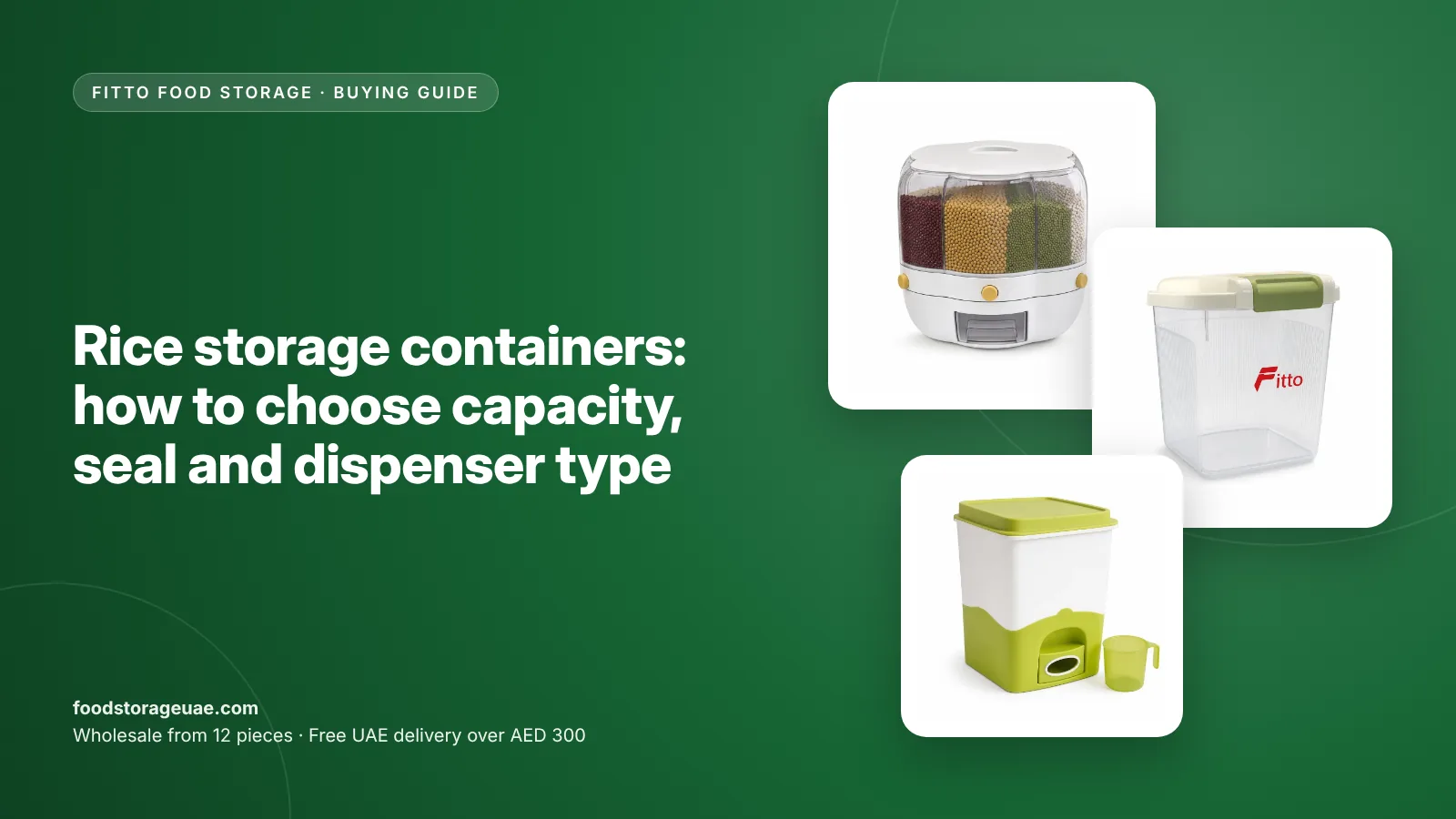
| Younger children | Flip-top bottle with carry lid | 400 ml | Smallest size; 22 x 10 x 9 cm |
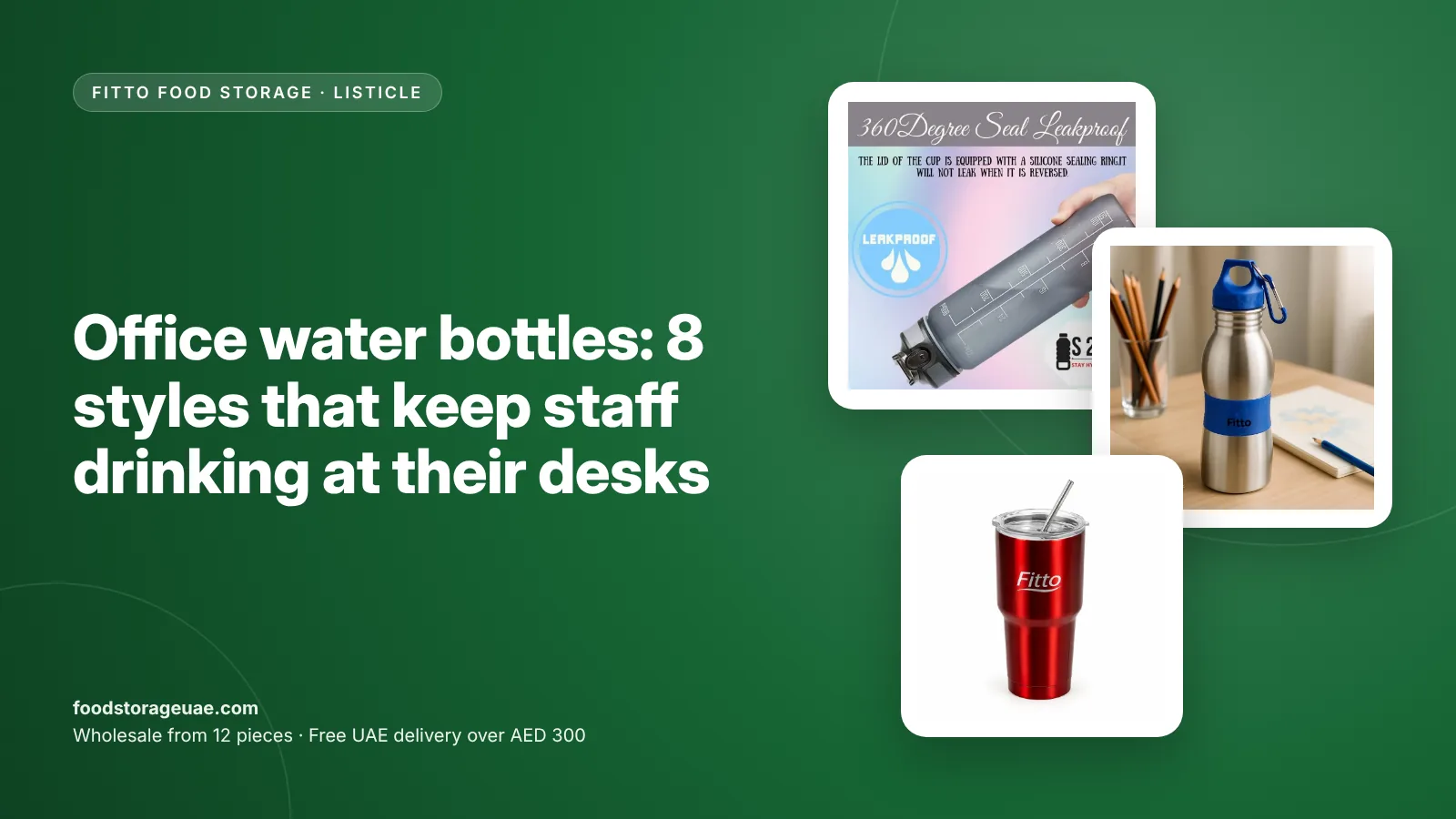
| Ages 6–10 | Straw bottle with carry handle | 600 ml | Sip without unscrewing the cap |
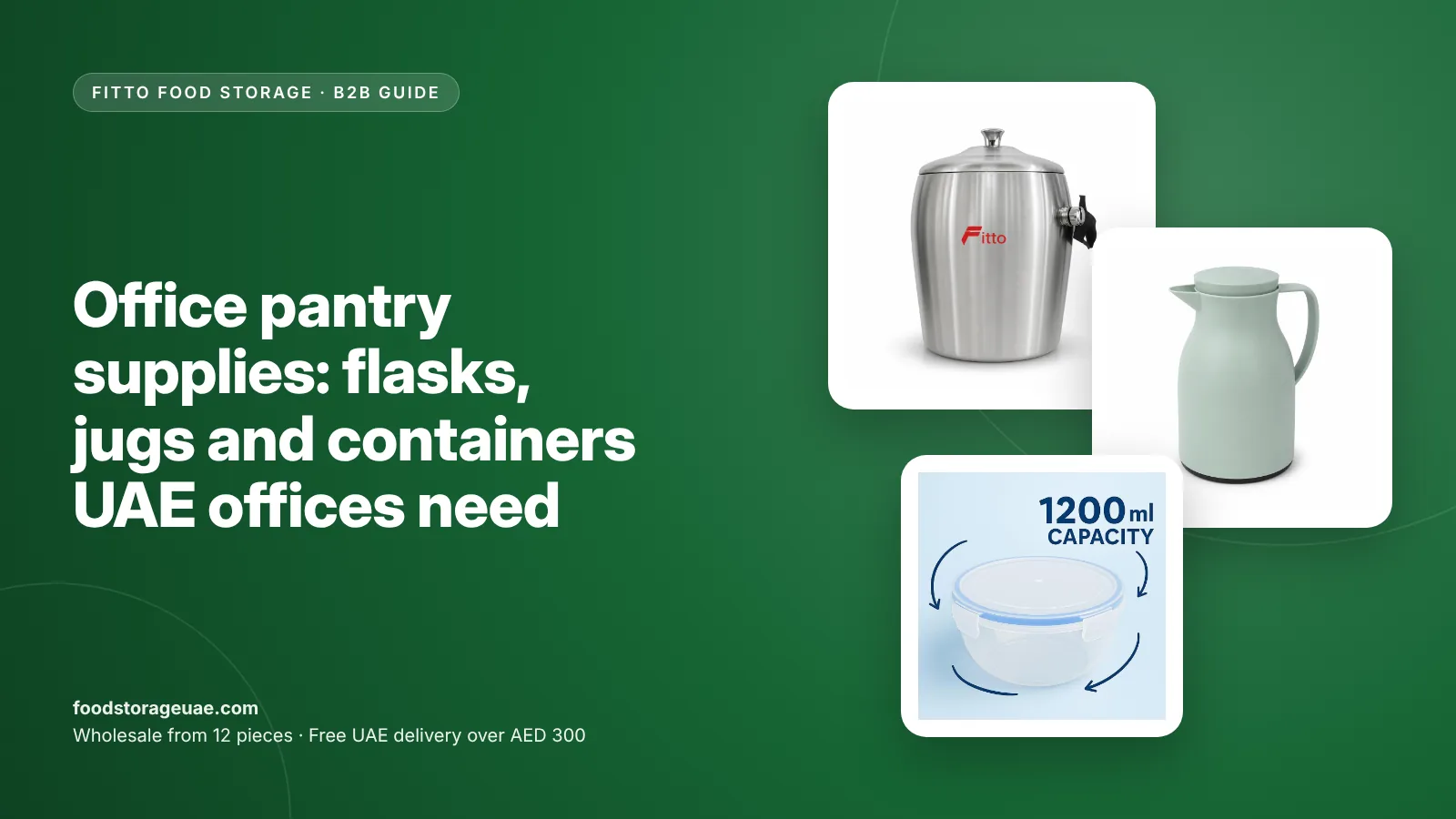
| Older pupils | Cartoon bottle with shoulder strap | 640 ml | Flip-top lid; strap keeps it upright |
| At the till | Bottle cleaning brush set | 1 set | Long brush plus a detail brush |
All three bottles come in assorted colours, so the colour supplied may vary; say so up front. For bundles, pair bottles with leakproof kids lunch boxes, and see our water bottles wholesale guide for the wider range.
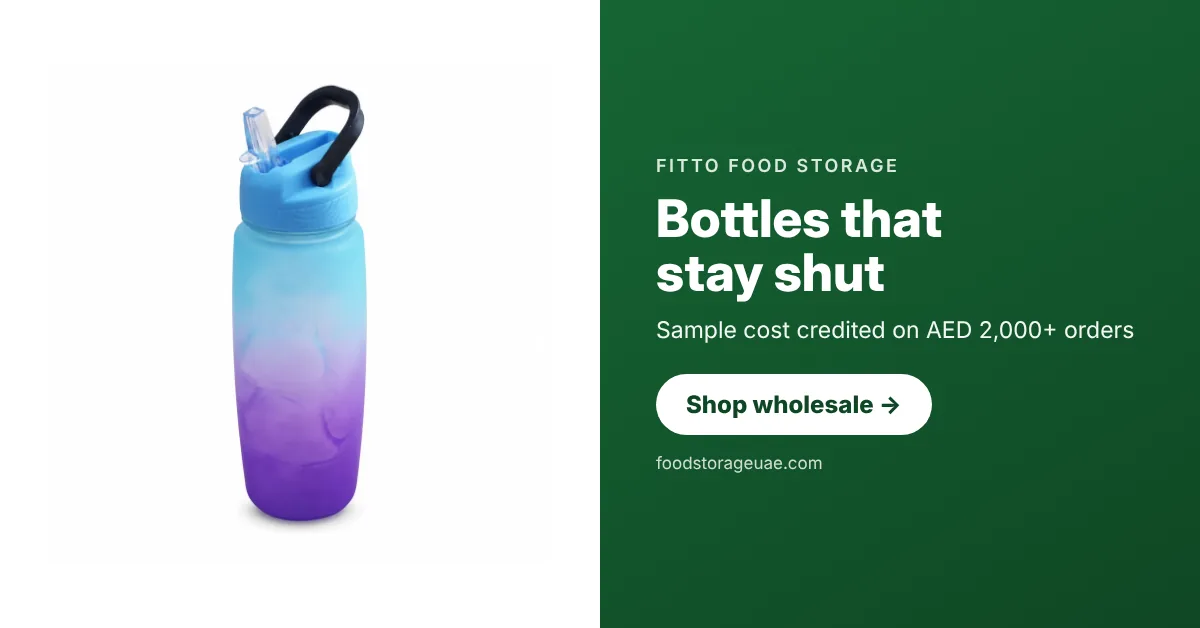
FITTO Trade Pick: Three kids bottles to test this term Start with the 400 ml flip-top bottle, the 600 ml straw bottle with carry handle and the 640 ml cartoon bottle with shoulder strap, plus the bottle cleaning brush set at the till; each comes in packs of 12 to 144 pieces. Run the upside-down test on a single sample first, and its cost is credited on a bulk order of AED 2,000+ within 30 days.
The bottom line
Kids water bottles leak at the lid, so choose one your child can close fully alone and test it upside down before term starts. Match the size to age and bus time, keep parts few and check the seal every week.
Browse wholesale kids drinkware and water bottles, pair them with lunch boxes and bags, or request a quote for mixed colours and school orders. Want to try one first? Order a sample or WhatsApp us on +971 55 672 6947. Delivery is free across all seven emirates on orders over AED 300. FITTO Food Storage: fit for the way you store.
FAQ
What size water bottle should a 5-year-old take to school?+
A 5-year-old usually manages a 350–400 ml bottle. The water alone weighs 350–400 g, and the empty bottle adds more, so check its listed weight. If the day is long or includes PE, ask whether the class has refill points before moving up a size.
Are straw bottles or flip-top bottles better for young children?+
Straw bottles suit nursery and KG children because they are easy to drink from, and a bite valve limits drips. Flip-top bottles suit children from about six, once they can click the lid shut reliably.
How do I stop my child's water bottle leaking in their bag?+
Check the seal ring sits flat inside the lid after every wash, and teach your child to close the lid until it clicks. Carry the bottle upright by its handle or strap where possible, and keep it out of parked cars, where warm air can push water past a weak seal.
Are BPA-free plastic bottles safe for children?+
A BPA-free label means the plastic is made without bisphenol A. Polypropylene and Tritan are widely used for children's drinkware. Follow the care label, keep plastic bottles out of hot cars and replace any bottle that is cracked or still smells after cleaning. For specific health questions, ask your paediatrician.