How to remove smells and stains from plastic food containers
By FITTO Trade Desk · Last updated 29 October 2026
To remove smell from plastic containers, wash them in hot soapy water, then soak overnight in warm water with baking soda or white vinegar and dry with the lid off. For turmeric and tomato stains, scrub with baking soda paste and leave the container in sunlight for a few hours. Always wash the silicone seal separately.
Key takeaways
- Lingering garlic and curry smells often live in the silicone seal ring, not the container body.
- Sunlight fades turmeric and tomato stains better than most scrubbing, at no cost.
- Baking soda paste lifts stains; a vinegar or baking soda soak removes smells.
- Never mix bleach with vinegar or other cleaners, and use bleach only as a last resort.
- Cool food before storing, rinse straight after emptying and store containers with lids off.
An orange-stained container looks dirty even when clean, and a lid smelling of yesterday's garlic taints today's fruit. Many kitchens bin boxes that still work.
This guide gives numbered methods for turmeric, tomato and garlic, plus the habits that stop stains and smells returning. It is written for home cooks and canteen staff. At FITTO Food Storage, a wholesale food container supplier in the UAE, these are the questions we hear most about plastic food containers (علب حفظ الطعام البلاستيكية).
Why do plastic containers stain and hold smells?
Plastic is slightly porous at a microscopic level, and oily, strongly coloured foods soak into it, especially when hot. Turmeric, tomato sauce and chilli oil carry fat-soluble colour that bonds with plastic, while garlic and onion leave sulphur compounds that cling to seals.
Heat makes it worse: hot curry or reheated sauce sinks colour and smell deeper, and scratches give stains more places to settle.
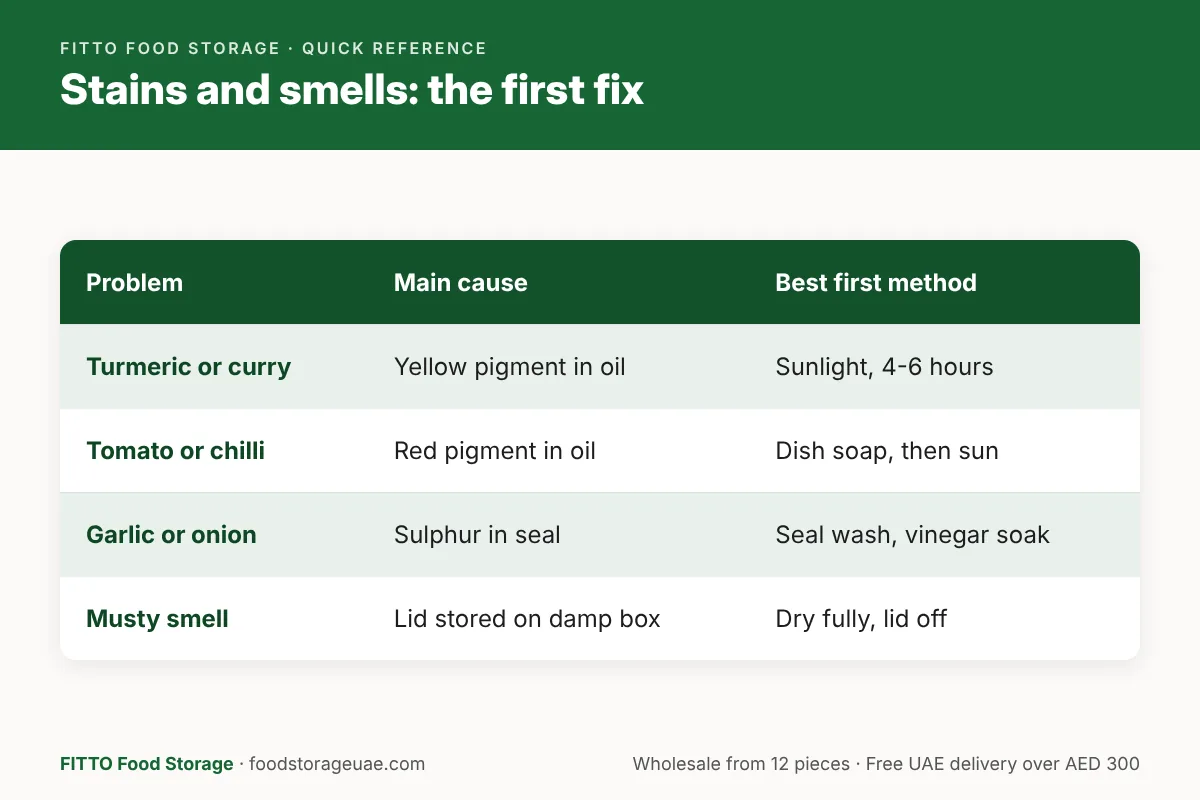
| Problem | Main cause | Best first method | Back-up method |
|---|---|---|---|
| Turmeric or curry stain | Fat-soluble yellow pigment | Sunlight for 4-6 hours | Baking soda paste |
| Tomato or chilli stain | Red pigment carried in oil | Dish soap wash, then sunlight | Baking soda paste, then sun |
| Garlic or onion smell | Sulphur compounds in seal and plastic | Wash seal separately, vinegar soak | Baking soda soak overnight |
| Musty smell | Lid stored on a damp container | Dry fully, store lid off | Baking soda soak |
How do you remove turmeric and curry stains?
Turmeric fades in sunlight, so a clean container left in direct sun for a few hours often comes out close to its original colour.
- Wash the container in hot soapy water to remove surface oil.
- Rub on a paste of 2 tablespoons baking soda and 1 tablespoon water, leave 15-30 minutes, then rinse.
- Place the open container in direct sunlight for 4-6 hours, and repeat the next day if needed.
In summer, use morning sun rather than a hot balcony floor at midday, which can warp thin plastic, and keep lids indoors.
How do you remove tomato and chilli stains?
Wash tomato stains with dish soap first, because the colour is carried in oil, then use sunlight to fade what is left.
- Wipe out sauce with a paper towel, then wash with dish soap and warm water.
- If a stain remains, apply baking soda paste for 15-30 minutes and rinse.
- For older stains, wipe the inside with lemon juice.
- Leave the container in the sun for a few hours.
How do you remove garlic, onion and curry smells?
Clean the silicone seal separately, because that is where smells usually hide, then soak everything.
- If the seal ring is designed to come out, lift it gently with the tip of a spoon; if not, clean its groove with a soft brush.
- Wash the seal, lid and container in hot soapy water.
- Soak everything for at least an hour, or overnight, in warm water with either 2 tablespoons of baking soda per litre or one part white vinegar to three parts water.
- Rinse, air dry every part completely and refit the seal only when dry.
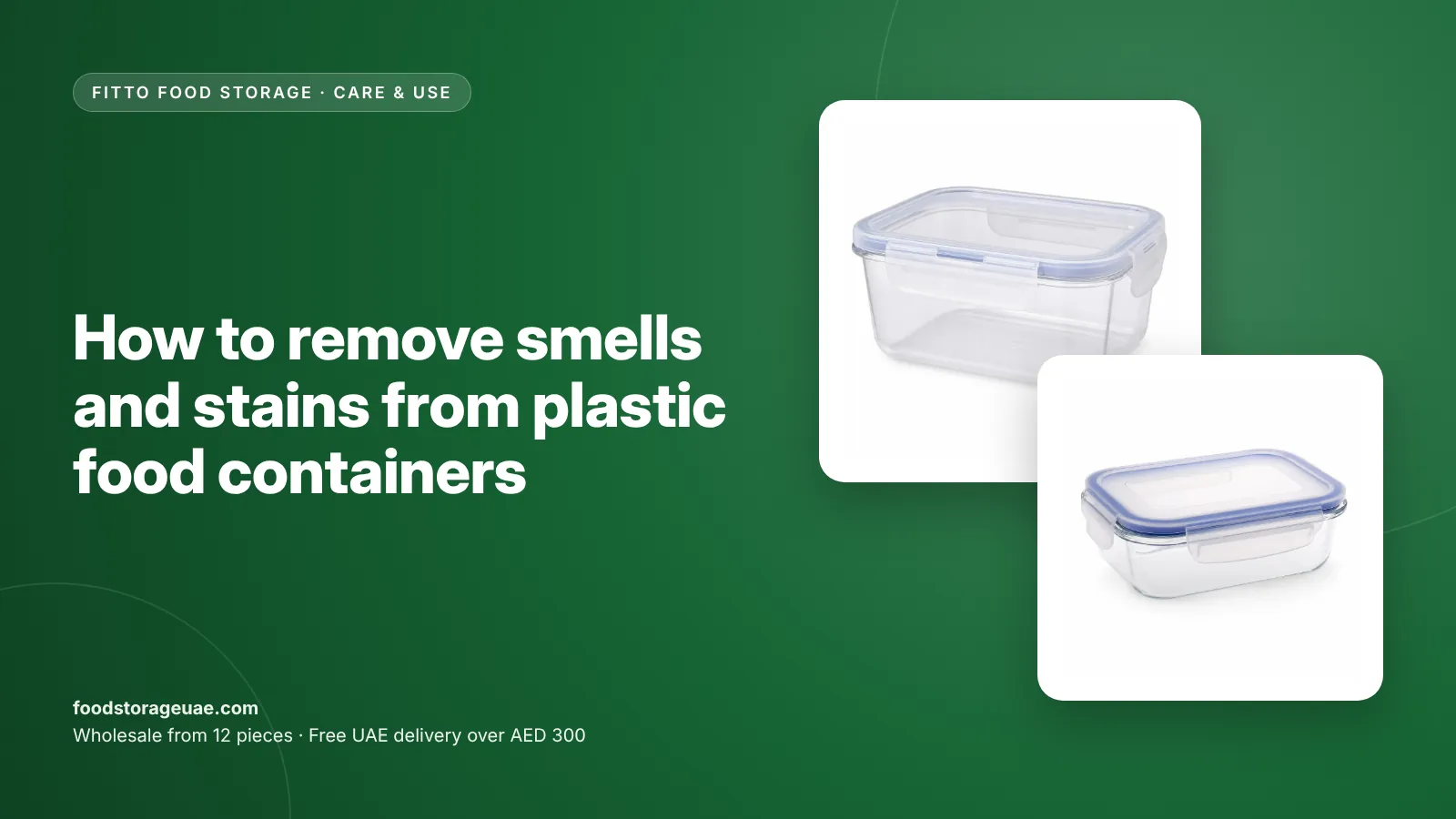
Clip-lid containers such as the FITTO clip-lid container with silicone seal, 18 x 13 x 8 cm and the four-side clip-lock container with seal ring close snugly, so smells stay in the box instead of spreading through the fridge. Both are hand-wash items.
Which habits prevent stains and smells?
Cool food first, rinse promptly and dry containers fully before closing them. These habits cost nothing.
- Cool food briefly before storing, but still refrigerate it within two hours.
- Wipe on a thin film of oil before adding tomato sauce, so colour bonds less.
- Rinse straight after emptying. Stains set as sauce dries.
- Reheat in glass or ceramic. Hot oily sauce stains plastic fastest; read our guide to microwave-safe plastic containers first.
- Store lids off, so damp containers do not turn musty.
- Avoid harsh scourers. Scratches trap colour and odour.
For curries and tomato dishes, consider glass: the FITTO 1040 ml borosilicate glass container with PP lid does not absorb colour or smell the way plastic can. See our glass vs plastic food containers comparison for the trade-offs.
What should canteen staff do differently?
Batch-soak containers at the end of each shift and label separate containers for curries and sauces. That stops stains spreading across the whole stock.
Dishwasher-safe containers save time: the FITTO 800 ml airtight food storage box is listed as dishwasher and microwave safe. Replace any container that is cracked, warped, deeply scratched, cloudy or still smells after cleaning.
FITTO Trade Pick: Containers that clean up easily Choose the clip-lid container with silicone seal for daily storage and the 1040 ml borosilicate glass container for curries and sauces that stain plastic. Every line comes in packs of 12 to 144 pieces, with up to 20% off per piece on the largest pack.
The bottom line
Wash the seal separately, soak smells out with baking soda or vinegar, and let sunlight fade turmeric and tomato stains. Cooling food first, rinsing promptly and storing lids off keep containers fresh for much longer.
Browse our wholesale food containers and jars and lunch boxes and lunch bags for home, canteen and office kitchens. Request a quote for a kitchen restock, order samples to test seals and sizes, or WhatsApp +971 55 672 6947. Delivery is free to all seven emirates on orders over AED 300. FITTO Food Storage: fit for the way you store.
FAQ
Does sunlight damage plastic food containers?+
A few hours of sun to fade a stain is generally fine for sturdy food containers. Long, repeated exposure can make plastic brittle, and very hot surfaces can warp it. Use morning sun, keep the lid and seal indoors, and do not leave containers outside for days.
Can I put plastic containers in the dishwasher to remove smells?+
Only if the container is labelled dishwasher safe, on the top rack away from the heating element. A dishwasher removes grease well but will not always shift garlic smells trapped in a seal, so soak the lid and seal separately too.
Is bleach safe for plastic food containers?+
Use a dilute bleach solution only as a last resort, following the dilution on the label, then rinse very thoroughly and air dry. Never mix bleach with vinegar, lemon juice or other cleaners, because it can release harmful chlorine gas. If a container still smells after bleach, replace it.
How do I stop garlic smells transferring to other food?+
Keep one or two containers just for garlic, onion and strong curries, and use others for fruit or baked goods. Wash and fully dry the lid and seal after every use. Glass is the safest choice for strongly flavoured food because it does not absorb smells.