Glass storage jars: a complete guide for pantries, shops and displays
By FITTO Trade Desk · Last updated 29 October 2026
Glass storage jars keep dry food visible, odour-free and easy to clean, which suits pantries, cafés and sweet shops. Choose the lid by the job: a sealed bamboo or clamp lid for staples that must stay dry, a loose glass or wooden lid for display. Size each jar to the pack you decant, and handle glass with care around heat.
Key takeaways
- The lid decides freshness. A silicone ring or clamp seal keeps humidity out; a loose lid only keeps dust out.
- Size jars to your packs: as a rule of thumb, 1 kg of sugar needs about 1.2 litres and 1 kg of flour nearly 2 litres.
- Clear glass shows stock levels at a glance, but light fades spices and tea, so keep those jars in a cupboard.
- Pedestal and candy jars sell sweets and dates; pantry jars sell organisation. Stock both if you have the shelf space.
- Avoid sudden temperature changes, and hand-wash bamboo and wooden lids.
Half-used packets, clipped bags and a pantry where nobody can see what is left cost money. Rice and flour pick up moisture in humid months, sugar clumps, and duplicates get bought because the old pack was hidden at the back. In a shop or café, an untidy display simply sells less.
This guide settles how to choose glass storage jars by lid, size and glass type, and how to use them at home, on a café counter or in a retail display. It is written for homeowners, cafés, sweet shops, hotels and retailers. At FITTO Food Storage, a wholesale food containers and jars supplier in the UAE, we stock glass jars (برطمانات زجاج) with bamboo, wooden, clamp and glass lids, from small spice jars to 42 cm pedestal candy jars.
What are glass storage jars best for?
Glass storage jars are best for dry foods you want to see, keep odour-free and refill often. Think rice, sugar, flour, pasta, lentils, nuts, dates, coffee beans, tea and sweets.
Glass has three practical advantages over plastic for these jobs:
- It does not hold smells or stains. A jar that held cardamom coffee one month can hold sugar the next after a wash.
- It stays clear. Glass does not cloud or scratch as easily as many plastics, so displays keep looking new.
- It feels premium. On a café counter or a gift-shop shelf, glass and natural wood signal quality.
The trade-offs are real. Glass is heavier, it breaks when dropped on tiles, and it costs more to ship and store than plastic. For children's snacks, high shelves or picnic use, plastic jars are often the safer, cheaper choice. Our comparison of glass vs plastic food containers covers that decision in detail.
Which lid type should you choose?
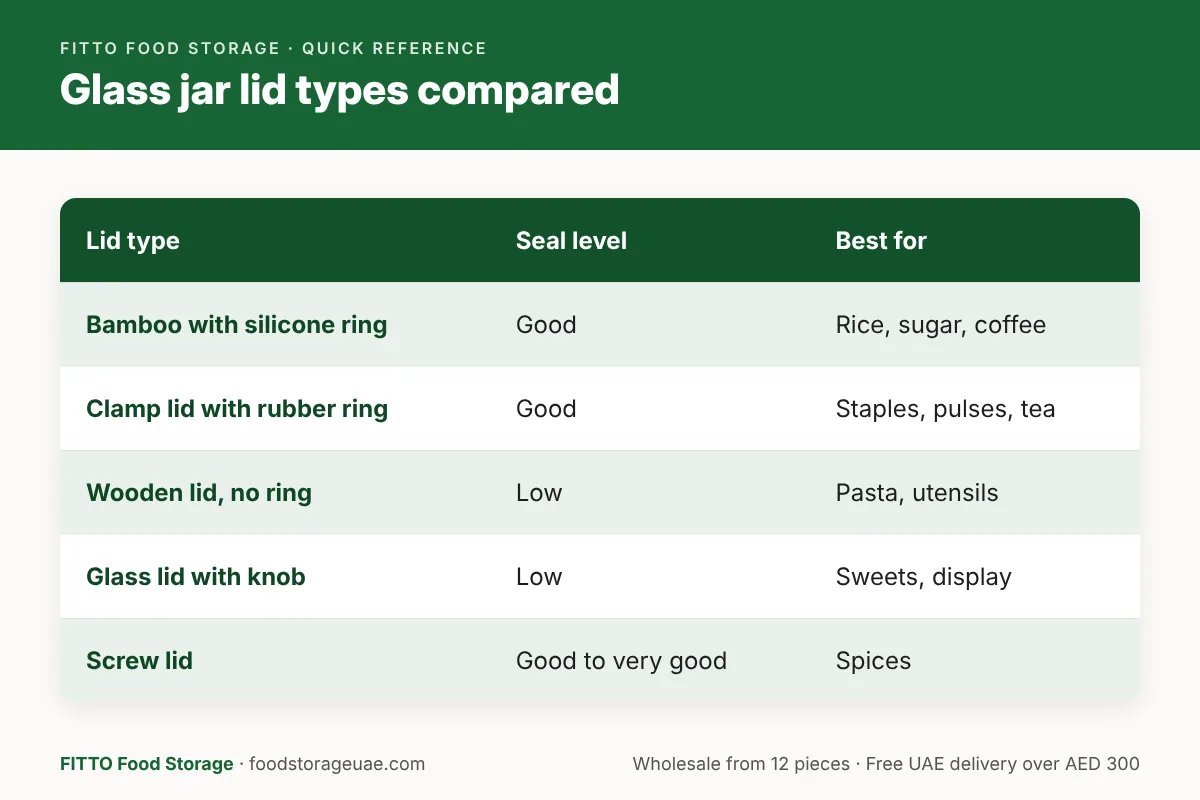
Choose a sealed lid for anything that must stay dry, and a loose lid for display and quick access. The lid, not the glass, decides how fresh the contents stay.
| Lid type | How it closes | Seal level | Best for |
|---|---|---|---|
| Bamboo lid with silicone ring | Pushes in; ring grips the neck | Good, when the ring is fitted | Rice, sugar, flour, nuts, coffee |
| Clamp lid | Wire clamp presses lid onto a seal | Good, when the rubber ring is present | Staples, pasta, pulses, tea |
| Wooden lid without ring | Rests on or in the opening | Low: keeps dust out | Pasta, sticks, utensils, decor |
| Glass lid with knob | Sits on the rim | Low | Sweets, biscuits, display |
| Screw lid | Threads onto the neck | Good to very good | Spices, small staples |
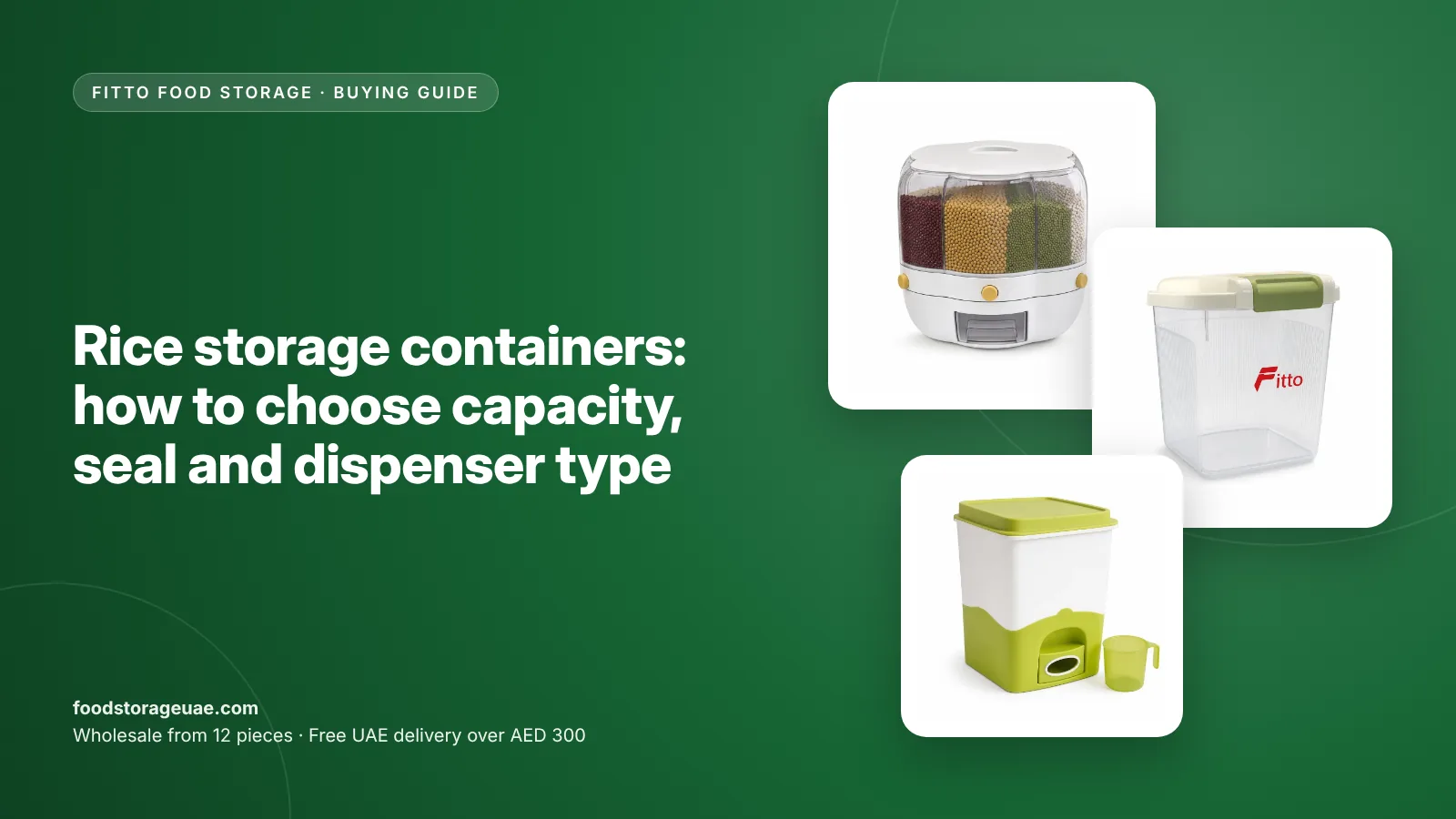
Look closely at product descriptions. Our glass jar with bamboo lid is sold as airtight, with a borosilicate glass body, while several of our wooden-lid jars are described as lids that rest over the opening. Both are useful; they just do different jobs.
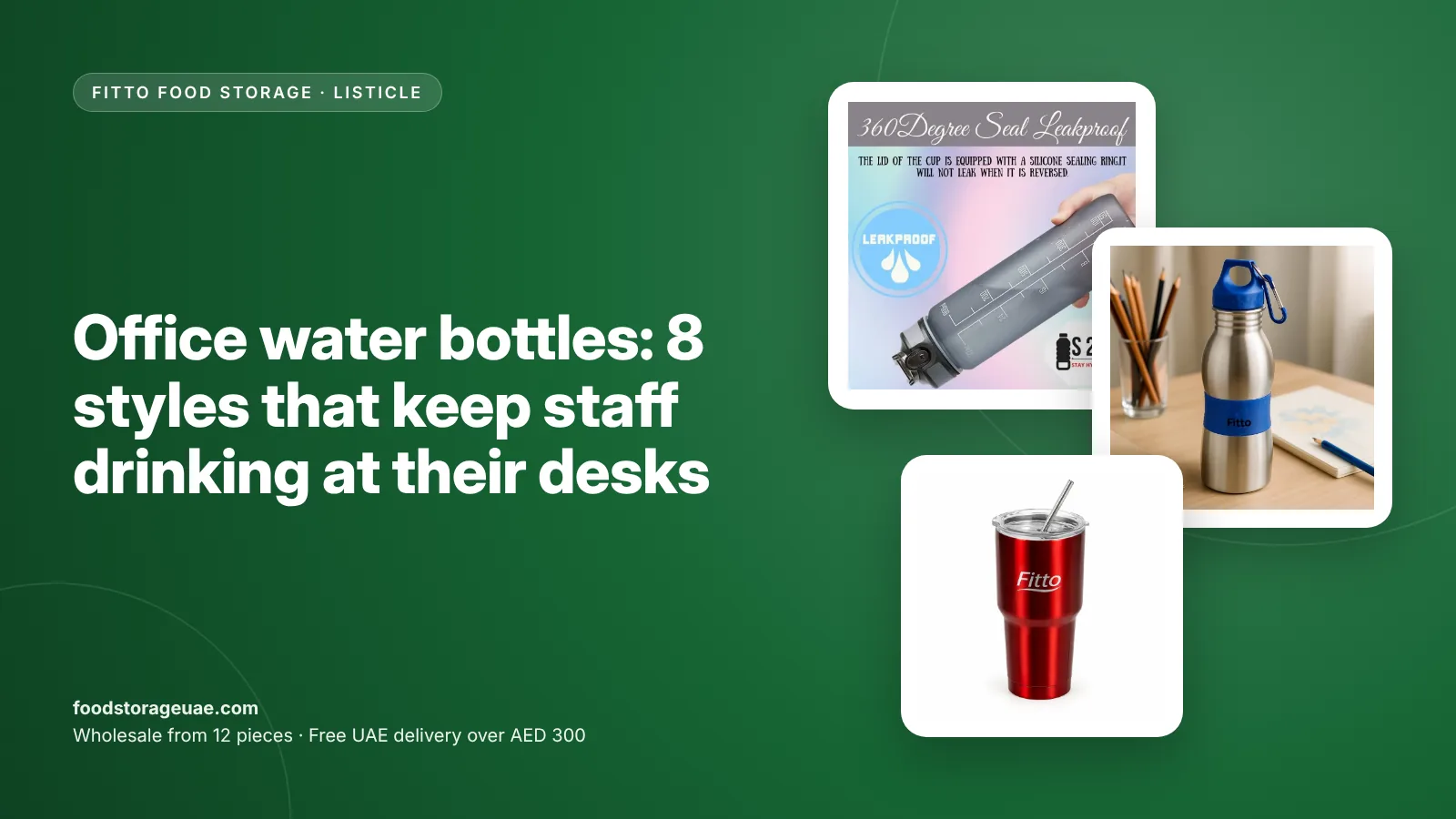
Clamp lids, such as our 1000 ml glass storage jar with clamp lid, close with a hinged wire. Clamp jars normally rely on a rubber ring between lid and rim, so check that the ring is in place and lies flat before filling.
How airtight does a glass jar need to be?
Staples that absorb moisture need a sealed lid; sweets on display for a day do not. Match the seal to how long the food sits and how humid the room gets.
In UAE homes, kitchens are air-conditioned most of the year, but humidity rises in coastal summers and whenever a kettle or pot is steaming nearby. Flour, sugar, salt, crackers and Arabic coffee lose quality fastest in damp air. Keep those in jars with a silicone ring or clamp seal.
A quick home test tells you whether a lid seals. Close the empty jar, turn it on its side and press the lid gently. A sealed lid does not move or hiss; a resting lid lifts or slides. For a fuller look at seal types, read our guide to airtight food containers.
No jar fixes food that went in damp or stale. Decant only fresh, dry food into clean, fully dry jars.
What size glass jar do you need?
Size each jar to the pack you buy, plus a little headroom. A jar that takes a whole bag avoids half-packets lying around.
Dry foods differ in weight per litre, so the same jar holds very different amounts. The figures below are approximate rules of thumb.
| Food (dry) | 1 kg needs roughly | Suggested jar |
|---|---|---|
| Granulated sugar | 1.2 litres | 1.5–1.8 litre clamp or bamboo jar |
| Basmati rice | 1.3 litres | 1.8 litre jar |
| Plain flour | 1.9 litres | 2 litres or larger |
| Lentils and pulses | 1.2–1.3 litres | 1.5–1.8 litre jar |
| Pasta (short shapes) | 2–2.5 litres | Large jar or two medium jars |
| Spices, saffron, cardamom | Small amounts | Small jars, 6 cm wide or under |
FITTO glass jars come in several clear size steps. Clamp-lid jars come in 500 ml, 1000 ml and 1800 ml. Slim wooden-lid jars measure 6 x 6 cm across and come in heights of 12, 15, 20 and 25 cm, which suits spices, tea, coffee and pasta sticks. Round bamboo-lid jars come in small, medium and large, with the small listed at about 15 x 15 x 16 cm and the medium at about 18 x 18 x 20 cm.
Measure your shelf height before ordering tall jars. A 25 cm jar does not fit many standard cabinet shelves once you allow room to lift the lid.
Borosilicate or soda-lime glass: does it matter?
Borosilicate glass copes better with temperature changes; soda-lime glass is the standard for most dry storage jars. For rice, sugar and sweets, either works well.
Borosilicate glass expands less when heated, so it is less likely to crack if it meets hot water or moves from a cool cupboard to a warm counter. Soda-lime glass is the everyday glass of most jars and bottles, and it is perfectly suitable for room-temperature dry storage.
What matters more than the glass type is how you treat it. Do not pour boiling liquids into a cold jar, do not put a jar from the fridge into hot water, and do not use storage jars in an oven unless the product page says they are oven-safe.
How should you set up a pantry with glass jars?
Group jars by how often you use them, label them and keep them out of direct sun. A good layout saves time every day and stops duplicate buying.
- Empty and sort the pantry. Throw out anything stale or past its date, and list what you buy every month.
- Pick one or two jar families. Matching lids and shapes look tidy and stack or line up neatly on a shelf.
- Match jar size to pack size using the table above, so a full bag fits in one go.
- Wash and dry every jar fully. Even a few drops of water can make flour or sugar clump.
- Label each jar with the contents and the best-before date from the pack. Keep the cooking instructions by cutting them from the bag and taping them under the lid or to the back.
- Put daily items at eye level and bulk or occasional items higher up. Keep heavy jars low.
- Use first in, first out. Finish the old food before topping up, or tip the old food into a bowl, add the new pack and pour the old back on top.
Keep spices, tea and saffron jars inside a cupboard, because light and warmth fade their colour and flavour. For a full kitchen kit list, see our pantry storage essentials.
How do cafés, sweet shops and hotels use glass jars?
Businesses use glass jars to display what they sell and to keep counter stock fresh between refills. The jar becomes part of the presentation.
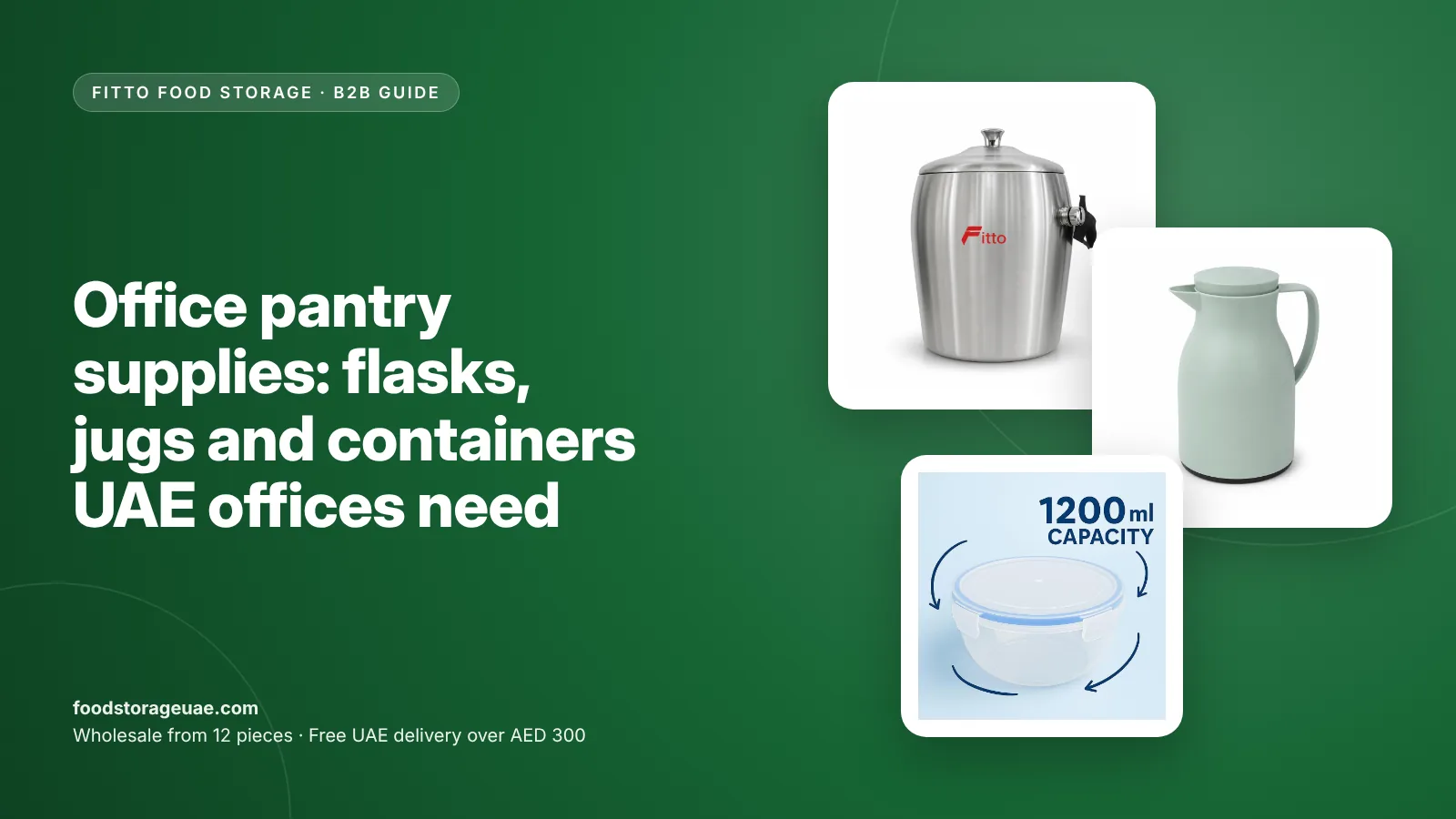
- Sweet and date shops: pedestal candy jars raise sweets, chocolates and stuffed dates to eye level. Our clear glass candy jar with pedestal base measures 18 x 18 x 32 cm, and we also stock taller versions up to 42 cm for statement displays.
- Cafés and coffee shops: jars of coffee beans, biscuits and sugar sticks on the counter show what is on offer. Clamp-lid jars keep beans and biscuits fresher between servings.
- Hotels and buffets: jars of nuts, dried fruit and cereal toppings work for breakfast bars. Our guide to cereal dispensers covers the self-serve side.
- Gift and home shops: coordinated sets, such as jars on a wooden stand, sell as housewarming and Ramadan kitchen gifts.
For food sold loose, give each jar its own scoop or tongs and keep lids closed between customers. Check your local municipality's food-display rules for open displays and labelling.
How do you clean and handle glass jars safely?
Wash glass jars in warm soapy water or the dishwasher, but clean bamboo and wooden lids by hand and dry everything fully. Most damage comes from heat shock, chips and soaked lids.
- Glass bodies: most are dishwasher-safe; check the product page. Our airtight bamboo-lid jar, for example, is listed with dishwasher-safe jars.
- Bamboo and wooden lids: wipe or hand-wash quickly and never soak them. Water swells wood and can crack it or loosen the ring.
- Silicone rings: remove and wash them separately, then dry before refitting so no moisture is trapped.
- Chips and cracks: retire any jar with a chipped rim. Chips cut hands and stop lids sealing.
- Temperature: let jars cool after a hot wash before filling, and avoid sudden hot-cold changes.
Carry large jars with two hands from the base, not by the lid or knob. On café counters, place tall pedestal jars away from the edge and from busy service points.
How should retailers stock glass storage jars?
Stock a core of pantry jars in clear size steps, a few coordinated sets and one or two display jars. That covers everyday buyers, gift buyers and businesses.
A practical range for a home or kitchen shop looks like this:
- Core pantry jars: clamp-lid jars in small, medium and large, and bamboo-lid jars for buyers who want a sealed, natural look.
- Slim jars: the 6 x 6 cm wooden-lid jars in several heights for spices, tea and pasta.
- Sets: jar sets on a wooden stand, such as our glass storage jar set with wooden stand, which sell well as gifts.
- Display jars: one or two pedestal candy jars for sweet shops, cafés and party buyers.
Demand for glass jars rises before Ramadan, when families restock pantries and dates, and again before Eid for sweets displays and gifts. Order ahead of those weeks. On arrival, open a few cartons and check for chips, then display jars at waist height or lower and keep stock in original cartons until it goes on the shelf.
FITTO Trade Pick: Jars that keep pantries dry and shelves selling Pair the airtight glass jar with bamboo lid for staples with the 1000 ml clamp-lid glass jar for everyday use. Order a sample to check the seal and finish; its cost is credited on a bulk order of AED 2,000+ within 30 days.
The bottom line
Choose glass storage jars by the lid first: sealed bamboo or clamp lids for staples, loose glass or wooden lids for display. Size each jar to the pack you decant, keep spices out of the light and protect glass from sudden heat.
Browse our wholesale food containers and jars in packs from 12 pieces, with free delivery to all seven emirates over AED 300. Request a quote, order a sample or WhatsApp +971 55 672 6947. FITTO Food Storage: fit for the way you store.
FAQ
Are glass storage jars airtight?+
Only some are. A glass jar is airtight when its lid has a seal, such as a silicone ring on a bamboo lid, a rubber ring under a clamp lid or a tight screw thread. Jars with a lid that rests on top keep dust out but let air in. Read the product description and test the lid at home.
Can I put glass storage jars in the dishwasher?+
Many glass jar bodies are dishwasher-safe, but check the product page for each one. Bamboo and wooden lids should be wiped or washed by hand and dried straight away, because soaking can swell and crack the wood. Remove silicone rings and wash them separately so no water is trapped.
What is the best way to store rice in the UAE?+
Keep rice in a sealed jar or container in a cool, dry cupboard, away from the stove and dishwasher. A clamp-lid or bamboo-lid glass jar of about 1.8 litres takes a 1 kg bag with room to spare. For 5 kg or 10 kg bags, a larger rice bin or dispenser is more practical.
Are glass jars safe for hot food?+
Storage jars are designed for room-temperature dry food. Let cooked food cool before storing it, and do not pour boiling liquids into a cold jar, because sudden temperature changes can crack glass. Borosilicate glass copes better with temperature changes, but only use a jar in the oven or microwave if its product page says so.
How do I stop spices fading in glass jars?+
Keep spice jars in a closed cupboard or drawer, away from direct sunlight, the stove and the kettle. Light and heat fade colour and flavour, especially in paprika, saffron and dried herbs. Buy smaller quantities more often, label each jar with the date and refill only when the jar is empty.
What size candy jar suits a shop counter?+
For a standard counter, a jar around 30–38 cm tall shows sweets clearly without blocking the view of the till. Taller jars of around 40 cm work as centrepieces on display tables. Measure the space, including room to lift the lid, and keep tall jars away from the counter edge.