Feeding and nursing products: a complete guide for UAE parents and baby shops
By FITTO Trade Desk · Last updated 29 October 2026
Feeding and nursing products in the UAE fall into three stages: bottles, teats and cleaning tools for the milk-only months; a high chair, bibs and first cups once solids start at around six months; and sturdier seating and cups for toddlers. Buy by stage, check age guidance on every label and follow your paediatrician's advice.
Key takeaways
- Plan by stage: milk feeding (0-6 months), starting solids (around 6-12 months) and toddler meals (1-3 years).
- Two bottle sizes, such as 220 ml and 330 ml, cover most of the first year as feeds grow.
- A bottle brush with a small teat brush is the one accessory every bottle buyer needs.
- High chairs need a flat floor, a locked frame and an adult present for every meal.
- Baby shops sell more when bottles, cleaning tools, bibs and seating sit together as one routine.
New parents in the UAE often buy feeding products twice. The bottle is the wrong size, the high chair arrives months early, and nobody mentions a teat brush until milk residue builds up. Each mistake costs money in the hardest months.
This guide sets out what each stage of feeding needs, how to use the products safely and how a baby shop can build a range parents actually return to. It is written for new parents, grandparents, nannies and other caregivers, and for baby and pharmacy retailers. At FITTO Food Storage, a wholesale feeding and nursing supplier in the UAE, we stock the core pieces of this routine.
This is general product guidance, not medical advice. For anything about how much, how often or what your baby should eat or drink, speak to your paediatrician or health visitor.
What counts as feeding and nursing products?
Feeding and nursing products are the tools that help a baby or toddler drink and eat: bottles, teats, cups, bibs, seating and the cleaning kit that keeps them hygienic.
In practice, the category (مستلزمات الرضاعة) breaks into five groups:
- Bottles and teats: feeding bottles in different sizes, with caps that keep the teat covered between feeds.
- Cleaning and hygiene: bottle brushes, teat brushes and drying racks, plus sterilising equipment.
- Mealtime seating: high chairs, booster seats and portable or inflatable chairs.
- Mealtime protection: waterproof bibs and splash mats that save clothes and floors.
- First cups and toddler drinkware: cups with lids and straws, then small bottles for nursery.
This guide focuses on the tools most homes need, whichever way a baby is fed.
Which feeding products does each age need?
Buy for the stage your baby is in now, not the one six months away. Needs change fast in the first three years, and products bought too early often go unused.
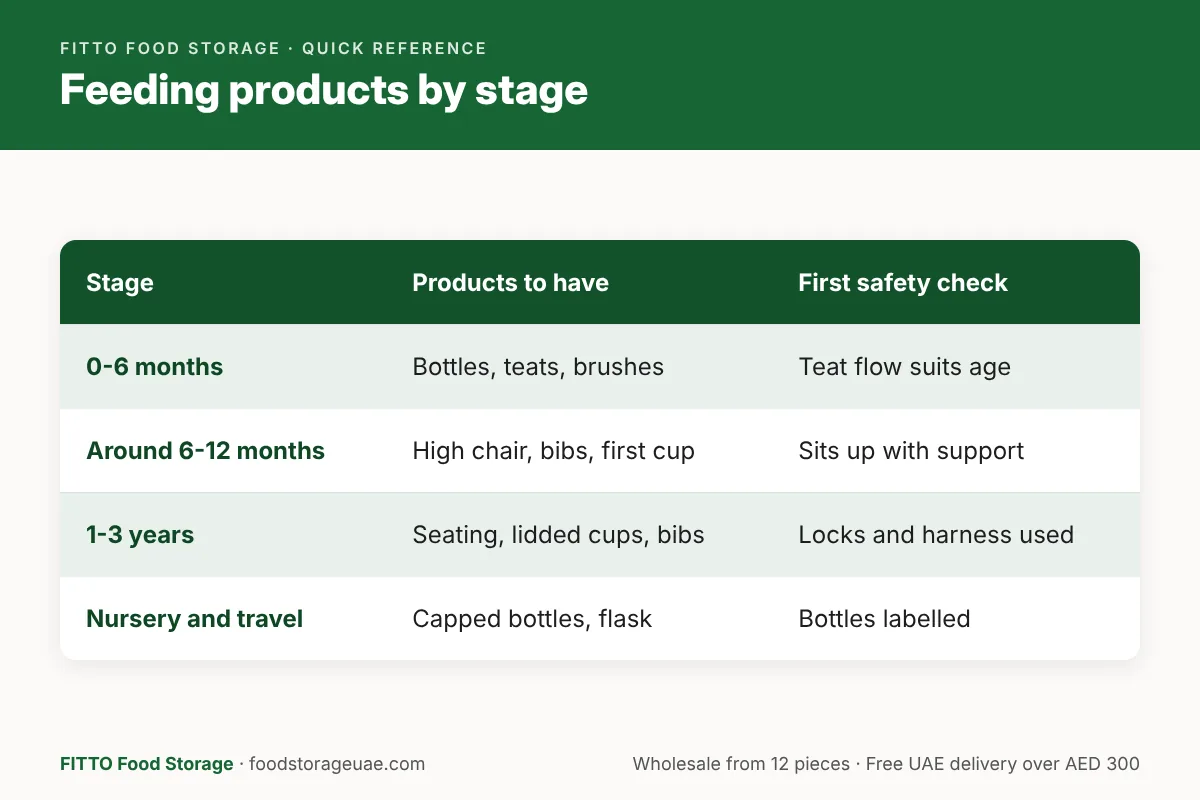
The table below is a general planning guide. Children develop at different speeds, so always check the age and weight guidance on the product label and ask your paediatrician when unsure.
| Stage | Feeding focus | Products to have | First safety check |
|---|---|---|---|
| Newborn to around 6 months | Breast milk or formula only | Bottles, teats, bottle and teat brushes, sterilising method | Teat flow suits the baby's age; equipment cleaned after every feed |
| Around 6-12 months | Milk plus first solid foods | High chair, waterproof bibs, first cup, larger bottle | Baby can sit up with support before using a high chair |
| 1-3 years | Family meals, more independence | Toddler seating, cups with lids and straws, bibs | Chair locks and harness used every time, if fitted |
| Nursery and travel | Feeding away from home | Capped bottles, bibs, insulated bag or flask | Bottles labelled; prepared milk kept cool or made fresh |
What should parents know about the milk-feeding months?
In the first six months, babies need only breast milk or infant formula, and the World Health Organization recommends exclusive breastfeeding for this period where possible. Whether you breastfeed, bottle feed or combine both, the right bottle and a strict cleaning routine matter most.
How do you choose a feeding bottle?
Choose a bottle by capacity, teat flow, how easy it is to clean and how it fits the baby's stage. Smaller bottles suit younger babies who take less per feed, and larger ones suit older babies.
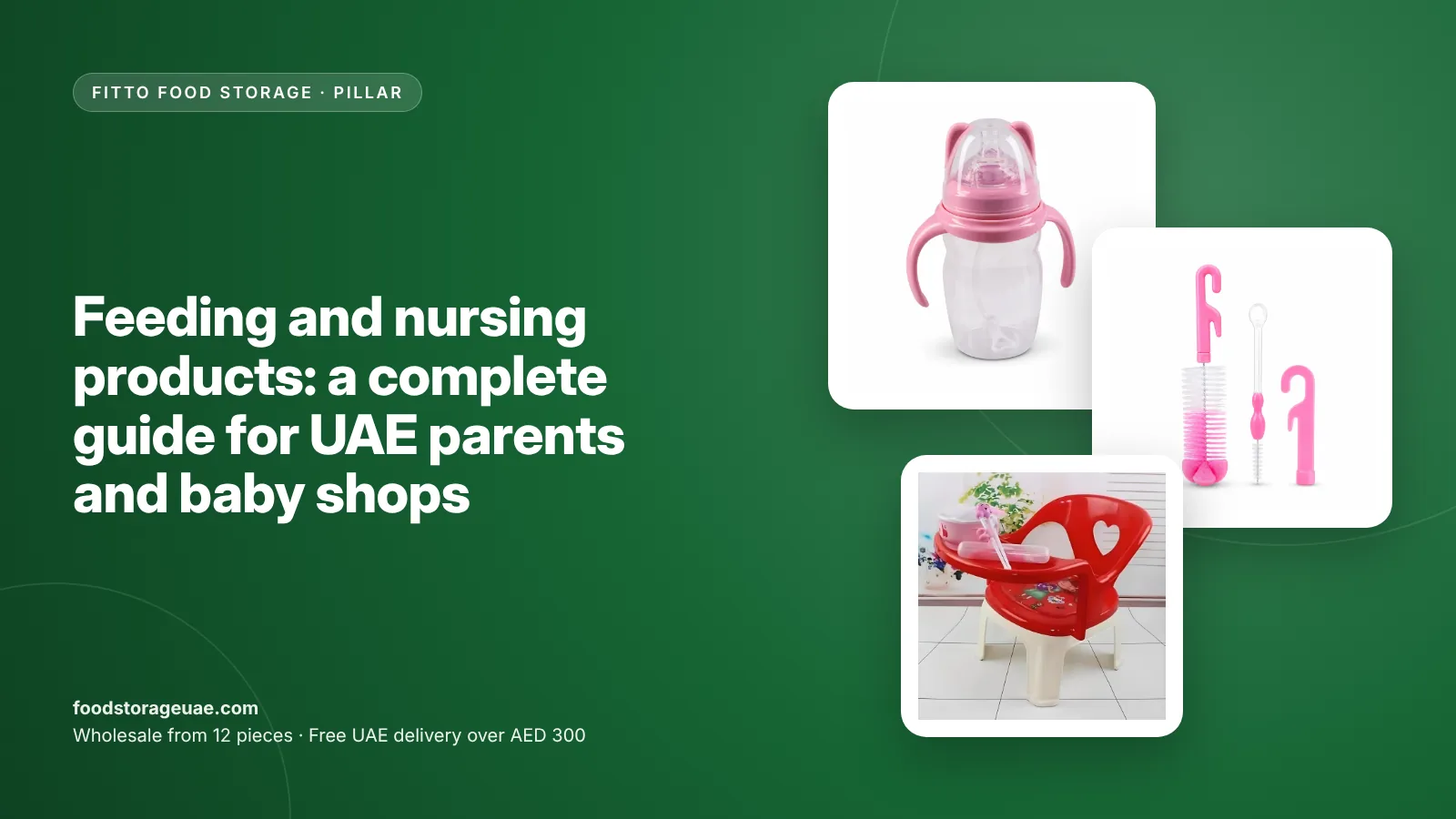
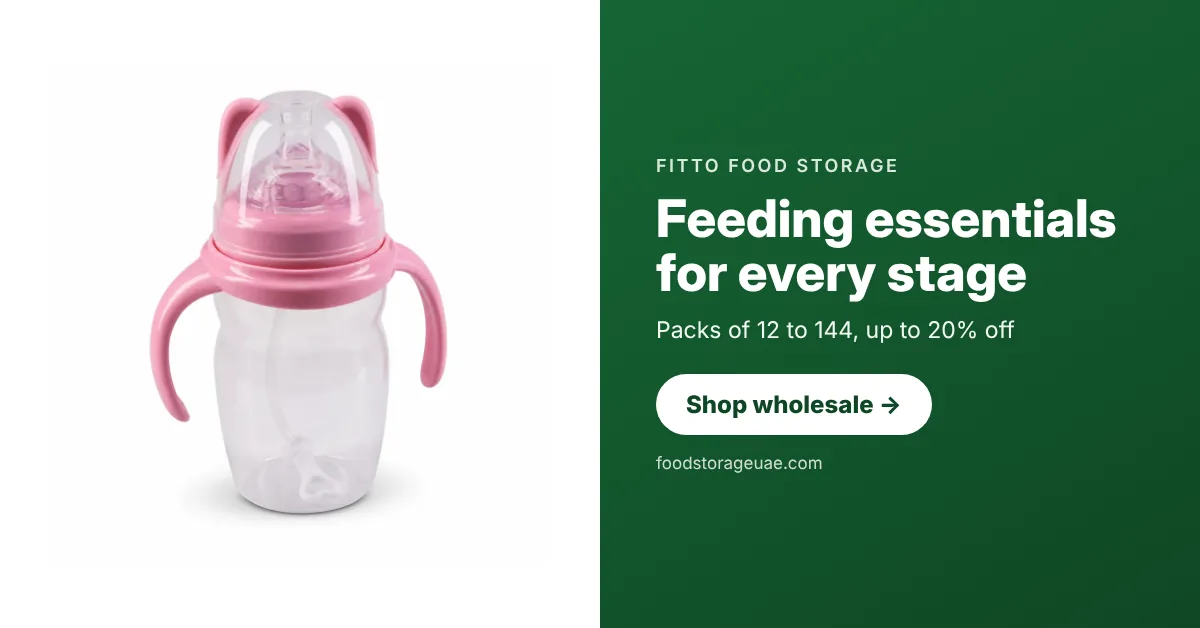
FITTO stocks two handled bottles with protective caps. The FITTO 220 ml feeding bottle with handles comes in pink or blue, with a transparent body so you can see the fill level. The FITTO 330 ml feeding bottle with handles has the same format in a larger size, supplied in assorted colours.
The side handles give a defined grip point, which helps older babies practise holding a bottle while an adult supports and watches them. The protective cap keeps the teat covered in a nappy bag or on the way to nursery.
When comparing any bottle, check these points on the label:
- Material: many bottles are polypropylene (PP), which is light and hard to break; glass is heavier but resists scratches and staining.
- Teat flow and age guidance: slow-flow teats are generally for young babies, faster flows for older ones.
- Parts count: fewer parts mean faster washing and fewer places for milk to hide.
Why does the teat matter as much as the bottle?
The teat controls how fast milk flows, so the wrong flow can make feeds too fast or frustratingly slow. Signs a flow may not suit your baby include coughing or spluttering, or long feeds where the baby tires before finishing.
Inspect teats before every use. Replace any teat that is cracked, torn, swollen, sticky or discoloured. As a rule of thumb, many manufacturers suggest replacing teats every one to two months even without visible damage, but follow the guidance on your teat packaging.
How should you clean and sterilise bottles?
Wash every bottle, teat and cap in hot soapy water after each feed, rinse, then sterilise them while your baby is young. The UK's NHS advises sterilising feeding equipment until a baby is at least 12 months old.
Follow this routine after every feed:
- Take the bottle apart completely: bottle, teat, ring and cap.
- Rinse away milk with cold water, because hot water can make milk proteins stick.
- Wash in hot soapy water with a bottle brush, and use a small brush inside the teat.
- Rinse well under clean running water.
- Sterilise using one method: boiling, a steam steriliser or a cold-water sterilising solution, following the product instructions.
- Air dry on a clean rack and store assembled with the cap on.
The FITTO bottle cleaning brush set includes a long-handled bottle brush, a smaller nipple brush for teats and a hook for hanging. It measures 32 x 8 x 6 cm and weighs 180 g, so it fits a drying rack or cupboard door. Replace brushes once bristles splay or stay damp and discoloured.
If you boil equipment, the NHS suggests boiling it for at least 10 minutes. Boiling can wear teats faster, so check them more often. For more on keeping drinkware hygienic in hot kitchens, read our food storage safety guide for UAE heat.
Is it safe to warm milk or formula in the microwave?
Health services generally advise against warming baby milk in a microwave, because it heats unevenly and can leave hot spots that scald. Stand the bottle in a jug of warm water instead.
Shake the bottle gently and test a few drops on the inside of your wrist; it should feel warm, not hot. Make up formula exactly as the instructions on the tin say, using the stated water temperature and scoop measures. Never add extra powder or water to "stretch" a feed.
Prepared formula and expressed milk spoil faster in warm rooms, and UAE summers make that worse. Discard any milk left in a bottle after a feed, rather than keeping it for later.
What changes when your baby starts solid food?
From around six months, most babies begin solid foods alongside milk, and mealtimes need a safe seat, a bib and a first cup. The WHO recommends continuing breastfeeding up to two years or beyond, alongside suitable family foods.
When can a baby use a high chair?
A baby is usually ready for a high chair when they can sit up with good head control, which tends to happen around six months. Check the chair's own age and weight limits before the first use.
The FITTO baby high chair for toddlers has a cushioned seat, a high backrest and adjustable height to match different tables. Its surfaces wipe clean and the removable tray goes in the dishwasher, which matters when food ends up everywhere.
Use any high chair safely:
- Set it on a flat, level floor and check all locks and legs before seating the baby.
- If the chair has a harness or strap, fasten it every time, even for a quick snack.
- Keep it away from walls, tables and counters the child could push against.
- Never leave a baby alone in a high chair, and stay close for every mouthful.
- Watch for choking risks; learn which foods to cut small or avoid by asking your paediatrician.
What about portable and inflatable chairs?
Portable and inflatable chairs suit travel, family visits and small apartments where a full high chair will not fit. They are designed for floor use under close supervision, not as a raised seat.
The FITTO inflatable baby chair inflates quickly, wipes clean and comes in bright pink with cartoon graphics toddlers enjoy. Inflate it fully, place it on the floor away from stairs, heat and sharp objects, and check for leaks before each use.
Which bibs work best?
Waterproof bibs with adjustable snaps are the most practical choice, because spills wipe away and the fit grows with the child. Fabric bibs soak through quickly once a baby starts feeding themselves.
The FITTO waterproof infant bib has snap closures and can be wiped, rinsed or machine washed. The FITTO waterproof silicone infant bibs with 3 bath toys adds an adjustable snap fit in orange, with toys for bath time. Remove bibs after meals and never leave a sleeping baby wearing one.
When do babies move to a cup?
Many health services, including the NHS, suggest offering a cup from around six months, starting with sips of water at mealtimes. Open or free-flow cups help babies learn to sip rather than suck.
Once your toddler drinks confidently, cups with lids and straws reduce spills at home and at gatherings. The FITTO plastic cups with lids and straws, 5-piece set suit older toddlers and family occasions. For capacities and lid types by age, see our kids drinkware guide.
How do you feed a baby safely when out in UAE heat?
Keep prepared milk cool, carry water and powder separately when possible, and never leave bottles or babies in a parked car. Car interiors in a UAE summer heat up within minutes.
A practical routine for outings and nursery runs:
- Carry measured formula powder in a clean, dry container and hot boiled water in a clean vacuum flask, then mix when needed, following your formula's instructions.
- Keep expressed milk in an insulated bag with an ice pack and use it within the time your health visitor advises.
- Pack a spare teat, a waterproof bib and a small bottle brush for longer trips.
- Label every bottle and cap with your child's name for nursery.
A good-quality flask makes the water routine easier; our vacuum flask buying guide explains how to pick one that holds heat.
How should a baby shop plan a feeding and nursing range?
Build the range around the daily routine, not around single products: bottle, cleaning tool, bib, seat and cup. Parents who find everything in one place come back for refills and the next stage.
| Range slot | Example product | Why it sells |
|---|---|---|
| Small feeding bottle | 220 ml bottle with handles, pink or blue | Early months, gift sets, nursery spares |
| Larger feeding bottle | 330 ml bottle with handles | Next-size replacement as feeds grow |
| Cleaning tool | Bottle brush set with teat brush and hook | Bought with every bottle, replaced often |
| Mealtime protection | Waterproof bibs with snap closures | Repeat purchase, easy add-on |
| Seating | Adjustable high chair; inflatable chair | Higher-value item at the solids stage |
| First drinkware | Cups with lids and straws | Moves families into the kids drinkware range |
Display bottles next to brushes and bibs, and put age guidance on the shelf edge. Group stock by colour, because pink and blue bottles can be sold as matching gifts for new arrivals.
FITTO Trade Pick: A complete starter feeding range in one order Pair the 220 ml and 330 ml feeding bottles with handles with the bottle cleaning brush set and waterproof infant bibs, then add the adjustable high chair as your higher-value line. Every product comes in packs of 12 to 144 pieces, with up to 20% off per piece on the largest pack.
The bottom line
Feeding products work best when they match the stage: bottles, teats and a strict cleaning routine first, then a safe high chair, bibs and a first cup from around six months. Check every label for age guidance and ask your paediatrician about anything to do with amounts or diet.
Browse our wholesale feeding and nursing products, kids drinkware for the toddler years and flasks and thermos for feeds on the go. Request a quote for a baby shop or nursery order, order samples to check quality first, or WhatsApp +971 55 672 6947. Delivery is free to all seven emirates on orders over AED 300. FITTO Food Storage: fit for the way you store.
FAQ
Do I need to sterilise baby bottles every time?+
The NHS advises sterilising bottles, teats and caps until your baby is at least 12 months old, after washing them in hot soapy water. Washing removes milk residue and sterilising kills remaining germs. Boiling, steam sterilisers and cold-water solutions all work when you follow the instructions. Ask your paediatrician if your baby was premature or has a health condition.
Which bottle size should I buy first, 220 ml or 330 ml?+
Smaller bottles such as 220 ml suit the early months, when babies take smaller feeds. Larger bottles such as 330 ml suit older babies taking bigger feeds. Many parents keep both. Your paediatrician or health visitor can advise on typical feed amounts for your baby's age and weight.
How often should I replace bottle teats?+
Check teats before every feed and replace any that are cracked, torn, sticky, swollen or discoloured. As a rule of thumb, many manufacturers suggest replacing them every one to two months even when they look fine. Also move up a flow size when your baby seems frustrated by slow feeds, following the age guidance on the pack.
When can my baby sit in a high chair?+
Most babies are ready around six months, once they can hold their head steady and sit up with support. Always check the age and weight limits on the high chair itself. Use the harness if the chair has one, place it on a flat floor away from tables and walls, and never leave your baby alone while seated.
Are silicone bibs better than fabric bibs?+
Waterproof silicone and coated bibs are easier for the weaning stage because spills and purées wipe off instead of soaking through. Fabric bibs are softer for dribbling babies in the early months. Whichever type you use, take the bib off after meals and do not leave it on a sleeping baby.