Vacuum flask liners: stainless steel or glass for Arabic coffee and tea?
By FITTO Trade Desk · Last updated 29 October 2026
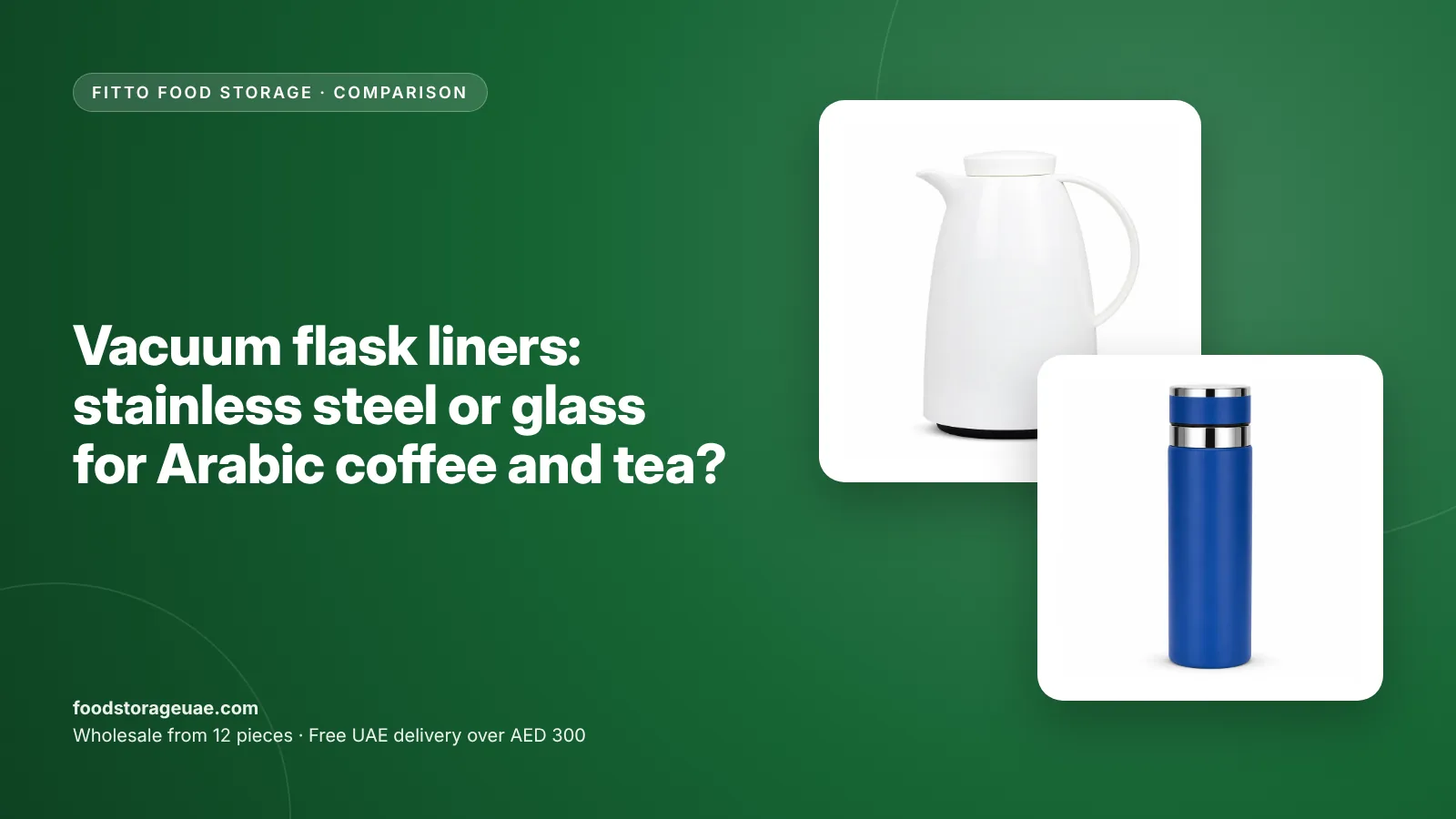
For a glass liner vs stainless steel flask decision, choose by where the flask lives. A glass refill keeps Arabic coffee and tea tasting clean and suits a majlis, reception or dining table where it is handled gently. A stainless steel liner is the safer pick for hotels, caterers, cars and desert trips, where knocks and drops happen.
Key takeaways
- Glass refills are neutral: they do not pick up cardamom, saffron or tea flavours, so the next brew tastes like itself.
- Steel liners do not shatter, which makes them the practical choice for heavy service, travel and outdoor use.
- Heat retention depends more on the vacuum, the stopper and preheating than on the liner material alone.
- Glass refills break from knocks and sudden temperature changes; steel liners mainly need stain and odour control.
- Many hosts keep both: a glass flask for the majlis and a steel flask for the car and the camp.
A flask that changes the taste of gahwa, or one that cracks on the second day of Eid, costs more than its price. The result is an embarrassed host, replacement stock and an awkward call from a gift recipient.
This comparison is for majlis hosts, hotel and café buyers, and anyone choosing flasks to give as gifts. At FITTO Food Storage, a wholesale flasks and food storage supplier in the UAE, we stock both styles, and the honest answer is that each wins in a different setting.
What is the difference between a glass liner and a steel liner?
Both are vacuum flasks: two walls with the air removed between them, so heat cannot easily pass through. The difference is what those inner walls are made of.
A glass-lined flask uses a double-walled glass refill with a mirrored (silvered) coating that reflects heat back into the drink. The refill sits inside a protective outer body, often plastic or metal.
A stainless steel flask uses two steel walls with a vacuum between them. Food-contact steel is commonly grade 304, also sold as 18/8. In the Gulf, the traditional glass-refill flask (ترمس, termos) is still the classic coffee and tea server, while steel flasks dominate travel and outdoor use.
Which liner keeps Arabic coffee and tea tasting better?
Glass has the edge on taste. It is non-porous and does not react with drinks, so it does not hold flavours or give any metallic note.
This matters for Arabic coffee, where cardamom and saffron are the point of the drink, and when one flask serves gahwa in the morning and karak later.
Steel is also a stable food-contact material, and most people cannot taste anything from a clean steel flask. Problems usually come from residue, not from the metal itself. Coffee oils and tea tannins build up as brown film and carry stale flavours into the next brew.
A faint metallic note in a brand-new steel flask usually goes after a wash with warm soapy water.
Which liner keeps drinks hot longer?
Neither material wins on its own. A well-made glass refill and a well-made steel liner can both hold heat for hours; the stopper, the fill level and preheating make the bigger difference.
Most heat escapes through the lid and neck, not the walls. A tight stopper, a narrow mouth and a full flask matter more than the liner.
As a rule of thumb, preheat any flask with hot water for five minutes, empty it, then fill with the freshly brewed coffee or tea. This one step makes a noticeable difference with either liner. For more on realistic retention times, see our guide on how to choose a vacuum flask.
How do glass and steel liners compare side by side?
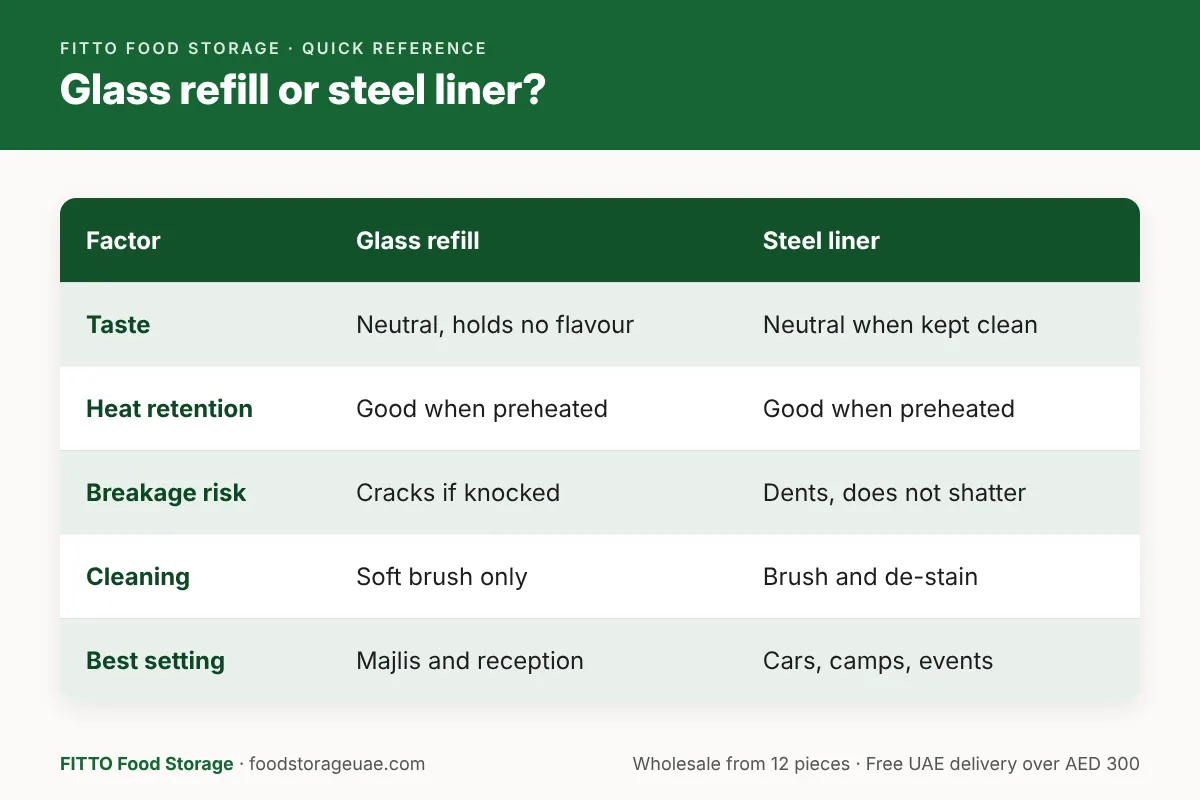
Glass wins on taste and presentation; steel wins on durability and travel. Heat retention is close when both are well made.
| Factor | Glass refill | Stainless steel liner |
|---|---|---|
| Taste | Neutral; holds no flavours | Neutral when clean; stains carry flavour |
| Heat retention | Good; mirrored coating reflects heat | Good; depends on vacuum and lid |
| Breakage risk | Cracks if knocked or shocked | Dents rather than breaks |
| Weight | Light refill, but outer body adds bulk | Usually light for its size |
| Cleaning | Soft brush only; no metal tools | Easy; needs regular de-staining |
| Best for | Majlis, reception, dining table | Hotels, cars, camping, events |
| Gift appeal | Decorative bodies, traditional look | Modern, practical, travel-ready |
How likely is a glass refill to break?
Glass refills are robust in calm use but fail from two causes: impact and thermal shock. Treat them like good glassware, not like a camping bottle.
Impact is the obvious one. A drop onto a tiled floor, a spoon dropped inside, or a hard knock in a car boot can crack the refill.
Thermal shock is less obvious. Pouring boiling water into a cold refill straight from an air-conditioned room, or adding ice to a hot refill, puts stress on the glass. Warm the refill with hot tap water first and let it cool before chilling.
Steel liners avoid both risks. A deep dent can damage the vacuum, but a dropped steel flask will not shatter into the drink.
Which liner is easier to clean?
Steel is easier day to day because you can scrub it with a bottle brush. Glass cleans easily too but needs gentle tools.
In humid UAE homes, a capped damp flask can develop a musty smell within days, so dry both types open.
- Rinse with hot water as soon as the flask is empty.
- For steel, scrub with a soft bottle brush and warm soapy water.
- For glass, use a soft sponge brush and never metal tools or scourers.
- Remove coffee and tea stains with warm water and a spoon of baking soda, left for an hour.
- Rinse well and air-dry with the lid off before storing.
Most vacuum flasks should be hand-washed, and the outer body should not be submerged. Always check the care guidance supplied with the product. Our guide to removing flask stains covers stubborn residue.
Which liner should a majlis, hotel or gift buyer choose?
Choose glass for a calm, presentation-led table and steel for anything that moves, travels or sees heavy service.
- Home majlis: a 1 litre glass-refill flask suits gahwa served to guests in small cups and stays on the table.
- Hotel lobby or office reception: glass for display, steel for back-of-house, where staff handling is rougher.
- Catering and events: steel, including large jugs with a serving spigot, because it is moved and refilled constantly.
- Car and desert trips: steel only. Rough tracks and cold winter nights are hard on glass.
- Gifts: decorative glass-refill flasks in fluted or gold-trim styles feel traditional; steel suits sporty or travel-focused gifts.
For more serving styles, see our Arabic coffee flask styles guide. The full range sits in our flasks and thermos category.
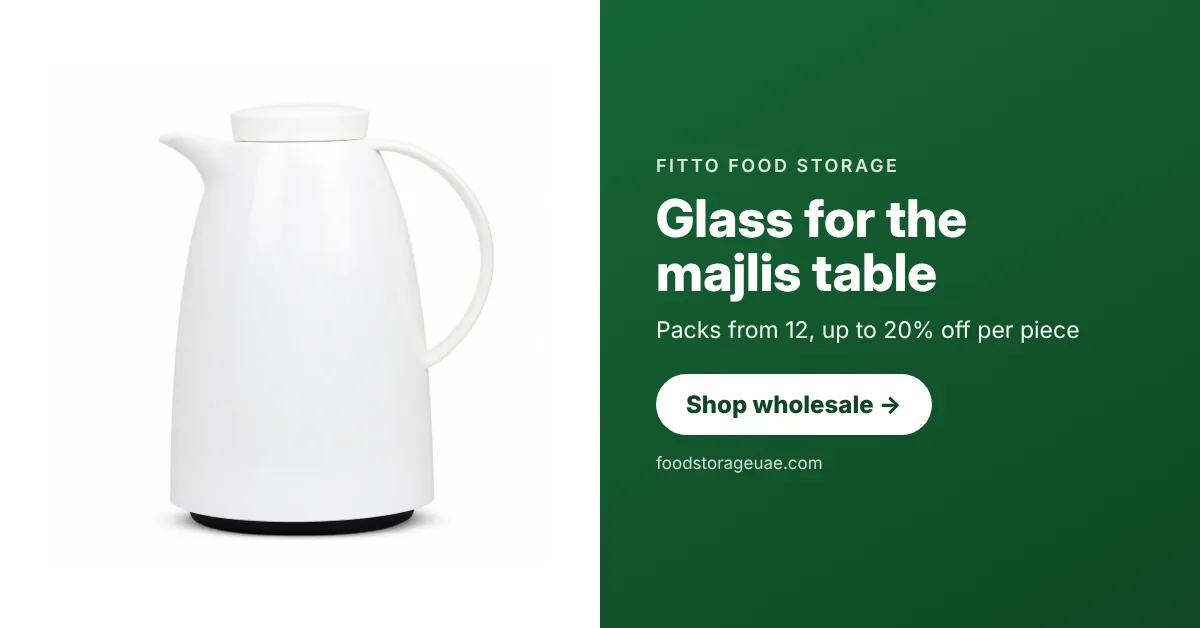
FITTO Trade Pick: Stock both liners, serve every setting Pair the 1 litre white and gold glass-refill flask for majlis tables with the 1 litre stainless steel vacuum flask for cars, camps and staff use. Packs run from 12 to 144 pieces, saving up to 20% per piece on the largest pack.
The bottom line
Glass refills give the cleanest taste and the most traditional look, as long as the flask stays on the table. Steel liners trade a little presentation for flasks that survive drops, cars and busy service. Preheat either one and both will serve hot gahwa well.
Browse our wholesale flasks and thermos range, request a quote for mixed liner types, order a sample to test taste and handling, or WhatsApp +971 55 672 6947. Free delivery to all seven emirates over AED 300. FITTO Food Storage: fit for the way you store.
FAQ
Does a stainless steel flask change the taste of coffee?+
A clean stainless steel flask should not noticeably change the taste of coffee. Most off-flavours come from old coffee oils and tea tannins left on the walls. Wash a new flask before first use, rinse it after every use and de-stain it regularly with baking soda. If a taste remains, a glass-refill flask is the more neutral choice.
Can I put ice in a glass-refill flask?+
You can keep cold drinks in a glass-refill flask, but avoid sudden temperature changes. Let a flask that has held hot coffee cool to room temperature before adding cold water or ice. Drop ice in gently rather than tipping a full tray, because hard ice cubes hitting the base can crack the refill.
How do I know if a glass refill is broken?+
Common signs are a rattling or crunching sound when you shake the empty flask, visible fragments, or drinks going cold far faster than before. If you suspect damage, stop using the flask and discard the contents.
Which liner is better for karak tea with milk?+
Either works, but milky drinks need extra care. Milk residue sticks to steel and can sour in UAE heat, while glass rinses clean more easily. As a general food-safety rule, drink milky tea within a few hours rather than keeping it all day, and wash the flask the same day.