How to clean a vacuum flask and remove tea and coffee stains
By FITTO Trade Desk · Last updated 29 October 2026
To clean vacuum flask stains, fill the flask with hot water and one to two tablespoons of baking soda, leave it open for one to three hours, then scrub with a long bottle brush and rinse. Use diluted white vinegar for limescale. Never use bleach, steel wool or a dishwasher unless the flask is labelled dishwasher safe.
Key takeaways
- Rinse after every use and deep-clean weekly, or as soon as brown tea or coffee rings appear.
- Baking soda and hot water lift most tea and coffee stains; white vinegar removes chalky limescale.
- The lid, seal and pour spout hold most of the smell, so take them apart every time.
- Skip bleach, steel wool and soaking the whole flask; they can damage the steel and the vacuum seal.
- If the outside gets hot when filled, the vacuum has failed and no cleaning will fix it.
A brown ring inside a flask makes fresh gahwa look old and leaves a stale taste in tea. Many people bin the flask, when a ten-minute clean would have saved it. This guide gives the routine, plus what not to do so the vacuum seal stays intact.
It is written for flask owners, office pantry staff and majlis hosts. At FITTO Food Storage, a wholesale flask and thermos supplier in the UAE, cleaning the thermos (تنظيف الترمس) is one of the most common questions buyers pass on from their customers.
Why do tea and coffee stain a vacuum flask?
Tea and coffee contain natural tannins and oils that cling to the inner wall and darken with every use. Milk, sugar and spices such as cardamom and saffron add a sticky layer that holds smells.
Stains build fastest when drinks sit overnight. In a warm UAE kitchen or car, leftover milky karak also turns sour quickly and adds an odour.
How do you clean a vacuum flask every day?
Empty the flask, wash it with hot soapy water and a long bottle brush, then dry it upside down with the lid off. Two minutes a day prevents most stains.
- Empty it soon after use, not the next morning.
- Add hot water and a drop of washing-up liquid, close the lid and shake gently.
- Scrub the inner wall and base with a long-handled bottle brush.
- Take the lid apart: remove the silicone seal and wash the stopper and pour spout separately.
- Rinse twice with hot water so no soap taste remains.
- Air-dry upside down with the lid off, then store it open.
How do you remove tea and coffee stains from a flask?
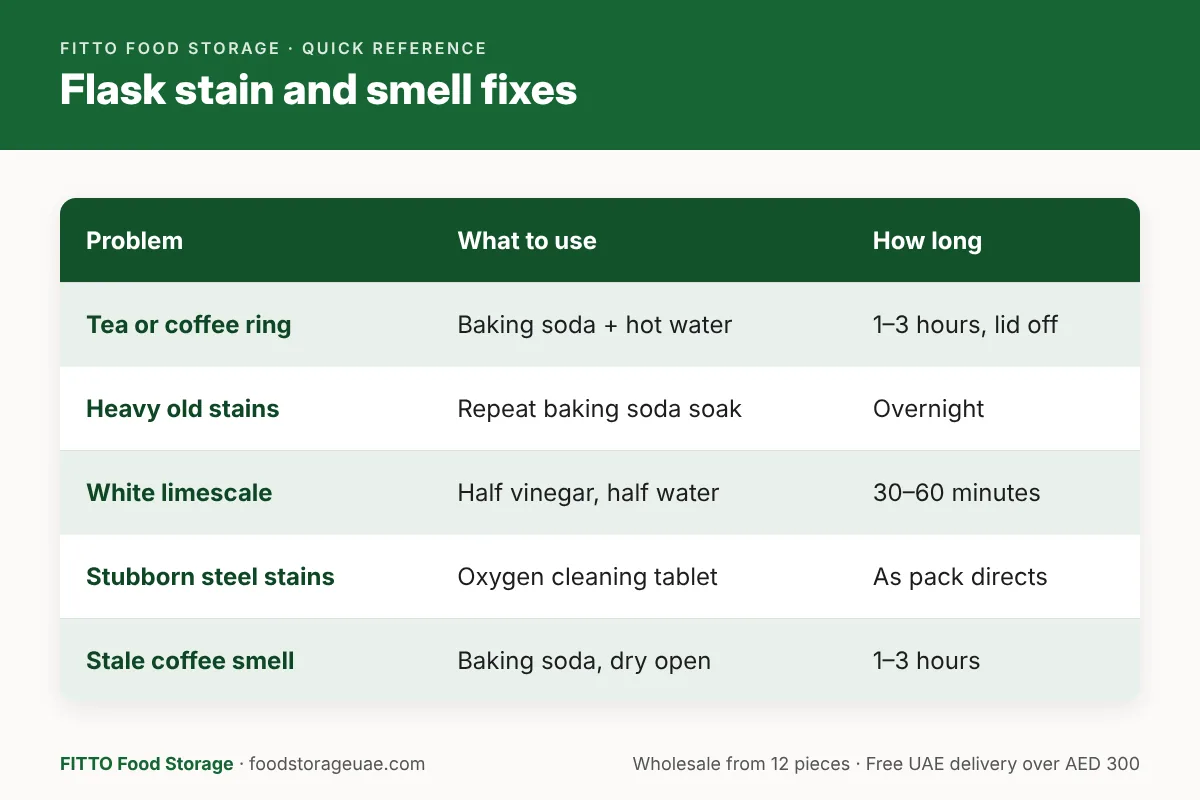
Use a baking soda soak for brown tannin stains and a white vinegar soak for white or chalky limescale. Match the method to the mark.
| Problem | What to use | How long | Notes |
|---|---|---|---|
| Light brown tea or coffee ring | 1–2 tbsp baking soda + hot water | 1–3 hours, lid off | Brush, then rinse well |
| Heavy, old stains | Baking soda soak, repeated | Overnight | Brush between soaks |
| White, chalky limescale | Half white vinegar, half hot water | 30–60 minutes | Rinse twice to clear the smell |
| Stubborn stains in steel | Oxygen-based cleaning tablet | As the pack directs | Avoid chlorine-based products |
| Stale coffee or karak smell | Baking soda soak, then air-dry open | 1–3 hours | Wash the seal separately |
For a soak, add hot water first, then the baking soda, and leave the lid off or resting loosely on top.
Do not mix baking soda and vinegar in a closed flask. The fizzing builds pressure and can push the stopper out.
How do you clean the lid, seal and pour spout?
Take the lid apart and soak the parts in warm soapy water, because trapped liquid in the lid causes most flask smells. Pour-spout lids have narrow channels where coffee collects.
- Ease the silicone seal out of its groove with your fingers, not a knife.
- Soak the seal, stopper and spout for 15 minutes, then brush the channels.
- Look for black spots on the seal; if they do not wash off, replace the seal where a spare is available, or the flask.
- Let every part dry fully before you reassemble the lid.
What should you never do when cleaning a flask?
Never use bleach, steel wool or a dishwasher on a flask that is not labelled dishwasher safe. Each can harm the inner wall, the finish or the vacuum seal.
- Bleach and chlorine cleaners can pit and discolour stainless steel.
- Steel wool and abrasive scourers scratch the inner wall, and scratches hold stains.
- Soaking the whole flask can let water into the base or behind the outer finish.
- Dishwashers use heat and strong detergent that may damage the seal or paint, so follow the product label.
- Hard knocks can crack a glass refill, so use a soft sponge brush on glass-lined flasks.
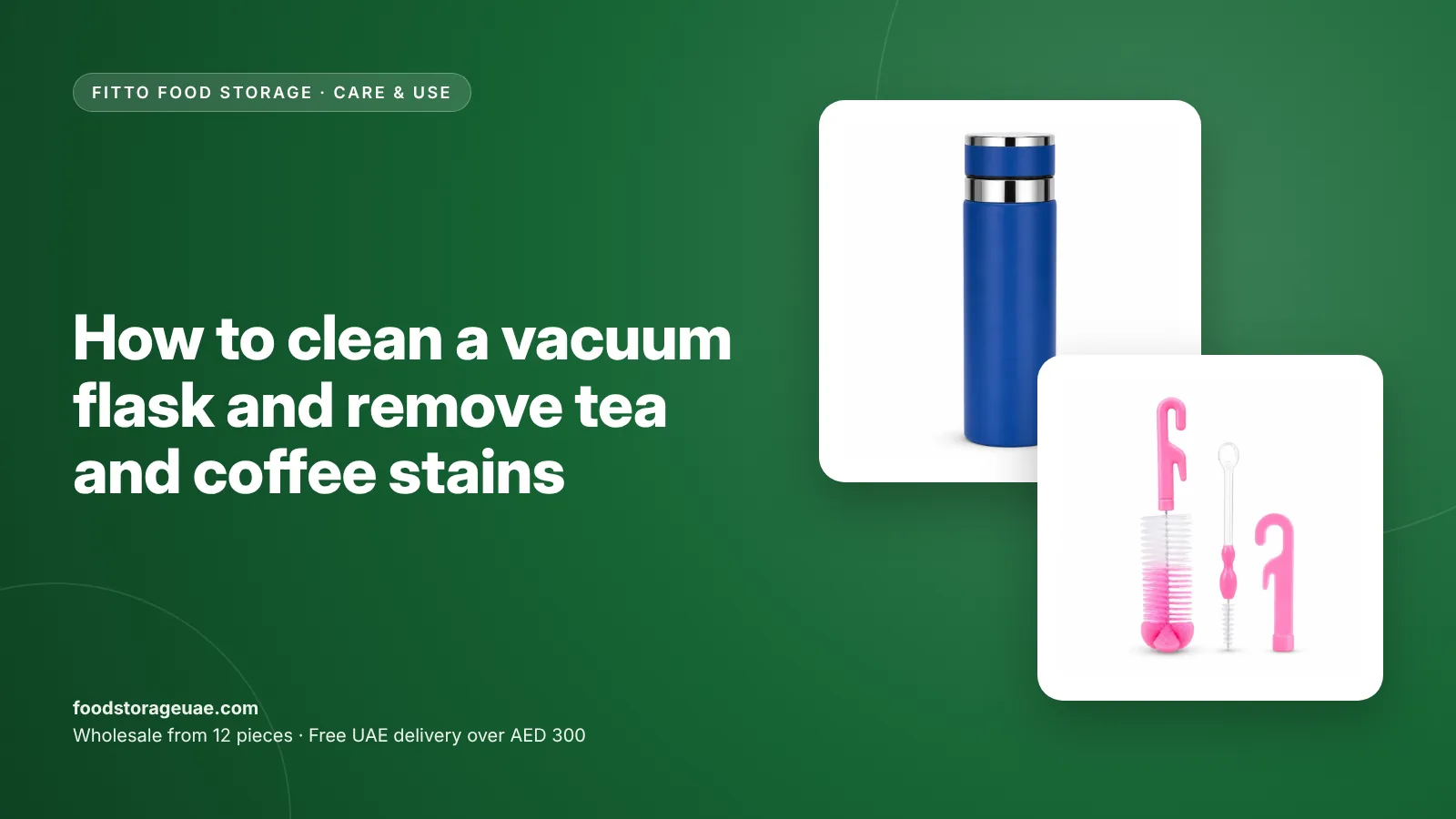
FITTO Trade Pick: Clean flasks start with the right brush The bottle cleaning brush set with small detail brush reaches the base of a 1 L flask and the narrow channels of a lid. Pair it with the 1 L stainless steel vacuum flask as an easy add-on sale. Delivery is free to all seven emirates on orders over AED 300.

How can you tell if a flask is past saving?
If the outside of the flask gets hot when you fill it with hot water, the vacuum has failed. Cleaning cannot fix that.
Other signs it is time to replace it:
- A rattle inside the walls, or a dent that changed its shape.
- Rust spots that return after cleaning.
- A cracked glass refill or a lid that no longer seals.
For what to look for in a replacement, read our guide on how to choose a vacuum flask. For the range of serving styles, see Arabic coffee flask styles, and for bottles, our guide on how to clean a water bottle.
The bottom line
Rinse a vacuum flask after every use, wash the lid apart and dry it open. Lift tea and coffee stains with a baking soda soak and limescale with diluted vinegar, and keep bleach, steel wool and unlabelled dishwashers away from it.
Browse our wholesale flasks and thermos range, request a quote, order samples or WhatsApp +971 55 672 6947. FITTO Food Storage: fit for the way you store.
FAQ
Can I put a vacuum flask in the dishwasher?+
Only if the product label says it is dishwasher safe. Dishwasher heat and detergent can damage the vacuum seal, outer paint and lid parts on many flasks. When in doubt, wash the body by hand with hot soapy water and a bottle brush, and check the label before putting the lid in.
How do I get rid of a coffee smell in my flask?+
Fill the flask with hot water and one to two tablespoons of baking soda, leave it open for one to three hours, then scrub and rinse. Remove and soak the silicone seal separately, because it holds most of the smell. Dry everything fully with the lid off before storing.
Is it safe to use bleach to clean a vacuum flask?+
It is best avoided. Chlorine bleach can pit and discolour stainless steel, and traces can leave a taste. Baking soda, white vinegar or an oxygen-based cleaning tablet used as directed are gentler choices. Rinse well after any cleaner, and never mix cleaning products inside a closed flask.
How often should I deep-clean a flask?+
For daily tea or coffee, deep-clean once a week with a baking soda soak. Flasks used for milky karak need it more often, because milk leaves residue that smells quickly in warm weather. A flask used only for hot water may need a vinegar soak every few weeks to clear limescale.