How to wash an insulated lunch bag without damaging the lining
By FITTO Trade Desk · Last updated 29 October 2026
To wash an insulated lunch bag safely, empty it and wipe the lining with warm (not hot) soapy water and a soft cloth. Rinse with a clean damp cloth and dry it fully open, upside down, in the shade. Skip the washing machine and tumble dryer unless the label allows them, and never use bleach or scourers.
Key takeaways
- Wipe the lining after every use; a full hand clean once a week is enough for most bags.
- Warm water and mild dish soap clean safely; hot water, bleach and scourers crack foil and PEVA linings.
- Drying fully open is the step that prevents mould, especially in humid UAE weather.
- Baking soda left overnight removes most smells without harming the lining.
- Replace a bag when the lining is torn and mould has reached the foam behind it.
A lunch bag that smells of last week's biryani is usually cleaned once a month, dried closed and kept in a warm car. In UAE humidity, that is enough for mould spots and a sour smell to set in.
This guide is for parents and office workers who want the bag to last the school year. At FITTO Food Storage, a wholesale lunch boxes and bags supplier in the UAE, we find damaged bags are rarely worn out. They were washed too hot or put away damp.
What is an insulated lunch bag lining made of?
Most linings are a thin foil-type or PEVA plastic layer over a foam core. The lining keeps spills out of the foam, so protecting it protects the whole bag.
The outer shell is usually polyester. Once the lining cracks or a seam opens, liquids soak into the foam, where they are almost impossible to clean out.
Heat, folding and scrubbing are what crack linings. That is why the care notes on many lunch bags (شنطة غداء, shantat ghada) say "wipe clean" rather than "machine wash".
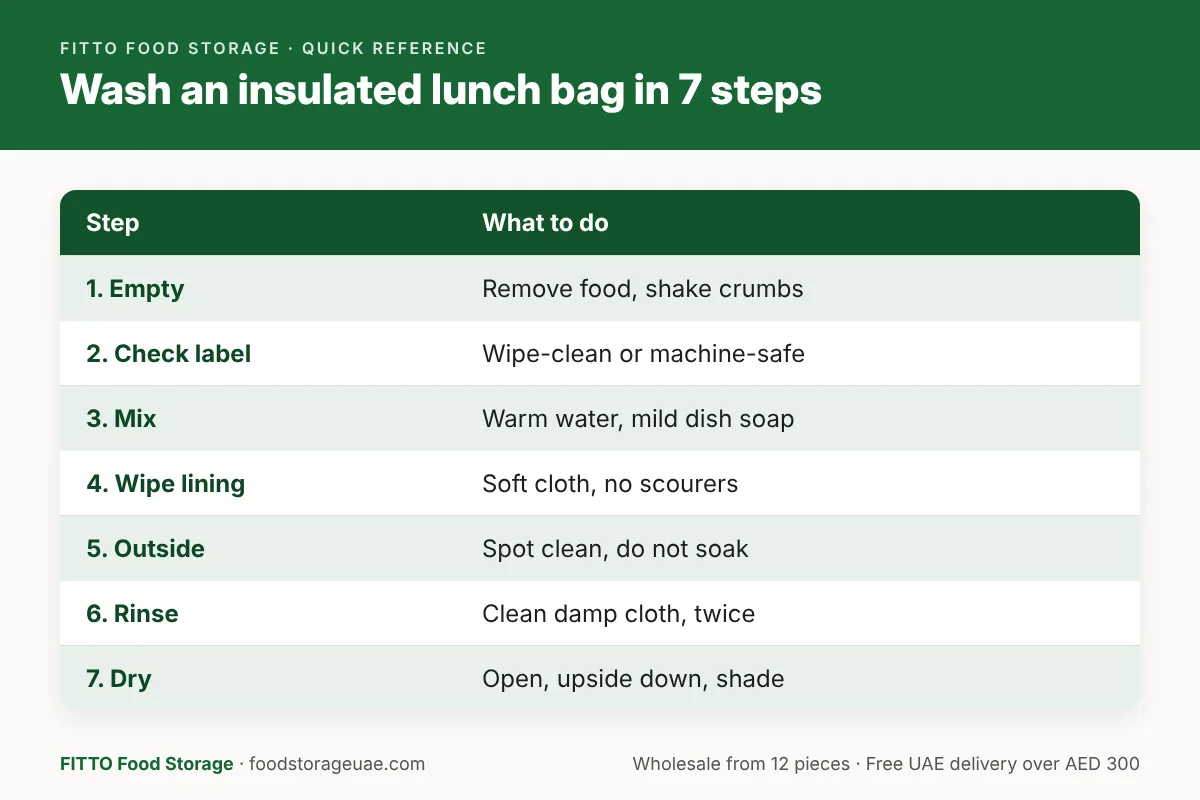
How do you wash an insulated lunch bag step by step?
Hand-wash the lining with warm soapy water, rinse it with a damp cloth and air-dry the bag open. It takes about ten minutes plus drying time.
- Empty and shake. Remove containers and ice packs, unzip fully and shake crumbs out over a bin.
- Check the label. If it says wipe clean only, keep water away from the outer shell's seams.
- Mix the wash. Add a few drops of mild dish soap to a bowl of warm water, comfortable on your hand.
- Wipe the lining. Use a soft cloth or sponge; work into the corners with a soft old toothbrush.
- Spot clean the outside. Dab marks on the polyester with the same soapy cloth; do not soak it.
- Rinse. Wipe twice with a cloth dampened in clean water to remove soap.
- Dry open. Stand the bag upside down and fully unzipped in a shaded, airy spot.
Do not zip the bag until the lining and seams are completely dry, which can take most of a day in humid coastal weather.
Can you put a lunch bag in the washing machine?
Only if the care label says it is machine-washable. Most insulated bags are not, because the drum folds and crushes the lining.
If the label allows it, use a cold, gentle cycle with the bag inside a laundry bag, and remove ice-pack inserts first. Never tumble dry: heat can shrink the lining, warp seams and break down the foam.
How do you get rid of a lunch bag smell?
Clean the lining, dry it fully, then leave baking soda inside overnight. Most smells come from residue in seams, not from the bag itself.
Sprinkle two tablespoons of baking soda into the dry bag, zip it closed overnight, then shake it out and wipe. For strong smells such as fish or eggs, wipe the lining with a 1:1 mix of white vinegar and water, then rinse with a damp cloth and dry.
If the smell comes from the containers instead, see our guide to removing smells from plastic containers.
How do you handle spills and mould?
Clean spills the same day and treat small mould spots with diluted vinegar. If mould has reached the foam behind a torn lining, replace the bag.
| Problem | Likely cause | What to do |
|---|---|---|
| Soup or juice spill | Lid not closed or container cracked | Blot, wipe with soapy water, dry open |
| Milk or yoghurt smell | Dairy residue in seams | Same-day wipe, vinegar rinse, dry fully |
| Black or grey spots | Mould from drying closed | Wipe with 1:1 vinegar and water, dry in airflow |
| Damp lining every day | Condensation from ice packs | Wipe dry after use, wrap ice pack in a cloth |
| Cracked or peeling lining | Hot water, folding or scrubbing | Use a container inside; replace if foam is wet |
Avoid bleach on foil or PEVA linings; it can damage the surface. Leaks usually point to the container, so a leakproof lunch box is the long-term fix.
How do you store a lunch bag between uses?
Store it clean, dry, unzipped and uncrushed. Keep ice packs in the freezer, not in the bag.
- Hang the bag or stand it open on a shelf rather than folding it into a drawer.
- Do not leave it in a parked car; heat can warp the lining and spoil any forgotten food.
- Over school holidays, store it clean and dry with a little baking soda inside.
If your bag is past saving, our insulated lunch bag buying guide explains what to look for next. To decide between a lunch bag and a larger cooler, see lunch bag vs cooler bag.
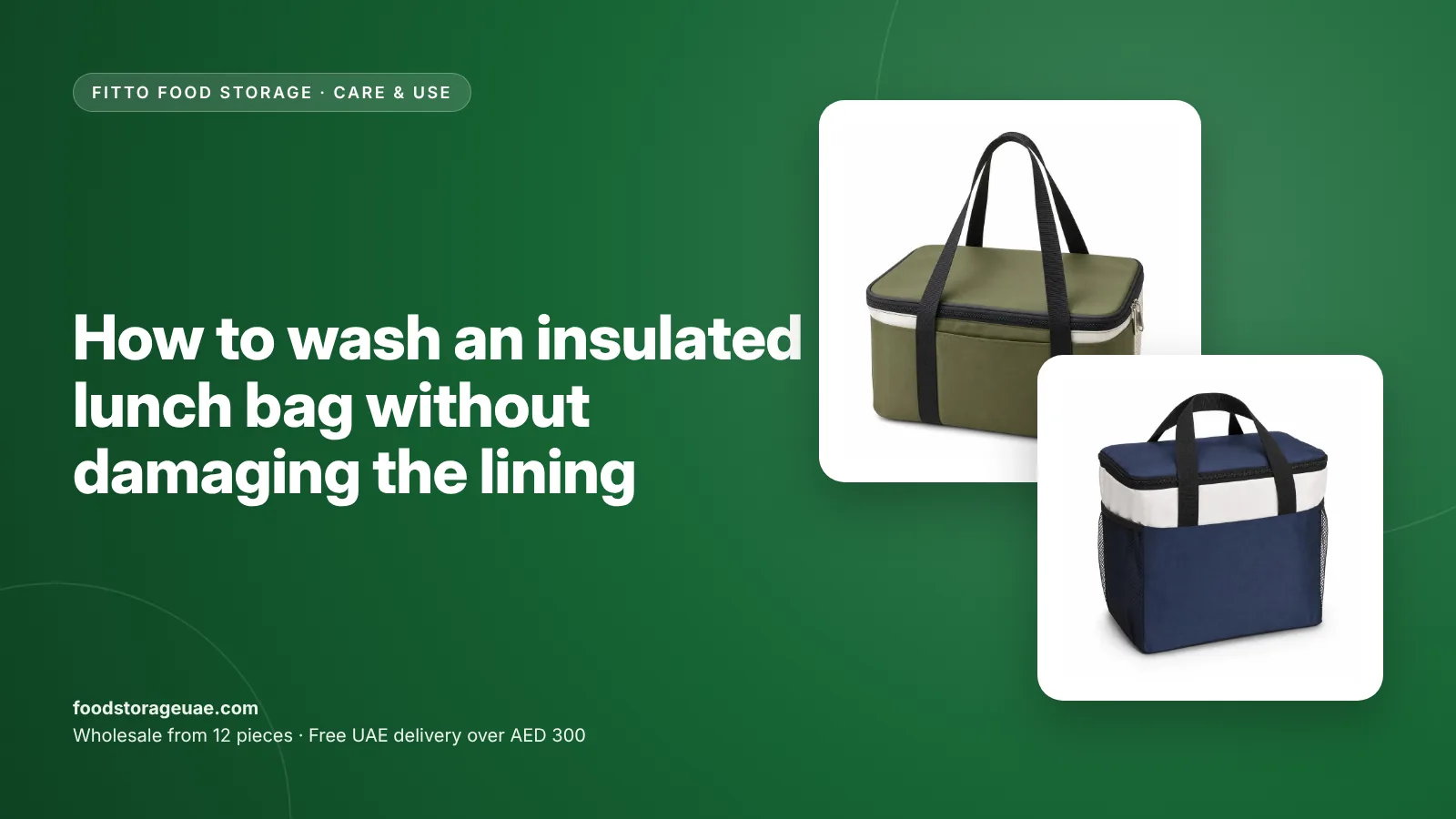
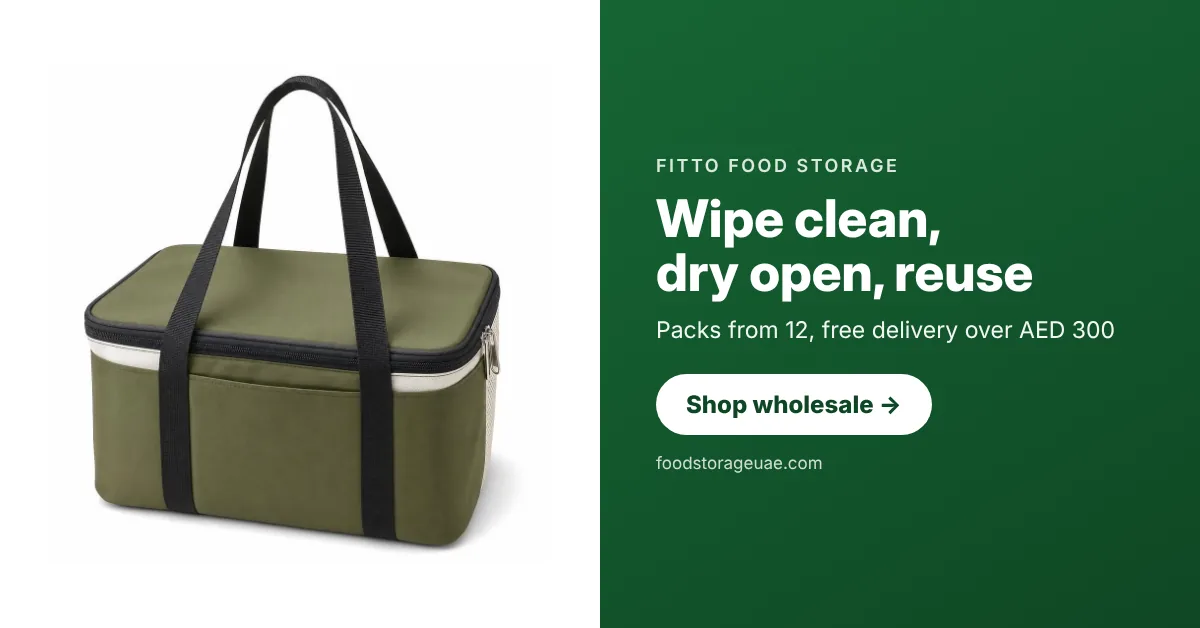
FITTO Trade Pick: Lunch bags built for daily wiping The olive flat zip lunch bag, 30 x 20 x 15 cm has a foil-type lining and opens wide for easy wiping. The navy cooler lunch tote with mesh side pockets suits family lunches. Buy in packs from 12 pieces, with free delivery over AED 300.
The bottom line
Wipe the lining after every use, hand-wash it weekly with warm soapy water and always dry the bag fully open. Avoid heat, bleach and machines unless the label says otherwise, and the lining will last for years.
Browse our wholesale lunch boxes and bags, request a quote for school or office orders, order a sample to check the lining yourself, or WhatsApp +971 55 672 6947. FITTO Food Storage: fit for the way you store.
FAQ
How often should I wash an insulated lunch bag?+
Wipe the lining after every use and give it a full hand clean once a week. Clean it the same day after any spill, especially milk, yoghurt, soup or juice. In summer, daily wiping matters more, because warm, damp linings grow mould faster.
Can I use disinfectant wipes on the lining?+
A mild wipe used now and then is usually fine, but follow it with a cloth dampened in clean water so no residue touches food. Avoid wipes or sprays containing bleach, and do not use them instead of washing off food residue.
Why does my lunch bag get wet inside?+
Usually from condensation. Ice packs and chilled drinks draw moisture from humid air, which collects on the lining. Wrap the ice pack in a thin cloth, wipe the lining dry after each use and dry the bag open overnight. If water appears without an ice pack, check containers for leaks.
When should I replace an insulated lunch bag?+
Replace it when the lining is torn and liquid has soaked into the foam, when mould returns after cleaning, or when the zip no longer closes. A bag that cannot be dried or cleaned properly is no longer a safe place for food, even if it still looks fine from outside.